
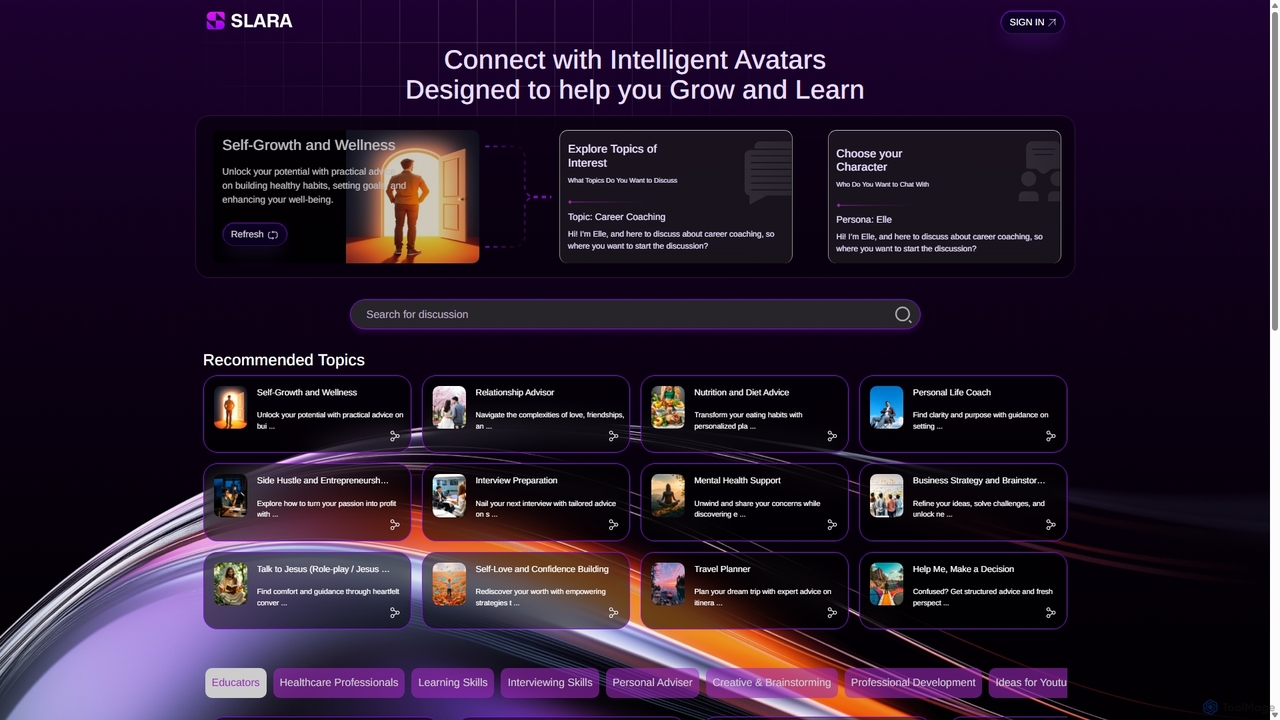
Slara
Slara is an AI-powered platform offering conversations with intelligent avatars for personal and professional growth. Users can discuss …
Slara is an AI-powered platform offering conversations with intelligent avatars for personal and professional growth. Users can discuss topics like career coaching, mental wellness, and entrepreneurship with specialized AI personas, providing a supportive space for learning, problem-solving, and self-improvement.
About Career Development
AI Career Development tools are specialized applications designed to help individuals manage and advance their professional journey. Leveraging machine learning and natural language processing, these tools analyze resumes, simulate interviews, and identify skill gaps. They provide personalized guidance for job seekers and professionals, helping them navigate the job market and plan their career progression effectively. This focused approach distinguishes them from broader business management software by concentrating specifically on individual growth and employability.
Core Features
- Resume Analysis & Optimization: Scans resumes to provide feedback on formatting, keywords, and content to pass Applicant Tracking Systems (ATS).
- AI Interview Coaching: Simulates job interviews and offers real-time feedback on verbal and non-verbal communication skills.
- Skill Gap Analysis: Compares an individual's current skills against job descriptions or career goals to identify areas for improvement.
- Personalized Career Pathing: Recommends potential career moves, promotions, and learning resources based on a user's profile and aspirations.
- Automated Cover Letter Generation: Creates tailored cover letters that highlight relevant skills and experiences for specific job applications.
Use Cases
These tools are ideal for job seekers aiming to optimize their applications, mid-career professionals planning their next move, and students preparing to enter the workforce. HR and Learning & Development (L&D) departments also use them to support internal mobility, employee upskilling, and succession planning, fostering a culture of continuous growth within an organization.
How to Choose
When selecting an AI Career Development tool, consider its specific focus—whether on job searching, interview preparation, or long-term skill development. Evaluate the quality and actionability of the feedback provided. Check for integrations with platforms like LinkedIn or job boards, and carefully review the tool's data privacy and security policies to ensure your personal information is protected.
Career DevelopmentUse Cases
Resume Optimization for Applicant Tracking Systems (ATS)
A job seeker uploads their resume to an AI career tool. The tool analyzes the document against a target job description, identifying missing keywords and suggesting improvements to formatting and phrasing. It provides a score and a detailed report, enabling the user to tailor their resume to pass automated screening systems (ATS) and catch the attention of recruiters, significantly increasing their chances of securing an interview.
AI-Powered Mock Interview Practice
A recent graduate preparing for their first job interviews uses an AI coaching tool. They can select common questions for their target role and record their answers. The AI provides instant, private feedback on their speech clarity, pacing, use of filler words, and even body language via webcam analysis. This allows them to practice repeatedly and build confidence before facing a real interviewer, addressing specific weaknesses in a low-pressure environment.
Identifying Skill Gaps for Career Advancement
A mid-level manager aiming for a director role uses a career development platform. They input their current role, skills, and target position. The AI analyzes thousands of job descriptions and career trajectories to identify the key skills the manager lacks, such as strategic financial planning or advanced data analysis. The platform then recommends specific online courses, certifications, and internal projects to help them bridge these gaps, creating a clear, actionable plan for promotion.
Personalized Career Path Planning
An employee feeling stagnant in their role uses their company's internal AI career tool. Based on their performance reviews, skills profile, and stated interests, the AI generates several potential career paths within the organization. It visualizes the steps, required skills, and typical timelines for each path, such as moving from a marketing specialist to a product marketing manager. This empowers the employee to have a constructive conversation with their manager about their future development.
Crafting a Compelling Cover Letter
A professional transitioning to a new industry needs to write a cover letter that highlights their transferable skills. They use an AI tool, providing their resume, the job description, and some key points they want to emphasize. The AI generates a well-structured, professional draft that connects their past experience in, for example, project management to the requirements of a customer success role. The user can then edit and personalize the draft, saving hours of writing time and overcoming writer's block.
Networking and Mentorship Matching
An early-career professional joins a professional development platform to expand their network. By analyzing their profile, career goals, and industry, the AI suggests relevant senior professionals to connect with and potential mentors. It can even draft personalized connection requests for platforms like LinkedIn. This data-driven approach helps the user build a meaningful professional network more efficiently than traditional methods, opening doors to new opportunities and guidance.