ToolMage
Sign in

Best 1 Certification Management AI tools for Business

Popular Certification Management AI tools in Business include Certiverse, helping you work more efficiently.

Certiverse
Paid

Certiverse

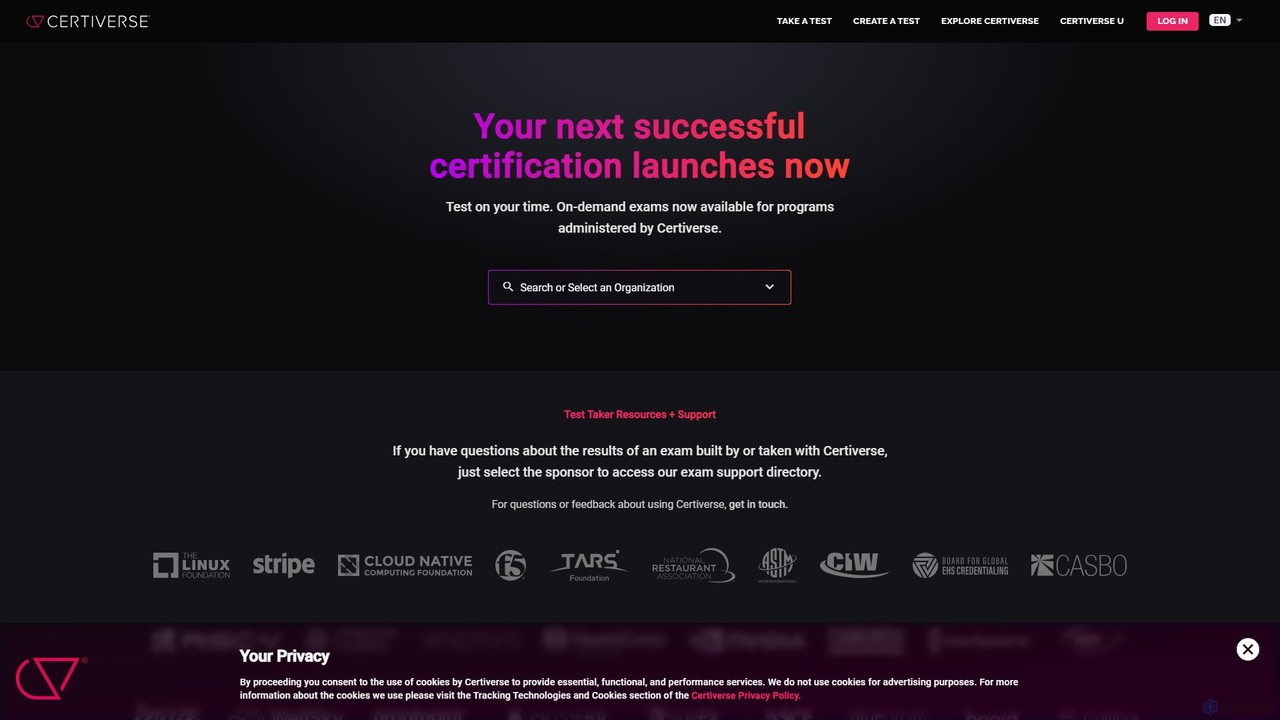
Certiverse is an AI-powered, end-to-end platform that revolutionizes certification exam development. It enables organizations to create and launch high-quality, psychometrically sound exams in weeks instead of months, at a fraction of the cost of traditional methods by leveraging a global network of subject matter experts for asynchronous content creation.

Certification Management
Visits 68.8KFavorites 123Likes 126

About Certification Management

Certification Management tools are specialized AI-powered platforms for creating, issuing, tracking, and verifying digital credentials. These systems use automation to manage the entire lifecycle of a certificate, from awarding it upon course completion to providing instant, fraud-proof validation for third parties. They enhance the credibility of training programs, reduce administrative overhead, and provide learners with secure, shareable proof of their skills. This focus on verifiable digital credentials distinguishes them from broader business or learning management systems.

Core Features

  • Digital Credential Issuance: Automatically generate and distribute secure digital certificates, badges, and micro-credentials.
  • Instant Verification: Provide a public or private portal for employers and institutions to instantly validate a credential's authenticity.
  • Lifecycle Automation: Track expiration dates, manage renewals, and send automated reminders to credential holders.
  • Analytics Dashboard: Offer insights into program performance, completion rates, and skill distribution across an organization.
  • LMS/HRIS Integration: Connect with existing learning and HR systems to automate issuance upon task completion.

Use Cases

These tools are primarily used by educational institutions, corporate training departments, and professional associations. For example, an online learning platform can automatically issue a verifiable certificate when a student passes a final exam, or a company can manage mandatory compliance certifications for its entire workforce, tracking renewals and ensuring audit readiness.

How to Choose

When selecting a tool, evaluate its security features (like blockchain support), integration capabilities with your existing LMS or HR software, and scalability to handle your volume of learners. Also, consider the customization options for certificate design and the depth of analytics provided to measure program effectiveness.

Certification Management use cases

1

Automating Compliance Training Certification

An HR department in a regulated industry like finance uses a certification tool to automate issuing annual compliance certificates. When an employee completes a mandatory course in the company's LMS, the tool automatically generates a time-stamped, verifiable certificate and logs it in the employee's file. This process reduces manual work, ensures a clear audit trail, and sends renewal reminders before expiration, maintaining continuous compliance.

2

Managing Professional Association Credentials

A national engineering association uses the platform to issue professional designations. The tool manages applications, tracks continuing education credits, and issues secure digital badges that members can display on their LinkedIn profiles. Employers can click the badge to instantly verify the member's standing with the association, enhancing the credential's value and trustworthiness.

3

Issuing Verifiable Certificates for Online Courses

An online education provider integrates a certification management tool with its platform. Upon course completion, students immediately receive a secure, shareable digital certificate. This improves the student experience and allows graduates to easily showcase their skills to potential employers, who can verify the certificate's authenticity with a single click, effectively combating certificate fraud.

4

Powering University Micro-Credential Programs

A university's continuing education department offers short-term skill bootcamps. They use a certification tool to issue digital micro-credentials for specific skills like 'Python for Data Analysis'. These credentials can be stacked over time and provide students with tangible, verifiable proof of specialized knowledge, making them more competitive in the job market.

5

Certifying Software Skills for Channel Partners

A tech company provides training for its sales and support partners. Using a certification management system, they issue tiered certifications (e.g., 'Certified Sales Professional'). This ensures partners have the required knowledge, provides a clear skills framework, and allows the company to track the expertise level across its entire partner ecosystem, identifying top performers and areas for improvement.

6

Tracking Internal Employee Skill Badges

A large enterprise's L&D team creates an internal skills academy. As employees complete training modules for skills like 'Project Management', they earn digital badges. The certification management tool acts as a central repository, creating a 'skills wallet' for each employee. This helps managers identify internal talent for projects and supports data-driven career pathing within the organization.

Certification Management FAQ

What is AI Certification Management?

AI Certification Management refers to software platforms that automate the creation, issuance, tracking, and verification of digital credentials like certificates and badges. They use AI and automation to streamline the entire process, from a learner completing a course to an employer verifying the credential's authenticity. Key features include secure digital issuance, instant validation portals, and automated renewal management.

How do I choose the right Certification Management tool?

When selecting a tool, consider these factors:

  • Security: Does it offer features like blockchain verification to prevent fraud?
  • Integration: Can it connect seamlessly with your existing Learning Management System (LMS) or HRIS?
  • Scalability: Can it handle your current and future volume of learners and certificates?
  • Customization: How much control do you have over the design and branding of your credentials?
  • Analytics: Does it provide meaningful data on your certification programs?
What's the difference between a Certification Management tool and an LMS?

A Learning Management System (LMS) focuses on delivering educational content and managing the learning process. A Certification Management tool specializes in what happens *after* learning is complete: issuing a secure, verifiable, and shareable credential. While some LMS platforms have basic certificate generation, dedicated certification tools offer advanced features like fraud prevention, third-party verification portals, and lifecycle management (e.g., expirations and renewals).

Who benefits from using Certification Management software?

A wide range of organizations benefit, including:

  • Educational Institutions: To issue credible degrees, diplomas, and course certificates.
  • Corporate L&D: To manage internal training, compliance, and skill development certifications.
  • Professional Associations: To administer and maintain professional designations for members.
  • Learners/Employees: They receive a secure, portable, and easily shareable proof of their accomplishments.
Can these tools issue more than just traditional certificates?

Yes. Modern certification management platforms are built on the concept of 'digital credentials.' This includes not only traditional certificates but also digital badges and micro-credentials. These formats are often more flexible, easily shareable on social media like LinkedIn, and can contain rich metadata about the skills and criteria met to earn them, providing deeper context than a simple PDF.