Business Best in category 1 results Churn Management AI Tool

Popular AI tools in the Churn Management field of Business include Slicker, etc., helping you quickly improve efficiency.

Slicker

Slicker

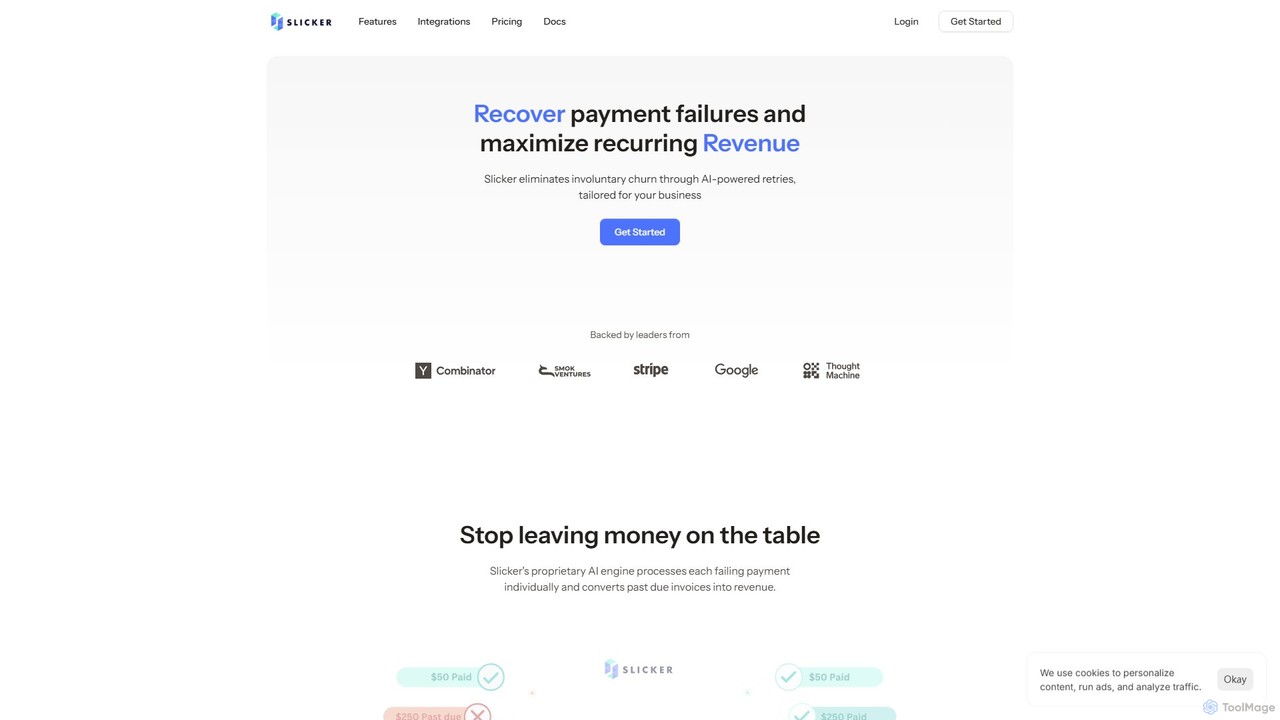
Slicker is an AI-powered platform designed to automatically recover failed recurring payments and reduce involuntary churn for subscription-based …

9.8K

About Churn Management

Churn Management AI tools are specialized solutions designed to predict, analyze, and prevent customer attrition. These tools leverage machine learning and predictive analytics to identify customers at risk of leaving, understand the underlying reasons, and enable proactive retention strategies. By transforming raw customer data into actionable insights, they help businesses safeguard revenue, enhance customer lifetime value, and foster stronger customer relationships. They are an essential component of a robust business strategy focused on sustainable growth.

Core Features

  • Predictive Churn Modeling: Utilizes AI to forecast which customers are likely to churn based on historical data and behavioral patterns.
  • Root Cause Analysis: Identifies the primary drivers behind customer attrition through data mining and sentiment analysis.
  • Customer Segmentation: Groups customers by churn risk, value, and behavior to enable targeted retention efforts.
  • Retention Campaign Optimization: Recommends personalized offers and interventions to maximize the effectiveness of retention campaigns.
  • Real-time Monitoring: Provides continuous insights into customer health and early warning signs of dissatisfaction.

Applicable Scenarios

SaaS companies, e-commerce platforms, telecommunication providers, and subscription services heavily rely on Churn Management AI. These tools are crucial for customer success teams to proactively engage at-risk users, for marketing departments to tailor retention campaigns, and for product teams to identify areas for improvement based on churn drivers.

How to Choose

When selecting a Churn Management AI tool, consider its predictive accuracy and the clarity of its insights. Evaluate its integration capabilities with existing CRM, marketing automation, and data platforms. Look for customizable models that adapt to your specific business logic and data, and assess the tool's ability to recommend actionable, personalized retention strategies. Scalability and user-friendliness for non-technical users are also key factors.

Churn ManagementUse Cases

1

Predictive Churn Risk Identification for SaaS

A SaaS Product Manager uses AI Churn Management tools to proactively identify users at high risk of churning. The AI analyzes user engagement, feature adoption, support ticket history, and billing data to flag accounts showing early warning signs. This allows the product team to intervene with targeted educational content or feature updates before the customer decides to leave, significantly reducing potential revenue loss.

2

Automating Personalized Retention Campaigns

A Marketing Manager at a subscription service leverages AI Churn Management to automate personalized retention campaigns. The AI segments at-risk customers based on their churn probability and value, then suggests tailored offers like discounts or feature upgrades. This enables the manager to deploy highly relevant campaigns automatically, improving customer engagement and increasing the likelihood of retention by up to 20% compared to generic offers.

3

Analyzing Root Causes of Customer Attrition in E-commerce

An E-commerce Customer Success Lead uses AI Churn Management to understand the root causes of customer attrition. The AI processes customer feedback, support interactions, product return data, and browsing behavior to pinpoint common issues like poor product quality, shipping delays, or website usability problems. This data-driven insight allows the lead to collaborate with product and operations teams to implement targeted improvements, leading to a measurable reduction in churn and improved customer satisfaction.

4

Proactive Engagement for High-Value B2B Accounts

An Account Manager in a B2B services company uses AI Churn Management to proactively engage high-value accounts. The AI monitors key usage metrics, sentiment from communication, and contract milestones to identify subtle shifts in client behavior that might indicate dissatisfaction or an intent to churn. The system then alerts the account manager, providing context and suggesting personalized outreach strategies, enabling timely interventions that strengthen client relationships and prevent significant revenue loss.

5

Optimizing Onboarding to Reduce Early Churn in Mobile Apps

A Growth Manager for a mobile app uses AI Churn Management to optimize the onboarding process and reduce early churn. The AI analyzes user behavior during the initial trial period, identifying common friction points or drop-off patterns. By predicting which new users are most likely to churn within the first week, the tool enables the manager to trigger targeted in-app messages, tutorials, or support outreach, significantly improving activation rates and long-term retention for new users.

6

Dynamic Pricing and Offer Optimization for Retention

A Revenue Operations Manager in a telecommunications company uses AI Churn Management to optimize retention offers. The AI models predict customer response to various discounts, plan upgrades, or loyalty rewards based on their individual churn risk and historical preferences. This allows the manager to dynamically adjust offers, ensuring that retention efforts are both effective in preventing churn and cost-efficient, maximizing the return on investment for retention campaigns without over-discounting.

Churn ManagementFrequently Asked Questions