ToolMage
Sign in

Best 1 Communication Tools for Business

Popular Communication Tools in Business include StenifyAI, helping you work more efficiently.

StenifyAI
Freemium

StenifyAI

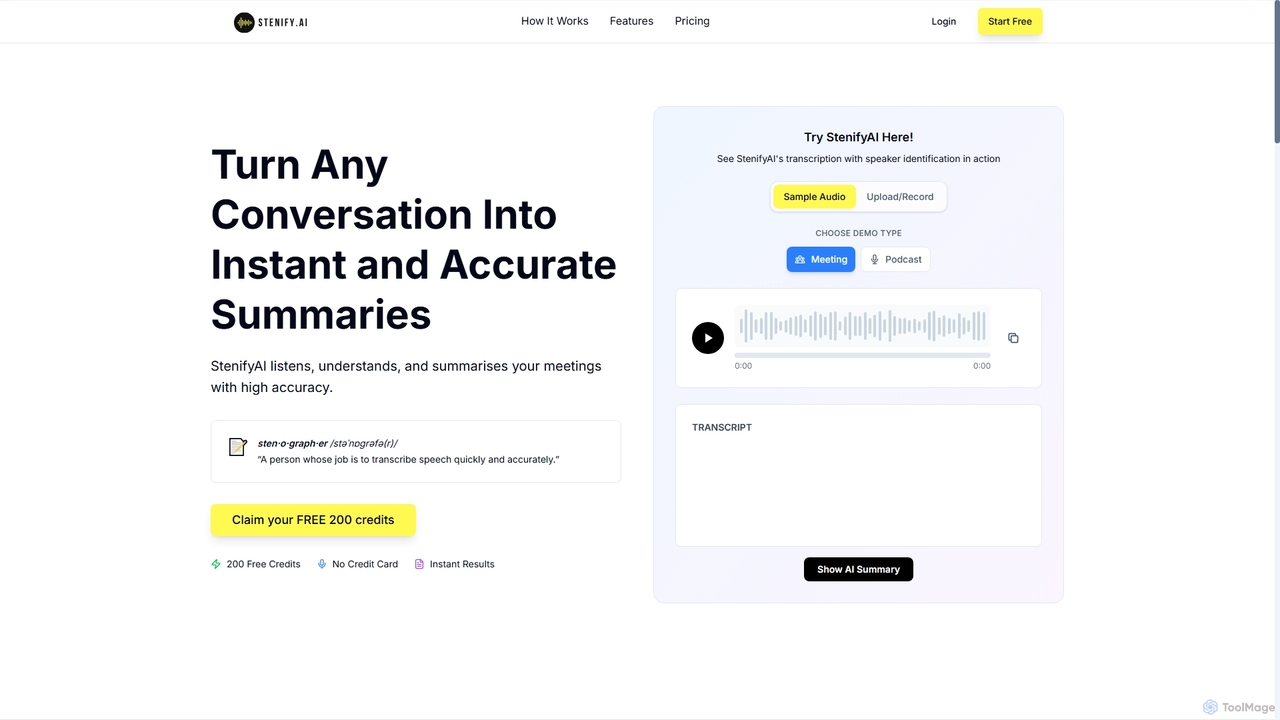
StenifyAI transforms any conversation into instant, accurate summaries and transcripts with speaker identification. It streamlines meeting documentation, saving teams valuable time and ensuring consistent, searchable records across 99 languages.

Communication Tools
Visits 9KFavorites 110Likes 95

About Communication Tools

Communication Tools are AI-powered applications designed to enhance and automate various aspects of human and machine interaction within business and personal contexts. Leveraging advanced Natural Language Processing (NLP) and machine learning, these tools facilitate seamless information exchange, improve clarity, and streamline workflows. They are invaluable for optimizing customer service, fostering global team collaboration, and personalizing outreach, ultimately boosting efficiency and effectiveness across diverse communication channels.

Core Features

  • AI Chatbots & Virtual Assistants: Automate responses to common queries, provide instant support, and guide users through processes.
  • Real-time Translation: Break down language barriers in live conversations, meetings, and written communications.
  • Sentiment Analysis & Tone Detection: Analyze text and speech to understand emotional context, helping tailor responses and gauge audience reception.
  • Automated Meeting Summarization: Transcribe discussions, identify key decisions, and generate concise summaries and action items.
  • Smart Notification Management: Prioritize and filter communications, ensuring users focus on critical information and reduce digital overload.

Use Cases

These tools are widely adopted across various sectors to transform how individuals and organizations connect. They are essential for customer support teams managing high inquiry volumes, enabling 24/7 assistance and consistent responses. Multinational corporations utilize them to bridge linguistic gaps, ensuring smooth collaboration among diverse global teams. Sales and marketing professionals leverage AI communication for personalized outreach at scale, crafting targeted messages that resonate with individual prospects.

How to Choose

When selecting an AI communication tool, prioritize its integration capabilities with existing CRM, project management, or collaboration platforms to ensure a unified ecosystem. Evaluate its scalability to accommodate your team's growth and user capacity requirements. Security and data privacy features are paramount, especially when handling sensitive information. Finally, consider the level of customization and training options available to tailor the AI's behavior and knowledge base to your specific organizational needs.

Communication Tools use cases

1

Automated Customer Support

Customer service managers deploy AI chatbots and virtual assistants to handle a high volume of routine inquiries around the clock. These tools provide instant answers to FAQs, guide users through troubleshooting steps, and efficiently escalate complex issues to human agents. This significantly reduces response times, improves customer satisfaction by offering immediate assistance, and frees up human agents to focus on more intricate problems, leading to substantial operational savings.

2

Enhancing Global Team Collaboration

For project managers in multinational companies, facilitating seamless communication across diverse linguistic backgrounds is crucial. AI communication tools offer real-time translation features for video conferences, chat platforms, and document sharing. This eliminates language barriers, fosters better understanding among team members, and ensures that all participants can contribute effectively, ultimately boosting cross-border project productivity and cohesion.

3

Streamlining Meeting Management

Team leads and executives often struggle with capturing key decisions and action items from numerous virtual meetings. AI meeting assistants automatically transcribe discussions, identify speakers, and generate concise summaries, including crucial decisions, assigned tasks, and deadlines. This ensures accurate record-keeping, provides clear follow-ups for all participants, and saves considerable time previously spent on manual note-taking and distributing minutes.

4

Personalized Sales & Marketing Outreach

Sales representatives and marketing specialists utilize AI writing assistants to craft highly personalized emails, social media messages, and ad copy at scale. By analyzing prospect data, past interactions, and intent signals, these tools generate tailored content that resonates with individual recipients. This approach leads to significantly higher engagement rates, more qualified leads, and a more efficient sales funnel, driving revenue growth.

5

Internal Knowledge Sharing & Onboarding

HR and training managers leverage internal AI knowledge base chatbots to provide quick and consistent access to company policies, HR information, and training materials for employees, especially new hires. Employees can ask questions in natural language and receive immediate, accurate answers, reducing the burden on HR staff. This facilitates faster onboarding, improves employee self-service, and ensures consistent information dissemination across the organization.

6

Crisis Communication & Sentiment Monitoring

PR and marketing specialists use AI sentiment analysis tools to monitor public perception and manage brand reputation, particularly during critical events or crises. These tools track mentions across social media, news outlets, and forums, identifying shifts in sentiment and urgent issues in real-time. This enables proactive issue management, allows for timely and appropriate responses, and helps protect the brand's image by addressing concerns before they escalate.

Communication Tools FAQ

What are AI Communication Tools?

AI Communication Tools are software applications that integrate artificial intelligence, primarily Natural Language Processing (NLP) and machine learning, to automate, enhance, and analyze various forms of communication. Unlike traditional tools, they can understand context, generate human-like text, translate languages in real-time, and analyze sentiment, making interactions more efficient and insightful. They are widely used in customer service, team collaboration, and marketing.

How do AI Communication Tools differ from traditional communication software?

The key difference lies in AI's ability to understand, learn, and automate complex communication tasks. Traditional software (like email or basic chat) provides a platform for communication but requires manual input and interpretation. AI tools, however, can automatically draft responses, summarize conversations, translate languages, detect sentiment, and even predict user needs, significantly reducing manual effort and adding intelligence to interactions.

What are the main benefits of using AI Communication Tools in business?

Businesses benefit from AI Communication Tools through increased efficiency, improved customer experience, and enhanced decision-making. They automate routine tasks, allowing human teams to focus on complex issues. Real-time translation and sentiment analysis foster better global collaboration and more empathetic customer interactions. Furthermore, AI provides valuable insights from communication data, helping businesses understand trends and optimize strategies.

What should I consider when choosing an AI Communication Tool?

When selecting an AI communication tool, evaluate its core functionalities against your specific needs, such as chatbot capabilities, translation accuracy, or summarization quality. Consider its integration potential with your existing tech stack (CRM, project management). Assess its scalability for future growth, robust security features for data protection, and the level of customization available to align with your brand voice and operational workflows. Finally, review pricing models and user support.

Can AI Communication Tools replace human interaction entirely?

No, AI Communication Tools are designed to augment, not entirely replace, human interaction. While they excel at handling repetitive tasks, providing instant information, and analyzing data at scale, they lack the nuanced empathy, complex problem-solving abilities, and creative thinking inherent in human communication. They serve as powerful assistants, freeing up human agents to focus on high-value, emotionally intelligent interactions and strategic decision-making.