Business Best in category 1 results Content Management System AI Tool

Popular AI tools in the Content Management System field of Business include FireCMS, etc., helping you quickly improve efficiency.

FireCMS

FireCMS

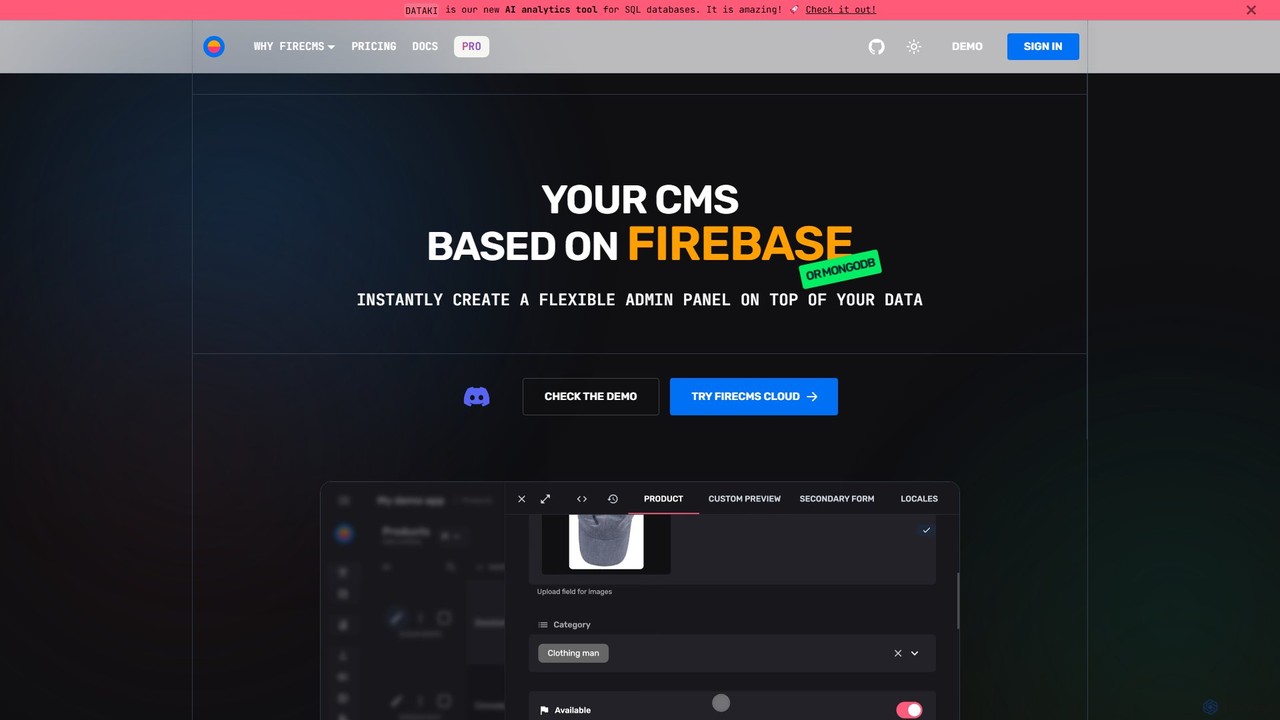
FireCMS is an open-source, headless CMS and admin panel builder for Firebase and MongoDB. It enables developers and …

24.2K

About Content Management System

An AI Content Management System (CMS) is a platform for creating, managing, and publishing digital content, enhanced with artificial intelligence capabilities. These systems leverage AI to automate tasks such as content generation, SEO optimization, and personalized user experiences. They empower marketing teams, publishers, and businesses to streamline content workflows, make data-driven decisions, and scale content production efficiently. Unlike traditional CMS, AI-powered versions actively assist throughout the entire content lifecycle, from ideation to performance analysis.

Core Features

  • AI-Assisted Content Creation: Generates content drafts, headlines, summaries, and translations using generative AI models.
  • Automated SEO Optimization: Provides real-time suggestions for keywords, readability, internal linking, and meta tags to improve search rankings.
  • Personalized Content Delivery: Dynamically adapts website content, product recommendations, and offers to individual users based on their behavior and profile.
  • Intelligent Asset Management: Automatically tags images, videos, and documents with relevant keywords, making them easily searchable and reusable.
  • Predictive Analytics: Analyzes content performance and forecasts trends to provide actionable insights for future content strategy.

Use Cases

AI CMS platforms are ideal for enterprise marketing departments, large-scale media publishers, and e-commerce businesses that manage a high volume of content. They are used to power corporate blogs, news portals, complex product catalogs, and multi-channel marketing campaigns, where efficiency and personalization are critical for success.

How to Choose

When selecting an AI CMS, consider the depth of its AI feature set, from content generation to analytics. Evaluate its integration capabilities with your existing marketing stack (e.g., CRM, analytics). Assess the platform's architecture (headless vs. traditional) for scalability and flexibility. Finally, ensure the user interface is intuitive for non-technical content creators and marketers.

Content Management SystemUse Cases

1

Automating a Corporate Blog's Content Pipeline

A content marketing manager for a B2B tech company uses an AI CMS to streamline their entire blogging process. The AI suggests relevant, high-traffic topics based on industry trends. It then generates detailed outlines and first drafts for articles, which the human writer refines. As the content is written, the CMS provides real-time SEO scores and suggestions for improvement. This approach reduces content creation time by over 40% and helps the team publish more high-quality, optimized articles consistently.

2

Personalizing an E-commerce Shopping Experience

An e-commerce manager uses an AI CMS to deliver a unique experience to each visitor. The system analyzes a user's browsing history, past purchases, and real-time behavior. Based on this data, it automatically customizes the homepage, showing product carousels and promotional banners most relevant to that user's interests. This level of personalization, managed directly within the CMS, leads to higher engagement, increased average order value, and improved customer loyalty without manual intervention for each user segment.

3

Managing a Multilingual News Portal Efficiently

A global media organization uses an AI CMS to manage its news portal, which publishes content in over ten languages. When an editor publishes an article in English, the AI automatically generates high-quality translations for all other languages. It also suggests relevant tags and categories for each language based on the content's context. This automates a previously time-consuming process, ensuring timely news delivery to a global audience and maintaining consistency across all regional sites.

4

Optimizing Landing Page Content with A/B Testing

A digital marketer needs to maximize conversions on a new campaign landing page. Using the AI CMS, they create a primary version of the page. The AI then automatically generates five alternative headlines and two different call-to-action (CTA) button texts. The CMS runs an automated A/B test, distributing traffic evenly among all variations. After collecting enough data, it identifies the winning combination and automatically sets it as the default version, significantly improving the page's conversion rate without manual testing setup.

5

Streamlining Digital Asset Management for a Creative Team

A large enterprise's creative team uploads hundreds of new photos and videos to their digital asset library each week. Their AI CMS automatically analyzes each file upon upload. It generates descriptive tags (e.g., 'office meeting,' 'laptop,' 'team collaboration'), writes alt-text for images, and even transcribes video content. This intelligent tagging makes assets instantly searchable for marketers and designers across the company, saving hours of manual organization and ensuring brand assets are easily found and reused.

6

Ensuring Brand Voice Consistency Across All Content

A brand manager for a global consumer goods company establishes specific brand voice and style guidelines within their AI CMS. The system acts as a real-time editor for all content creators. As writers draft product descriptions, blog posts, or social media updates, the AI flags words, phrases, or tones that deviate from the defined brand voice. It suggests on-brand alternatives, ensuring that all published content, regardless of who wrote it, maintains a consistent and recognizable brand identity, strengthening brand trust and recall.

Content Management SystemFrequently Asked Questions