
ToolMage
Sign in

Best 1 Corporate Cards AI tools for Business

Popular Corporate Cards AI tools in Business include alaan, helping you work more efficiently.

alaan
Freemium

alaan

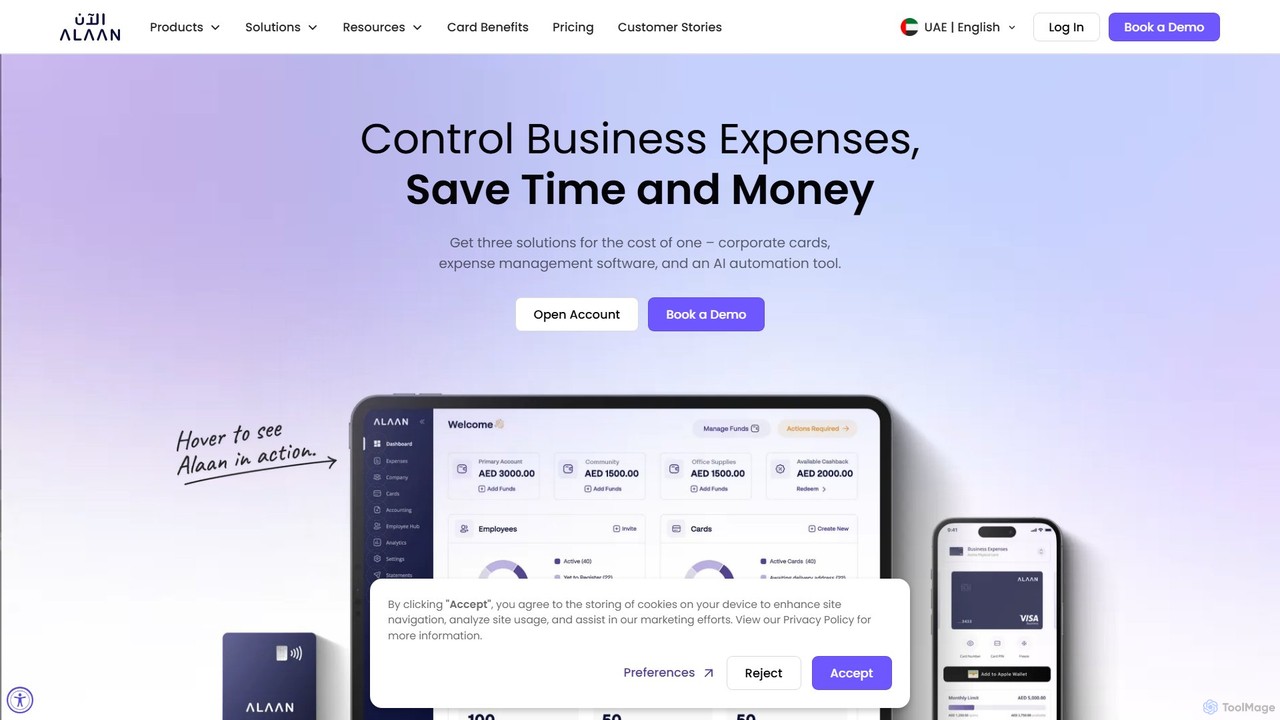
Alaan is an AI-powered spend management platform for UAE businesses, providing smart corporate cards and automated expense tracking. It helps companies gain real-time visibility and control over spending, automate financial workflows, and achieve significant savings through cashback and AI-driven insights. It's designed to eliminate manual expense reports and streamline financial operations for businesses of all sizes.

Corporate Cards
Visits 116.3KFavorites 127Likes 128

About Corporate Cards

AI-powered Corporate Cards are integrated financial platforms that combine physical and virtual cards with intelligent software to streamline and control company spending. These systems leverage AI to automate expense reporting, enforce spending policies in real-time, and provide deep analytical insights into cash flow. By connecting spending directly to accounting systems, they eliminate manual reconciliation and provide businesses with enhanced visibility and control over their expenditures. This approach transforms corporate spending from a reactive accounting task into a proactive strategic tool.

Core Features

  • Smart Spend Controls: Set dynamic, granular limits on cards by user, vendor, category, or time frame to prevent out-of-policy spending before it happens.
  • Automated Expense Management: AI automatically captures receipt data, categorizes transactions, and matches them to expenses, eliminating the need for manual reports.
  • Real-time Visibility: A centralized dashboard offers an immediate, live view of all company-wide transactions, helping managers track budgets and identify spending patterns.
  • Seamless Accounting Integration: Direct synchronization with major accounting software like QuickBooks, Xero, and NetSuite automates bookkeeping and accelerates financial closing.

Applicable Scenarios

These platforms are ideal for modern businesses of all sizes, from startups needing to manage venture capital efficiently to large enterprises aiming to digitize their financial operations. They are particularly valuable for companies with remote employees, field sales teams, or significant online advertising and SaaS subscription costs.

Selection Criteria

When choosing a corporate card solution, evaluate its integration capabilities with your existing accounting and HR software. Consider the fee structure, including any monthly fees, transaction fees, or foreign exchange rates. Also, assess the sophistication of its spend control features and the quality of its analytics and reporting tools.

Corporate Cards use cases

1

Manage and Control SaaS Subscription Spend

Tech companies and IT departments can issue a unique virtual corporate card for each SaaS subscription (e.g., Slack, AWS, Adobe). This allows them to set precise monthly spending limits for each service, instantly freeze a card if a subscription is cancelled, and track software spend by department. The AI platform automatically categorizes these recurring payments, providing a clear overview of software costs and preventing 'shadow IT' spending, which simplifies budget allocation and vendor management.

2

Automate Marketing Campaign Budget Tracking

Marketing teams can create dedicated virtual cards for each advertising campaign on platforms like Google Ads or Facebook. They can set a total campaign budget on the card, which automatically declines transactions once the limit is reached. This prevents overspending and provides real-time data on ad spend without waiting for invoices. All transactions are automatically categorized, allowing for precise ROI analysis for each campaign directly within the financial dashboard.

3

Streamline Employee Travel and Expense (T&E) Reporting

For employees who travel, such as sales teams, physical corporate cards can be issued with built-in spending policies. For example, limits can be set for daily meals or approved hotel chains. When an employee makes a purchase, they receive an instant notification to snap a photo of the receipt via a mobile app. The AI then automatically matches the receipt to the transaction, eliminating the need for manual expense reports and accelerating reimbursement cycles.

4

Empower Teams with Controlled Project Budgets

Project managers can provide team members, including freelancers, with virtual cards tied to a specific project budget. This empowers them to make necessary purchases (e.g., software, stock assets) without using personal funds or slow procurement processes. All spending is tracked against the project's budget in real-time, giving managers full visibility and control, ensuring projects stay on track financially.

5

Simplify Office and Remote Work Procurement

An office manager or HR department can use a corporate card to manage all office supply purchases, employee wellness perks, or remote work equipment stipends. The card can be restricted to specific merchant categories (e.g., office supplies, electronics stores) to ensure funds are used as intended. This centralizes purchasing, simplifies bookkeeping, and provides a clear audit trail for all operational expenses, whether for a central office or a distributed workforce.

6

Secure and Monitor One-Time Vendor Payments

When a business needs to make a one-time purchase from a new vendor, a single-use virtual corporate card provides an extra layer of security. The card can be generated for the exact purchase amount and automatically deactivates after the transaction is complete. This mitigates the risk of card fraud and prevents unauthorized recurring charges, making it a secure method for online procurement and ad-hoc vendor payments.

Corporate Cards FAQ

What are AI-powered corporate cards?

AI-powered corporate cards are financial management systems that pair physical or virtual payment cards with intelligent software. Unlike simple credit cards, they offer real-time spend controls, automated expense reporting through AI-driven receipt scanning and categorization, and seamless integration with accounting software. Their primary purpose is to give businesses proactive control and visibility over all employee spending.

How do corporate cards differ from traditional business credit cards?

The main difference lies in control and automation. Traditional business credit cards primarily offer a line of credit with basic transaction statements. AI-powered corporate cards are complete spend management platforms. They allow businesses to set granular, pre-emptive spending rules on each card, automate the entire expense reporting process, and sync data directly into their accounting systems in real-time, which traditional cards cannot do.

How do I choose the right corporate card platform?

To choose the right platform, consider these factors:

  • Integration: Ensure it seamlessly connects with your existing accounting software (e.g., QuickBooks, Xero, NetSuite).
  • Spend Controls: Evaluate how granular and flexible the spending rules are. Can you set limits by merchant, category, and time?
  • Card Types: Determine if you need physical cards, virtual cards for online spending, or both.
  • Pricing: Understand the fee structure, including monthly fees, rewards programs, and foreign transaction fees.
What are the key benefits of using a corporate card system?

The key benefits include enhanced financial control, significant time savings, and improved data accuracy. Businesses gain real-time visibility into spending, preventing budget overruns before they occur. Automation of expense reports and receipt collection frees up employees and finance teams from tedious manual work. Finally, direct integration with accounting software eliminates data entry errors and accelerates the monthly financial closing process.

Who are corporate cards best suited for?

Corporate cards are suited for a wide range of businesses, especially those looking to modernize their financial operations. They are particularly beneficial for:

  • Startups and SMBs: To manage cash flow tightly and establish scalable financial processes from the start.
  • Companies with remote or traveling employees: To simplify expense reporting and enforce policies from anywhere.
  • Marketing-heavy businesses: To control and track digital ad spend and SaaS subscriptions efficiently.
  • Enterprises: To digitize procurement and decentralize purchasing while maintaining central control.