
ToolMage
Sign in

Best 1 Corporate Law AI tools for Business

Popular Corporate Law AI tools in Business include LegalTranslations.com, helping you work more efficiently.

LegalTranslations.com
Paid

LegalTranslations.com

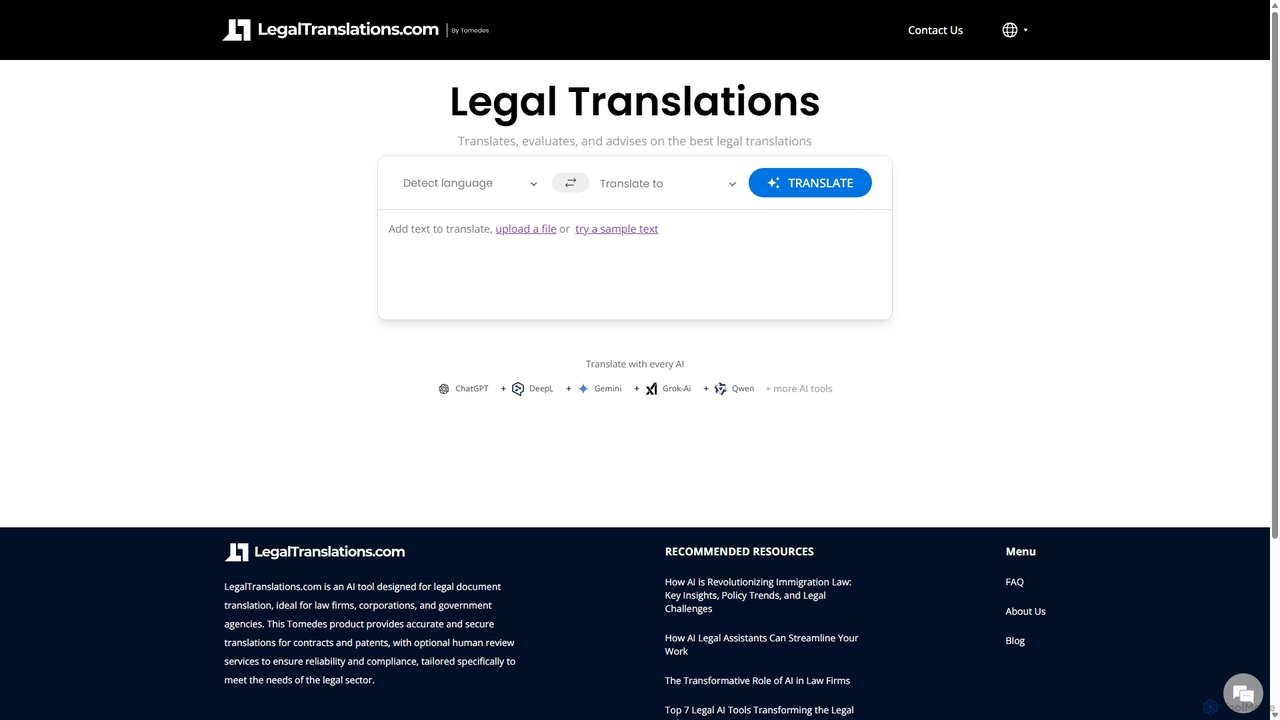
An AI-powered translation platform specializing in legal documents for law firms, corporations, and government agencies. It combines advanced AI with optional human review by legal experts to deliver fast, accurate, and secure translations of contracts, patents, and other sensitive legal materials.

Corporate Law
Visits 6.9KFavorites 142Likes 126

About Corporate Law

AI-powered Corporate Law tools are specialized platforms designed to assist legal professionals and businesses in managing complex corporate legal matters. These tools leverage natural language processing (NLP), machine learning, and advanced analytics to automate tasks, ensure compliance, and streamline legal operations. They provide significant value by enhancing efficiency, reducing risks, and offering deeper insights into legal documents and regulatory frameworks. This technology is transforming how legal departments and law firms handle corporate governance, transactions, and regulatory adherence.

Core Features

  • Automated Contract Review: Analyzes legal agreements for key clauses, risks, and compliance issues, highlighting discrepancies.
  • Regulatory Compliance Monitoring: Tracks changes in corporate law and regulations, alerting users to potential non-compliance risks.
  • Due Diligence Assistance: Expedites the review of large volumes of documents during mergers, acquisitions, or investments.
  • Legal Research & Analytics: Provides rapid access to case law, statutes, and legal precedents, with analytical insights.
  • Document Generation & Management: Automates the creation of standard legal documents and manages their lifecycle.

Use Cases

Corporate Law AI tools are indispensable for in-house legal departments, law firms specializing in corporate law, and compliance officers. They are used to manage the legal aspects of business operations, from daily governance to complex transactions.

How to Choose

When selecting Corporate Law AI tools, prioritize solutions with robust NLP capabilities for accurate document analysis and a comprehensive database of relevant legal precedents and regulations. Consider the tool's integration with existing legal tech stacks, its ability to customize workflows, and the level of data security and confidentiality offered. User-friendliness and vendor support are also crucial for seamless adoption and long-term effectiveness.

Corporate Law use cases

1

Streamlining M&A Due Diligence

For corporate legal teams and M&A advisors, these tools significantly accelerate the due diligence process. By rapidly analyzing thousands of contracts, financial statements, and regulatory filings, AI identifies critical risks, liabilities, and compliance gaps. This reduces manual review time by up to 70%, allowing legal professionals to focus on strategic negotiation and complex problem-solving, ensuring a more thorough and efficient transaction.

2

Ensuring Global Regulatory Compliance

Multinational corporations face a labyrinth of ever-changing global regulations. AI Corporate Law tools continuously monitor legal updates across jurisdictions, automatically flagging potential non-compliance issues in contracts or internal policies. Compliance officers can proactively adapt strategies, mitigate legal risks, and avoid costly penalties, maintaining adherence to diverse legal frameworks without extensive manual tracking.

3

Automated Contract Lifecycle Management

In-house legal departments can leverage AI for end-to-end contract management. From automated drafting of standard agreements (NDAs, vendor contracts) to intelligent review of incoming third-party contracts for unfavorable clauses, these tools streamline the entire lifecycle. They ensure consistency, reduce drafting errors, and provide real-time insights into contract obligations and expiry dates, freeing up legal counsel for high-value tasks.

4

Enhancing Legal Research Efficiency

Legal researchers and litigators benefit from AI tools that can quickly sift through vast legal databases, case law, statutes, and academic articles. These tools identify relevant precedents, summarize complex legal texts, and highlight key arguments, drastically cutting down research time. This allows for more comprehensive and precise legal arguments, strengthening legal strategies and improving case outcomes.

5

Risk Assessment in Corporate Governance

Boards of directors and corporate secretaries use AI to assess and mitigate governance risks. These tools analyze internal policies, board minutes, and public disclosures against regulatory requirements and best practices. They can identify potential conflicts of interest, governance gaps, or areas of non-compliance, providing actionable insights to strengthen corporate oversight and ethical conduct.

6

Intellectual Property Portfolio Management

For businesses with extensive IP portfolios, AI Corporate Law tools assist in managing trademarks, patents, and copyrights. They can monitor for potential infringements, analyze the strength of existing IP, and help with the automated filing and renewal processes. This ensures robust protection of intellectual assets, reduces administrative burden, and supports strategic IP development.

Corporate Law FAQ

What are AI Corporate Law tools?

AI Corporate Law tools are specialized software applications that use artificial intelligence, primarily natural language processing and machine learning, to assist with corporate legal tasks. They automate processes like contract analysis, regulatory compliance monitoring, and legal research, aiming to enhance efficiency, accuracy, and risk management for legal professionals and businesses. These tools are distinct from general business AI by their focus on legal-specific data and regulatory frameworks.

How do AI Corporate Law tools differ from general business AI solutions?

While general business AI solutions focus on broad operational efficiency (e.g., CRM, marketing automation), AI Corporate Law tools are specifically tailored to the nuances of legal language, regulatory frameworks, and legal processes. They are trained on vast datasets of legal documents, case law, and statutes, enabling them to understand legal context, identify specific clauses, and assess compliance risks with a precision that general AI tools cannot match. Their core value lies in legal-specific automation and insight.

What are the main benefits of using AI in corporate law?

The main benefits include significantly increased efficiency in tasks like contract review and due diligence, leading to substantial time and cost savings. They enhance accuracy by reducing human error in compliance checks and document analysis. Furthermore, these tools improve risk management by proactively identifying potential legal issues and ensuring adherence to complex regulatory landscapes. They also provide deeper analytical insights, empowering better strategic legal decision-making.

Who primarily uses AI Corporate Law tools?

AI Corporate Law tools are primarily used by in-house legal departments of corporations, law firms specializing in corporate law, compliance officers, corporate secretaries, and M&A advisors. These professionals leverage the tools to manage legal operations, ensure regulatory adherence, conduct due diligence for transactions, and streamline legal research, ultimately supporting sound corporate governance and business strategy.

What should I consider when selecting an AI Corporate Law tool?

When selecting an AI Corporate Law tool, consider its specific functionalities (e.g., contract analysis, compliance, research), the accuracy and reliability of its AI models, and its ability to integrate with your existing legal tech infrastructure. Evaluate its data security protocols, user interface, and the vendor's reputation for support and continuous updates. Scalability, customization options, and pricing models are also crucial factors to ensure it meets your organization's specific needs and budget.