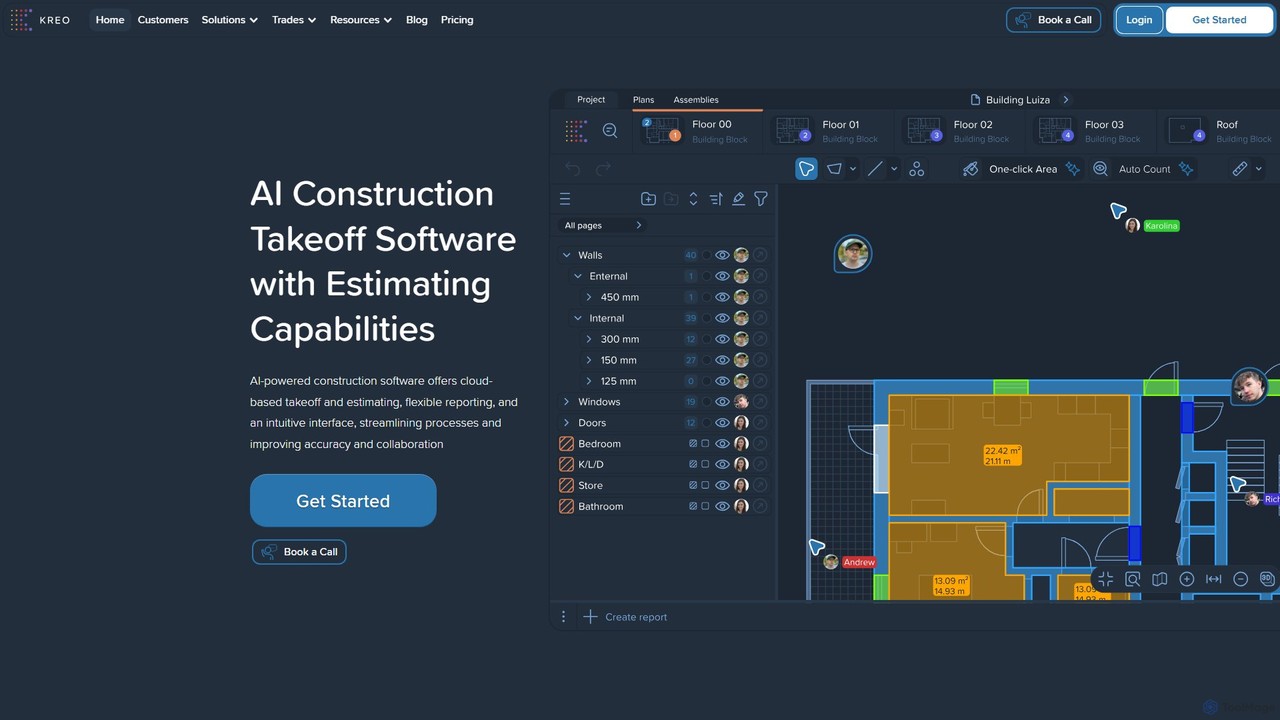
AI Cost Estimation tools are specialized applications that use machine learning to predict project, product, or operational costs with high accuracy. By analyzing historical data, market trends, and multiple project variables, these tools identify hidden patterns to generate reliable financial forecasts. They empower businesses to create precise budgets, submit competitive bids, and mitigate financial risks before they occur. This data-driven approach surpasses traditional spreadsheet methods by offering dynamic, multi-dimensional analysis.
Core Features
- Predictive Modeling: Utilizes historical data and machine learning algorithms to forecast future costs.
- Variable Analysis: Identifies and weighs the key factors that most significantly impact overall expenses.
- Scenario Simulation: Allows users to model different "what-if" scenarios to understand potential cost variations.
- Risk Assessment: Quantifies the probability and potential impact of cost overruns based on project uncertainties.
- Data Integration: Connects with financial, project management, and ERP systems to pull in real-time data.
Use Cases
These tools are invaluable in industries like software development for quoting client projects, construction for budgeting materials and labor, and manufacturing for forecasting production runs. They are also used by financial analysts and project managers to ensure projects remain within budget and to justify financial decisions to stakeholders.
How to Choose
When selecting a tool, consider the complexity of its predictive models and whether they fit your industry. Evaluate its data integration capabilities with your existing software stack. Also, assess the user interface for ease of use, the level of customization for reports, and a pricing model that aligns with your project volume and team size.