ToolMage
Sign in

Best 2 Crowdsourcing AI tools for Business

Popular Crowdsourcing AI tools in Business include DefinedCrowd and clickworker, helping you work more efficiently.

DefinedCrowd
Paid

DefinedCrowd

DefinedCrowd is a leading provider of high-quality AI training data. It leverages a global crowd to collect, annotate, and enrich data for machine learning models, specializing in speech, NLP, and computer vision. It offers a fully managed service to help companies build robust and unbiased AI applications at scale.

Machine Learning
Visits 1.9BFavorites 102Likes 99
clickworker
Paid

clickworker

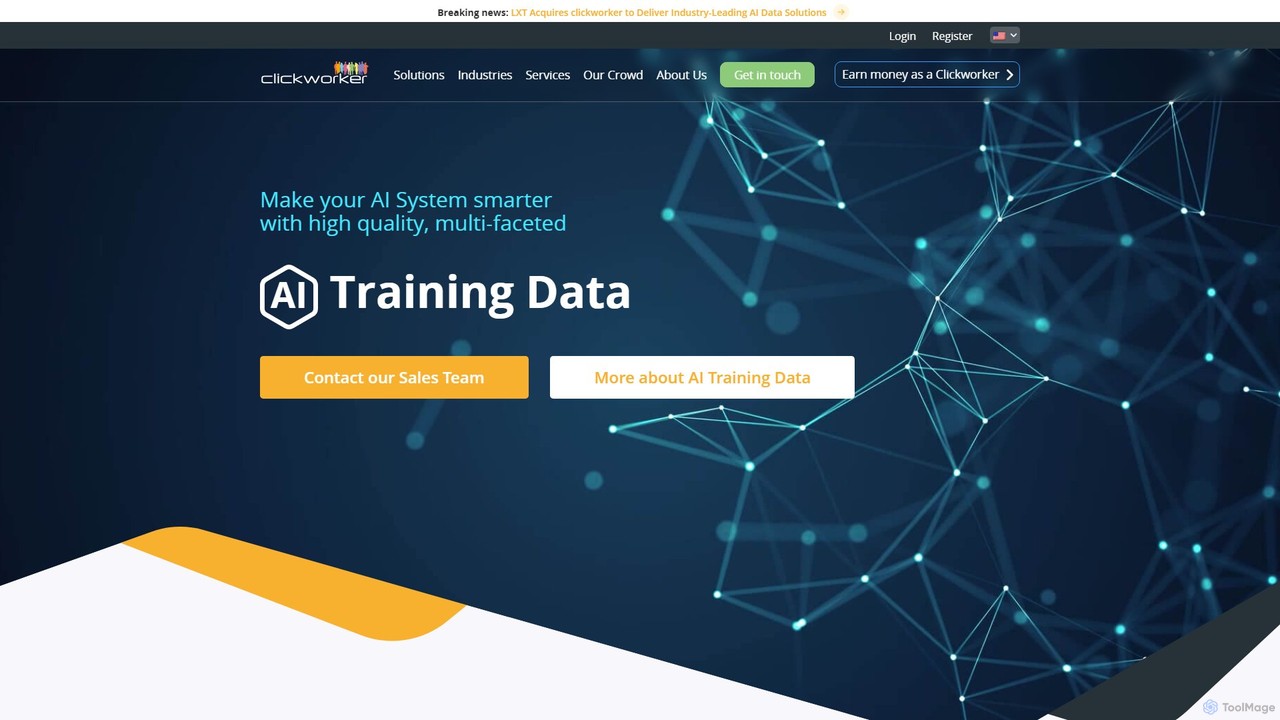
clickworker is a leading crowdsourcing platform that provides high-quality, diverse, and scalable data for training AI and machine learning models. It leverages a global community of over 7 million freelancers to generate, validate, and label data, including images, videos, audio, and text, tailored to specific project needs.

Data Collection
Visits 1.8MFavorites 99Likes 111

About Crowdsourcing

Crowdsourcing tools leverage the collective intelligence of a large, distributed group of individuals to perform tasks, generate ideas, or gather data. These AI-enhanced platforms streamline the process of engaging a global workforce, enabling businesses to scale operations, accelerate data annotation, and solve complex problems. By distributing work to a diverse crowd, organizations can achieve efficiency, cost savings, and access specialized skills for various business needs, making it a powerful strategy within the broader business landscape.

Core Features

  • Task Distribution & Management: Efficiently breaks down large projects into micro-tasks and distributes them to a global crowd, with AI often assisting in matching tasks to qualified workers and monitoring progress.
  • Quality Control Mechanisms: Implements AI-driven validation, consensus algorithms, and expert review processes to ensure the accuracy and reliability of crowd-contributed data or solutions, minimizing errors and maintaining high standards.
  • Worker Management & Payment: Manages worker registration, performance tracking, and secure payment processing, often integrating reputation systems and feedback loops to foster a reliable workforce.
  • Data Annotation & Labeling: Specializes in collecting and labeling vast datasets for AI model training, leveraging human intelligence for tasks AI struggles with, such as nuanced image recognition or sentiment analysis.
  • Idea Generation & Problem Solving: Facilitates open innovation challenges and ideation campaigns, gathering diverse perspectives and creative solutions from a broad community to tackle complex business or technical issues.

Applicable Scenarios

Crowdsourcing is highly effective across various business functions. For instance, marketing teams utilize it for rapid content creation, generating diverse ad copy or social media posts tailored to different demographics. AI development teams depend on crowdsourcing for large-scale data labeling, ensuring their machine learning models are trained on accurately annotated datasets. Furthermore, businesses can conduct extensive market research by deploying surveys and feedback requests to a global audience, gaining insights into consumer preferences and market trends more efficiently than traditional methods.

Key Selection Criteria

When choosing a crowdsourcing platform, several factors are crucial for success. First, assess the platform's specialization: Is it optimized for data annotation, creative tasks, or problem-solving? Second, examine its quality assurance protocols, including AI-powered checks, human review processes, and dispute resolution mechanisms. Third, consider the size, diversity, and skill sets of the available crowd to ensure they match your project requirements. Finally, evaluate the pricing structure, integration capabilities with your existing tools, and the level of project management support provided to ensure a seamless and cost-effective implementation.

Crowdsourcing use cases

1

Accelerate AI Model Training with Data Annotation

AI developers and data scientists often require vast amounts of accurately labeled data to train machine learning models. Crowdsourcing platforms enable them to quickly distribute image, text, or audio labeling tasks to thousands of human annotators worldwide. This ensures high-quality, diverse datasets are generated at scale, significantly reducing the time and cost associated with in-house data preparation and improving model performance.

2

Conduct Large-Scale Market Research and Surveys

Marketing teams and researchers need to gather diverse opinions and demographic data to understand consumer behavior or validate product ideas. Crowdsourcing allows them to deploy surveys, polls, and feedback requests to a broad, demographically targeted audience. This method provides rapid access to a wide range of perspectives, enabling quicker insights and more informed strategic decisions than traditional survey methods.

3

Generate Diverse Content and Multilingual Translations

Content creators and global businesses frequently need high volumes of unique content, such as product descriptions, social media posts, or translations into multiple languages. Crowdsourcing platforms connect them with freelance writers and translators. This approach ensures content diversity, cultural relevance, and scalability, allowing for the efficient production of localized marketing materials and user-generated content.

4

Enhance Software Quality Through Crowd Testing

Software development teams aim to identify bugs and usability issues across various devices and operating systems before product launch. Crowdsourcing allows them to engage a global community of testers with diverse hardware and software configurations. This broad testing coverage helps uncover edge cases and obscure bugs that internal teams might miss, leading to more robust and user-friendly software releases.

5

Source Creative Designs and Branding Concepts

Startups and businesses seeking fresh branding or design ideas can leverage crowdsourcing for creative contests. Designers from around the world submit their concepts for logos, website layouts, or marketing visuals. This provides a wide array of options and styles, allowing the client to choose the best fit for their brand while fostering competition among designers and often reducing design costs.

6

Solve Complex Problems with Collective Intelligence

Organizations facing intricate challenges, from scientific research to engineering hurdles, can tap into a global network of experts and innovators. Crowdsourcing platforms facilitate open innovation challenges where individuals or teams propose solutions. This method harnesses diverse intellectual capital, often leading to breakthrough ideas and novel approaches that might not emerge from internal R&D departments alone.

Crowdsourcing FAQ

What is Crowdsourcing, and how does AI enhance it?

Crowdsourcing is the practice of obtaining services, ideas, or content by soliciting contributions from a large, undefined group of people, typically via the internet. AI enhances crowdsourcing by automating task distribution, improving quality control through validation algorithms, and optimizing worker matching. This integration allows for more efficient project management, faster data processing, and higher accuracy in tasks like data annotation for AI model training.

How do I choose the right Crowdsourcing platform for my project?

When selecting a crowdsourcing platform, consider the specific nature of your tasks (e.g., data labeling, content creation, problem-solving) and the required skill level of the crowd. Evaluate the platform's quality control mechanisms, such as consensus algorithms or expert review, and its ability to scale with your project demands. Also, assess pricing models, worker demographics, and integration capabilities with your existing tools to ensure a seamless workflow and cost-effectiveness.

What are the main benefits of using Crowdsourcing for businesses?

Crowdsourcing offers several key benefits for businesses. It provides access to a vast, diverse talent pool, enabling rapid scalability for tasks that require human intelligence. Businesses can achieve significant cost savings compared to traditional employment models, as they often pay per task. Furthermore, it accelerates project completion, particularly for data-intensive tasks like AI model training, and fosters innovation by gathering diverse perspectives for problem-solving and idea generation.

What is the difference between Crowdsourcing and traditional outsourcing?

Crowdsourcing involves distributing tasks to a large, often undefined group of individuals, typically online, for small, discrete tasks. It emphasizes collective intelligence and scalability. Traditional outsourcing, conversely, involves contracting specific projects or services to a defined third-party company or individual, often for larger, more complex engagements with established contracts and relationships. Crowdsourcing is generally more flexible and cost-effective for micro-tasks and data collection, while outsourcing is suited for specialized, long-term projects.

Can Crowdsourcing be used for tasks involving sensitive data?

Using crowdsourcing for sensitive data requires careful consideration. While some platforms offer enhanced security features like data anonymization, secure environments, and non-disclosure agreements, it's crucial to assess the platform's compliance with data protection regulations (e.g., GDPR, HIPAA). For highly sensitive or confidential information, it might be safer to use internal teams or specialized, vetted vendors. Always prioritize data privacy and security protocols when designing crowdsourcing projects.