ToolMage
Sign in

Best 4 Custom Solutions AI tools for Business

Popular Custom Solutions AI tools in Business include Niya AI, Diverzum, Kursaha, and TUGADOT, helping you work more efficiently.

Diverzum

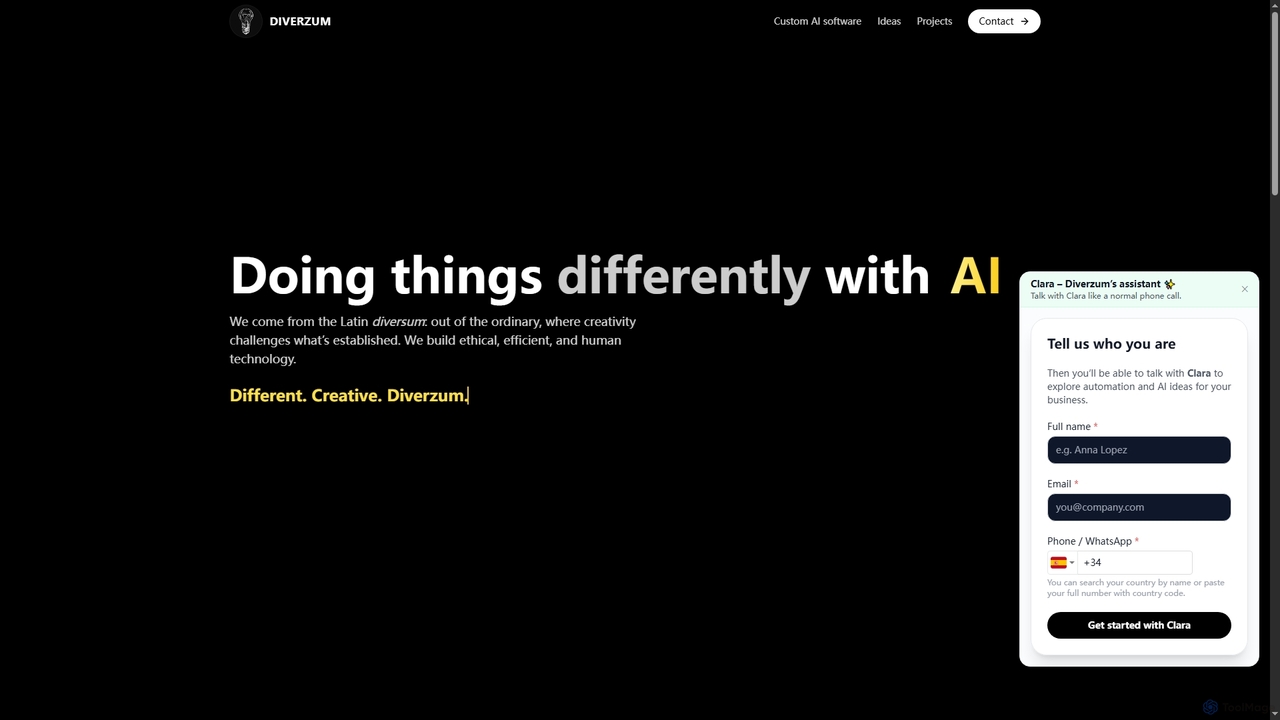
Diverzum

Diverzum designs and builds custom AI-powered software for businesses, specializing in workflow automation, advanced chatbots for channels like WhatsApp and voice, and deep integration with existing systems. They deliver tailor-made solutions from MVPs to enterprise-grade systems.

Custom Solutions
Visits 6.3KFavorites 114Likes 100
Niya AI
Paid

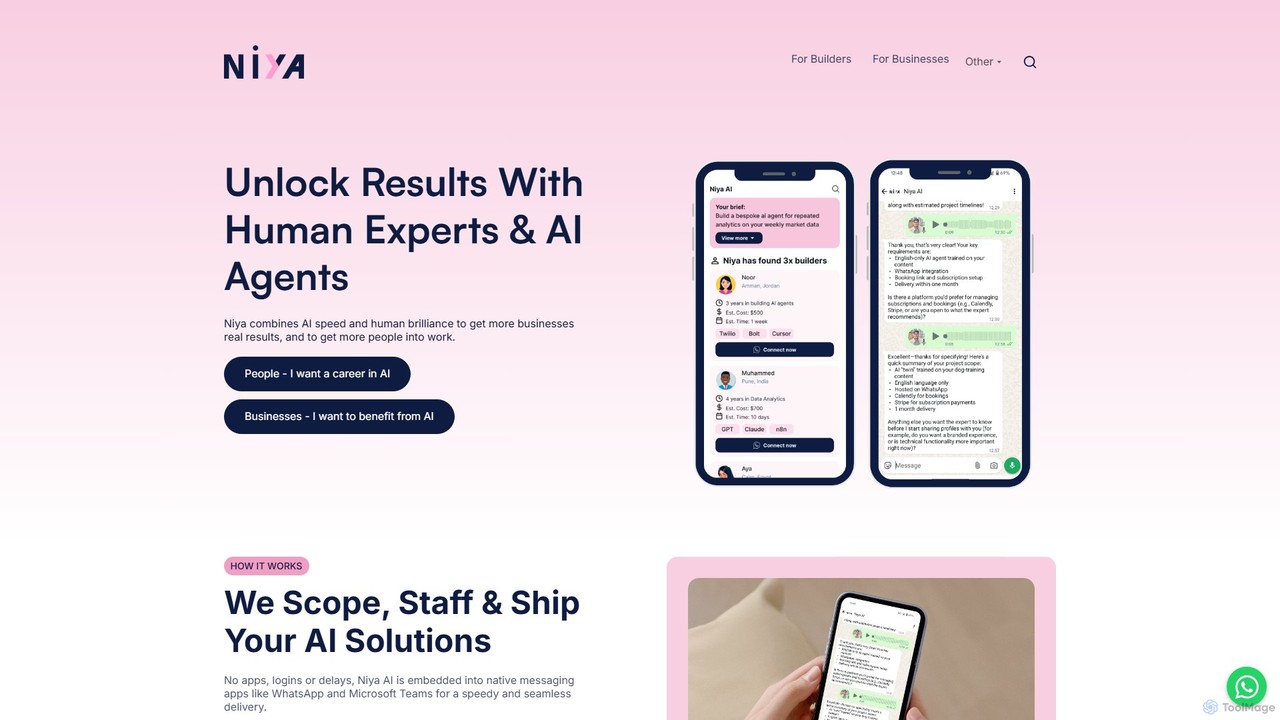
Niya AI

Niya AI is a service platform that connects businesses with a global network of vetted AI experts to build custom AI solutions and agents. Operating directly through messaging apps like WhatsApp and Microsoft Teams, it simplifies the process of scoping, staffing, and shipping AI projects without the need for new software or logins.

Custom Solutions
Visits 9.3KFavorites 104Likes 110
Kursaha
Paid

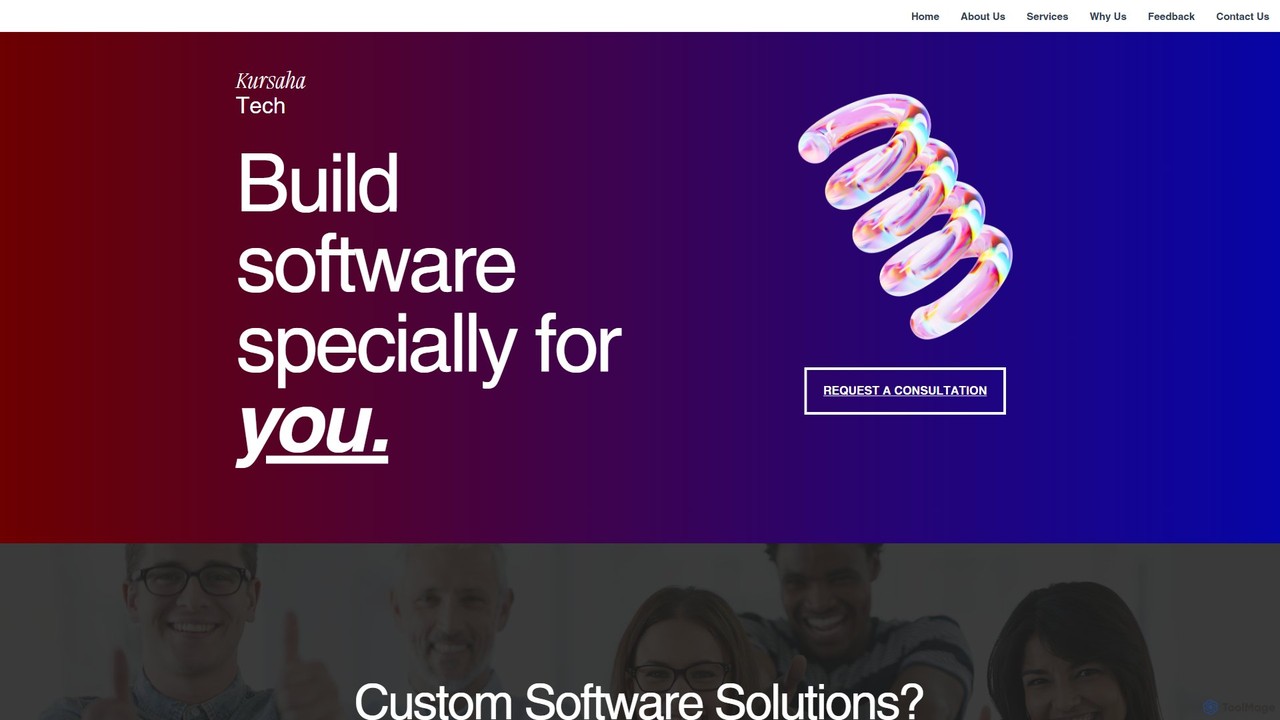
Kursaha

Kursaha is a technology consultancy specializing in custom software solutions. They empower businesses by developing bespoke AI services, data analytics platforms, and user-friendly mobile and web applications. Focusing on innovation and client satisfaction, Kursaha transforms unique business needs into functional, secure, and high-performing technology solutions.

Custom Solutions
Visits 6.2KFavorites 126Likes 113
TUGADOT
Paid

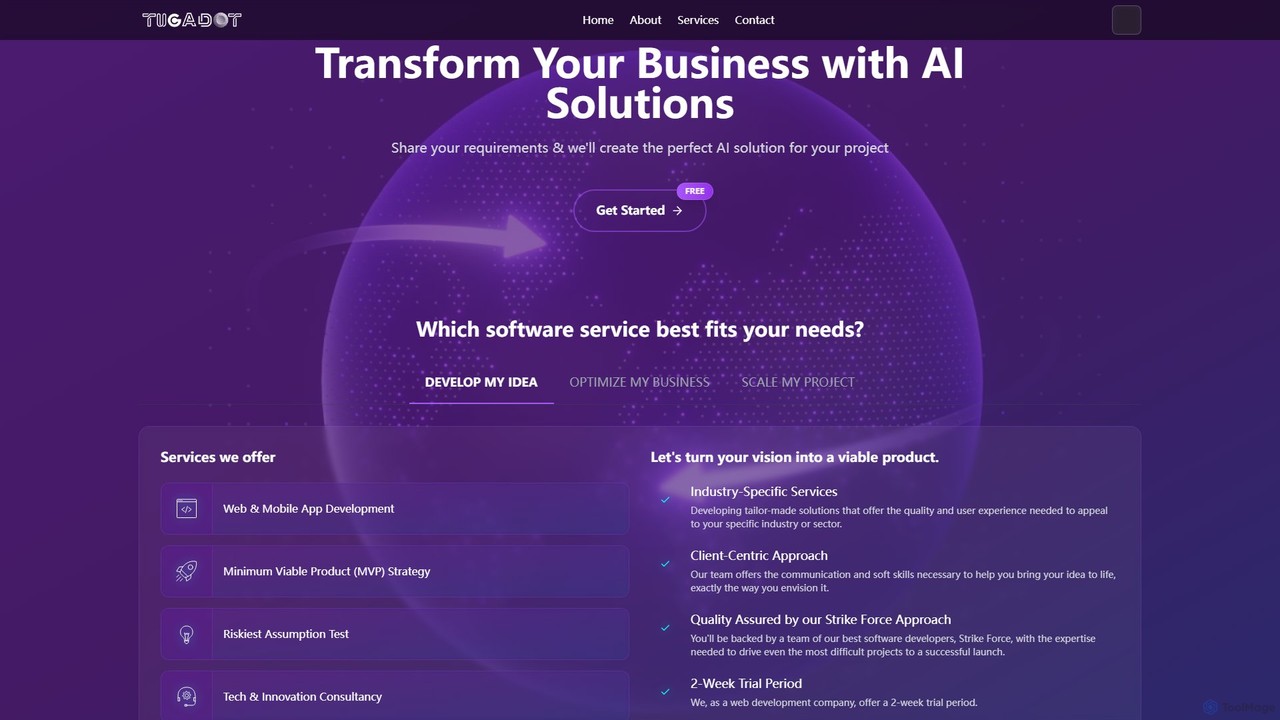
TUGADOT

TUGADOT is a custom software development and AI integration agency. They partner with businesses to transform ideas into powerful, tailor-made technological solutions, including web/mobile apps, MVP development, and advanced AI systems.

Model Integration
Visits 5.8KFavorites 109Likes 116

About Custom Solutions

Custom Solutions are platforms and services for creating tailored AI models and applications that address unique business challenges. These tools provide the frameworks, APIs, and infrastructure needed to train, deploy, and manage AI systems using proprietary company data. They enable businesses to build highly specific functionalities that off-the-shelf software cannot offer, integrating AI deeply into core operations. This approach allows for the development of unique competitive advantages and optimized internal workflows.

Core Features

  • Model Training & Fine-Tuning: Allows users to train AI models on their own datasets or fine-tune pre-existing models for specific tasks.
  • API & SDK Access: Provides programmatic access to integrate custom AI capabilities into existing applications, websites, and internal systems.
  • Workflow Automation Builder: Offers visual or code-based interfaces to design and automate complex, multi-step processes powered by custom AI models.
  • Scalable Deployment Infrastructure: Manages the hosting, scaling, and monitoring of trained models to ensure reliable performance in production environments.
  • Data Integration Connectors: Facilitates the connection to various internal and external data sources, such as databases, CRMs, and cloud storage.

Use Cases

Custom Solutions are ideal for businesses with specific operational needs that cannot be met by generic tools. Industries like finance, healthcare, manufacturing, and e-commerce use them to build proprietary systems for fraud detection, medical image analysis, predictive maintenance, and personalized recommendation engines. Roles such as data scientists, AI engineers, and enterprise architects are the primary users.

How to Choose

When selecting a Custom Solution, evaluate the platform's technical requirements—whether it's low-code or requires extensive programming skills. Assess its scalability to handle your data volume and user load. Scrutinize data security protocols and compliance certifications. Finally, consider the integration capabilities with your existing tech stack and the total cost of ownership, including development, deployment, and maintenance fees.

Custom Solutions use cases

1

Build a Custom Customer Support Chatbot

An e-commerce company wants to reduce support ticket volume by providing instant, accurate answers to product-specific questions. Using a custom solutions platform, their development team trains a chatbot on their entire product catalog, FAQs, and historical support conversations. The resulting AI chatbot is integrated into their website and can handle complex queries about product compatibility, shipping policies, and return procedures, providing context-aware responses that generic bots cannot. This leads to a 40% reduction in human agent workload and improves customer satisfaction.

2

Automate Internal Document Analysis

A large law firm needs to quickly extract specific clauses, dates, and party names from thousands of contracts. They use a custom AI solution to build and train a model that understands legal terminology and contract structures specific to their practice. Paralegals can now upload a batch of documents, and the AI automatically identifies, extracts, and categorizes the required information into a structured database. This process reduces manual review time from weeks to hours, minimizes human error, and allows legal professionals to focus on higher-value analysis rather than data extraction.

3

Develop a Predictive Maintenance System

A manufacturing plant aims to reduce equipment downtime by predicting failures before they happen. Using a custom AI solutions platform, they connect real-time sensor data (temperature, vibration, pressure) from their machinery. They train a machine learning model on historical failure data to recognize patterns that precede a breakdown. The deployed model now runs continuously, sending alerts to the maintenance team with specific warnings and recommended actions when it detects an anomaly. This proactive approach has decreased unexpected downtime by 30% and extended the lifespan of critical equipment.

4

Create a Custom Fraud Detection Model

A fintech startup needs a fraud detection system that can adapt to new, sophisticated attack vectors specific to its user base and transaction patterns. Off-the-shelf solutions are too generic. Using a custom solutions platform, their data science team builds a model trained on their own transaction data. The model learns the unique behaviors of legitimate users and can flag subtle anomalies that indicate fraudulent activity in real-time. This custom approach provides a higher detection rate and lower false positives compared to generic systems, protecting both the company and its customers.

5

Build a Personalized Content Recommendation Engine

A media streaming service wants to increase user engagement and retention by offering highly relevant content suggestions. Standard recommendation algorithms are not capturing the nuances of their content library. They use a custom solution to build a hybrid recommendation engine that combines collaborative filtering (what similar users watch) with content-based filtering (analyzing content metadata) and user-specific viewing history. The model is continuously retrained as new content is added and user behavior evolves, resulting in a dynamic and highly accurate recommendation system that significantly boosts watch time and reduces churn.

6

Automate Quality Control in Manufacturing

A company producing electronic components needs to identify microscopic defects on its production line, a task that is slow and error-prone for human inspectors. They deploy a custom computer vision solution. Using a dataset of thousands of images of both good and defective components, they train a model to detect scratches, misalignments, and other flaws with superhuman accuracy. The model is integrated with a camera system on the assembly line, automatically flagging faulty items for removal in real-time. This AI-powered quality control system increases throughput, achieves a near-zero defect rate, and frees up human workers for more complex tasks.

Custom Solutions FAQ

What are AI Custom Solutions?

AI Custom Solutions are platforms, frameworks, or services that enable businesses to build, train, and deploy their own artificial intelligence models tailored to specific data and workflows. Unlike off-the-shelf AI tools that offer pre-built functionalities, custom solutions provide the building blocks (like APIs, SDKs, and training environments) to create proprietary AI systems. This is ideal for addressing unique challenges, creating a competitive advantage, or integrating AI deeply into core business processes where generic solutions fall short.

How do Custom Solutions differ from pre-built AI tools?

The main difference lies in flexibility and specificity. Pre-built AI tools (like a generic chatbot or image editor) are ready to use but have limited customization. Custom Solutions, on the other hand, are like a toolkit. They don't solve a problem out of the box; instead, they provide the means to build a solution that is perfectly aligned with your specific data, business logic, and integration needs. This requires more technical effort but results in a more powerful and tailored application.

When should a business choose a custom solution over an off-the-shelf tool?

A business should opt for a custom solution when:

  • Unique Problems: Their challenge is highly specific to their industry or operations and no existing tool fits.
  • Proprietary Data: They want to leverage their unique, internal data to create a competitive advantage.
  • Deep Integration: The AI functionality needs to be deeply embedded into existing, complex software systems.
  • Scalability and Control: They require full control over the model's performance, security, and scalability for a mission-critical application.
If a standard, off-the-shelf tool can solve 80% of the problem effectively, it is often the more practical choice. Custom solutions are for when that remaining 20% is critical.

What skills are needed to use AI Custom Solutions?

The required skills vary depending on the platform. Some low-code/no-code platforms are designed for business analysts or citizen developers with minimal programming knowledge. However, more powerful and flexible solutions typically require a technical team with expertise in:

  • Data Science & Machine Learning: To select algorithms, prepare data, and train effective models.
  • Software Engineering: To integrate the model via APIs/SDKs into production applications.
  • DevOps/MLOps: To manage the deployment, scaling, and monitoring of the AI models in a live environment.
A successful custom AI project often involves a cross-functional team of data scientists, engineers, and domain experts.

How do you evaluate the ROI of a custom AI solution?

Evaluating the Return on Investment (ROI) for a custom AI solution involves looking beyond direct revenue. Key factors to consider include:

  • Cost Savings: Measure the reduction in operational costs, such as decreased manual labor hours, lower error rates, or reduced material waste.
  • Efficiency Gains: Quantify improvements in speed and throughput. For example, how many more customer queries are resolved per hour, or how much faster is the data analysis process?
  • Increased Revenue: Attribute new revenue streams or increased sales to the AI, such as improved product recommendations leading to higher conversion rates.
  • Strategic Value: Assess intangible benefits like improved customer satisfaction, faster decision-making, or the creation of a sustainable competitive advantage.
A comprehensive ROI analysis balances the initial development and ongoing maintenance costs against these tangible and strategic benefits.