Almeta ML
Almeta ML is a machine learning platform that predicts customer behavior on your website in real-time. It helps …
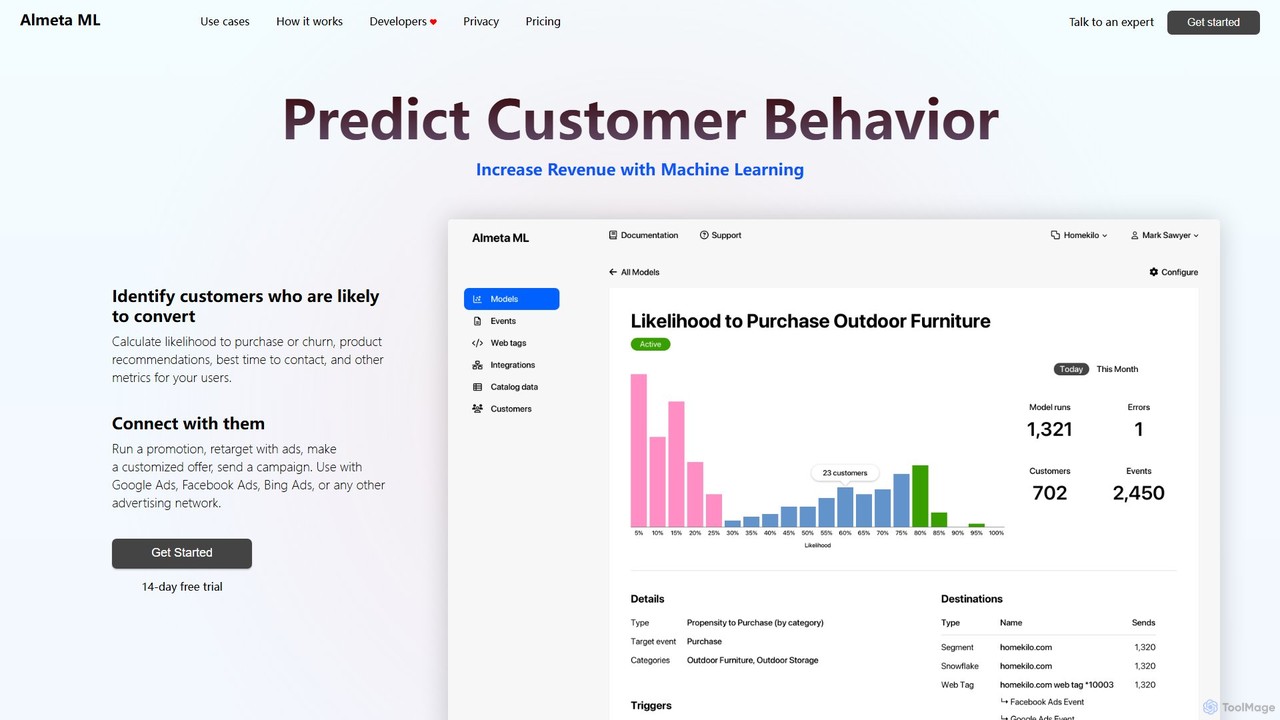
Almeta ML is a machine learning platform that predicts customer behavior on your website in real-time. It helps businesses increase revenue and ROAS by identifying users likely to convert, purchase, or churn. The tool provides actionable metrics like propensity scores, product recommendations, and optimal contact times, integrating seamlessly with advertising and marketing platforms like Google Ads, Facebook Ads, and Shopify.
About Customer Behavior Analysis
Customer Behavior Analysis tools are AI-powered solutions designed to collect, process, and interpret vast amounts of customer data. These tools leverage machine learning algorithms to uncover patterns, predict future actions, and provide actionable insights into how customers interact with products, services, and brands. By understanding customer motivations and preferences, businesses can optimize marketing strategies, enhance user experience, and drive growth within the broader business intelligence landscape.
Core Features
- Data Collection & Integration: Gathers customer data from various sources like websites, apps, CRM, and social media for a unified view.
- Customer Segmentation: Automatically groups customers into distinct segments based on shared behaviors, demographics, or preferences.
- Predictive Analytics: Forecasts future customer actions such as purchase likelihood, churn risk, or next best offer using AI models.
- Journey Mapping: Visualizes the entire customer journey, identifying touchpoints, pain points, and opportunities for improvement.
- Personalization Engine: Provides recommendations for tailored content, product suggestions, or marketing messages based on individual behavior.
Use Cases
These tools are invaluable for e-commerce businesses seeking to reduce cart abandonment, marketing teams aiming for hyper-targeted campaigns, and product managers looking to optimize feature adoption. They help identify high-value customers, understand reasons for churn, and personalize customer interactions at scale.
How to Choose
When selecting a Customer Behavior Analysis tool, consider its data integration capabilities with your existing systems, the depth and accuracy of its predictive models, the ease of use for non-technical users, and its ability to scale with your data volume. Evaluate the types of insights it provides and how well they align with your specific business objectives, such as conversion optimization or customer retention.

Customer Behavior AnalysisUse Cases
Optimizing E-commerce Conversion Rates
An e-commerce manager uses AI customer behavior analysis to track user paths, identify common drop-off points in the sales funnel, and understand which product recommendations lead to purchases. The tool helps pinpoint specific website elements or marketing messages that deter conversions, allowing for data-driven A/B testing and improvements to the checkout process, ultimately increasing sales efficiency.
Personalizing Marketing Campaigns
A marketing specialist leverages these tools to segment their audience based on past purchase history, browsing behavior, and engagement levels. The AI then suggests personalized email content, ad creatives, and product offers for each segment, ensuring that messages resonate more deeply with individual customers and significantly boosting campaign ROI and customer engagement.
Predicting Customer Churn
A subscription service provider employs customer behavior analysis to identify early warning signs of potential customer churn. By analyzing usage patterns, support interactions, and feedback, the AI predicts which customers are at risk, enabling the customer success team to proactively intervene with targeted retention strategies, such as personalized offers or support, before they cancel their service.
Enhancing Product Feature Adoption
A product manager uses the insights from customer behavior analysis to understand how users interact with new features. The tool reveals which features are frequently used, which are ignored, and identifies common user flows. This data guides product development, allowing the team to refine UI/UX, prioritize improvements, and design more intuitive onboarding experiences that drive higher feature adoption rates.
Improving Customer Service Efficiency
A customer support team integrates behavior analysis tools to provide agents with a comprehensive view of a customer's journey and past interactions before a call or chat. This allows agents to quickly understand the customer's context, anticipate their needs, and offer more relevant and efficient solutions, reducing resolution times and improving overall customer satisfaction.
Identifying High-Value Customer Segments
A business development team utilizes AI to analyze customer lifetime value, purchase frequency, and engagement metrics. The tool automatically identifies and profiles high-value customer segments, allowing the team to focus resources on nurturing these relationships, developing loyalty programs, and tailoring exclusive offers that maximize long-term revenue and strengthen brand advocacy.