Miro Insights
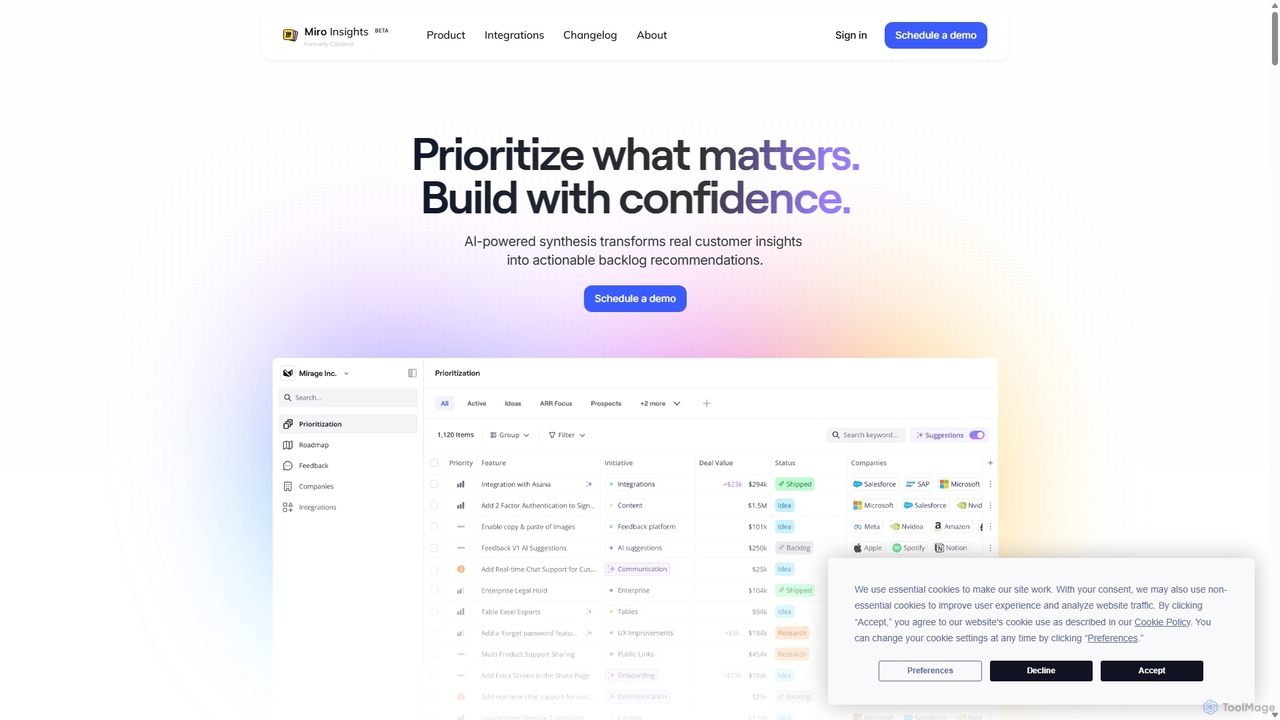
Miro Insights is an AI-powered product management platform that helps teams build better products. It automatically synthesizes customer …
Miro Insights is an AI-powered product management platform that helps teams build better products. It automatically synthesizes customer feedback from various sources like calls, tickets, and CRMs, transforming raw data into actionable insights. Teams can prioritize features based on revenue impact, align on a data-driven roadmap, and connect their product strategy directly to customer needs, all within the Miro collaborative workspace.
getthematic
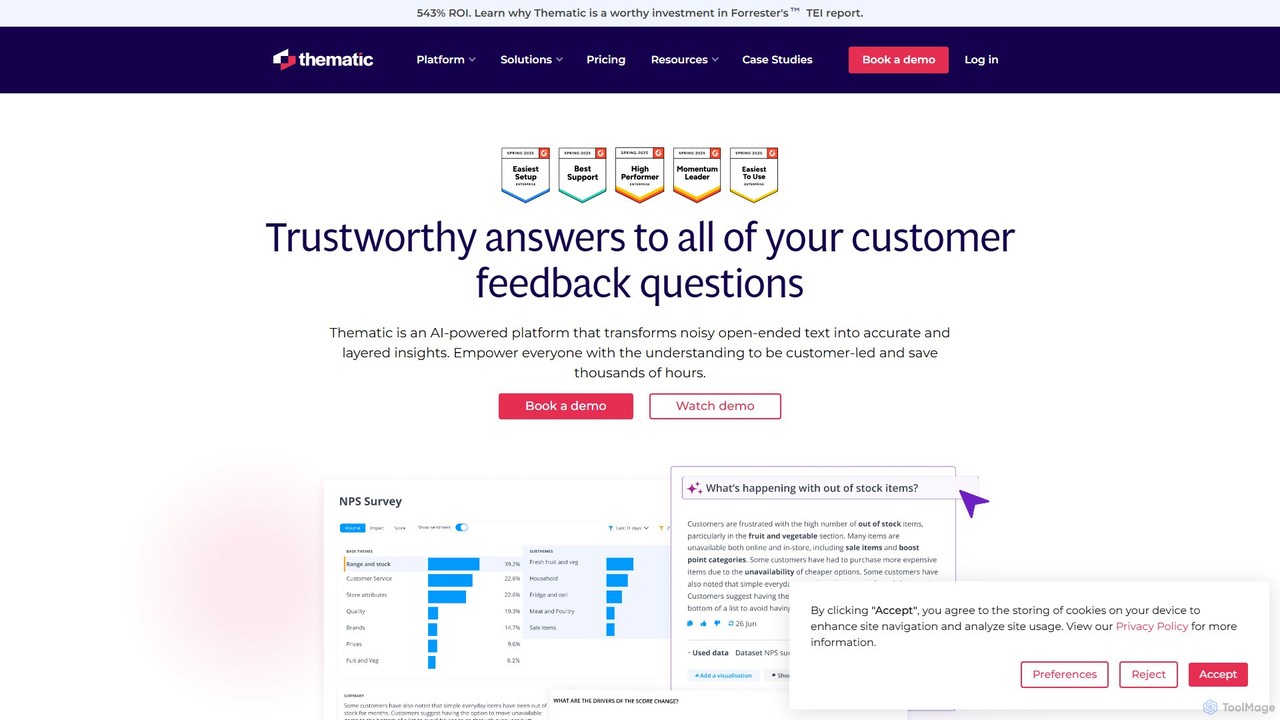
Thematic is an AI-powered feedback analytics platform that transforms unstructured text from surveys, reviews, and chats into actionable …
Thematic is an AI-powered feedback analytics platform that transforms unstructured text from surveys, reviews, and chats into actionable insights. It helps businesses understand customer sentiment, identify key themes, and make data-driven decisions to improve customer experience and product development.
Zeda.io
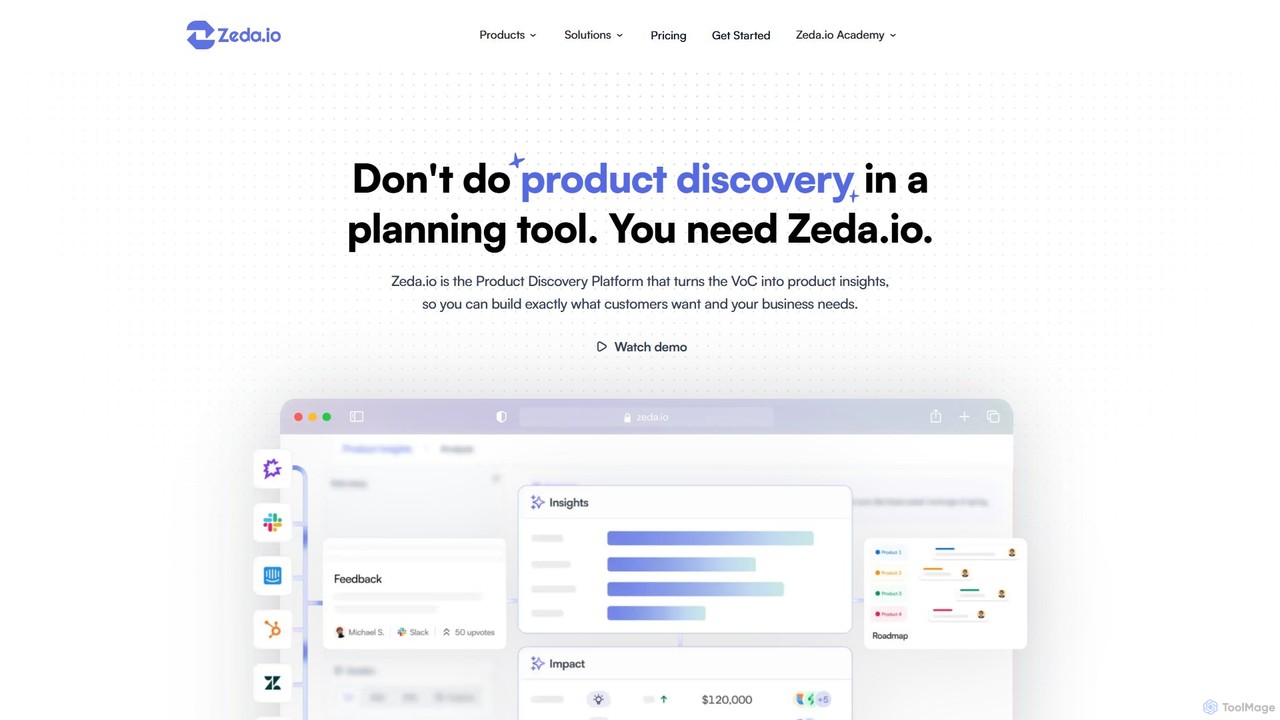
Zeda.io is an AI-powered product discovery platform that centralizes Voice of Customer (VoC) data from all sources. It …
Zeda.io is an AI-powered product discovery platform that centralizes Voice of Customer (VoC) data from all sources. It uses AI to analyze feedback, generate actionable insights, and help product teams build revenue-driven roadmaps, ensuring they create products that customers truly want and the business needs.
Bagel AI
Bagel AI is an AI-native product intelligence platform that automatically consolidates customer feedback from all sources. It helps …
Bagel AI is an AI-native product intelligence platform that automatically consolidates customer feedback from all sources. It helps product teams identify high-impact features, align roadmaps with revenue goals, and bridge the gap between product, GTM teams, and customers, turning scattered insights into actionable growth strategies.
About Customer Feedback Management
Customer Feedback Management tools are AI-powered platforms designed to systematically collect, analyze, and act on customer opinions from diverse channels. These tools utilize Natural Language Processing (NLP) and sentiment analysis to interpret unstructured text from reviews, surveys, support tickets, and social media. By automatically identifying themes, sentiment, and key topics, they transform raw feedback into structured, actionable insights for business improvement. This enables companies to prioritize product roadmaps, enhance customer experience, and respond proactively to market trends.
Core Features
- Multi-Channel Aggregation: Centralizes feedback from various sources like email, social media, app stores, and surveys into a single dashboard.
- AI-Powered Sentiment Analysis: Automatically determines the emotional tone (positive, negative, neutral) behind customer comments.
- Topic & Keyword Extraction: Identifies and categorizes recurring themes, feature requests, and pain points mentioned by customers.
- Insight Dashboards & Reporting: Visualizes feedback trends, sentiment scores, and key topics over time through customizable reports.
- Automated Routing & Alerts: Automatically tags feedback and notifies the relevant teams (e.g., product, support) for prompt action.
Use Cases
These tools are essential for product managers, customer experience (CX) teams, and marketing departments in sectors like SaaS, e-commerce, and hospitality. For instance, a SaaS company can analyze user feedback to prioritize new features, while an e-commerce brand can identify product quality issues from reviews. They help organizations make data-driven decisions based directly on the voice of the customer.
How to Choose
When selecting a tool, consider its integration capabilities with your existing systems (CRM, helpdesk). Evaluate the accuracy and depth of its AI analysis, including language support. Ensure it covers the data sources most relevant to your customers. Also, assess its scalability to handle your feedback volume and the clarity of its reporting dashboards for generating actionable insights.
Customer Feedback ManagementUse Cases
Prioritizing Product Roadmap with User Feedback
A Product Manager at a growing SaaS company is overwhelmed by feedback from various channels like Intercom, App Store reviews, and NPS surveys. By using an AI Customer Feedback Management tool, they can aggregate all this data into one place. The AI automatically analyzes and tags thousands of comments, identifying the most frequently requested features and pressing bug reports. This provides a clear, data-driven view of user needs, allowing the product team to confidently prioritize development tasks that will have the highest impact on user satisfaction and retention.
Improving E-commerce Product Descriptions
An e-commerce manager for a fashion brand notices a high return rate for a popular line of shoes. Instead of manually sifting through hundreds of reviews, they use a feedback management tool. The AI analyzes all product reviews and identifies a recurring theme: customers consistently mention that the 'sizing runs small'. Armed with this specific insight, the manager updates the product description with a clear note to 'order one size up'. This proactive change leads to a significant reduction in returns, fewer negative reviews, and improved customer satisfaction.
Enhancing Customer Support Agent Training
A Head of Customer Support wants to identify knowledge gaps in their team. They connect their helpdesk software (like Zendesk or Intercom) to a feedback management platform. The AI analyzes thousands of support conversations and post-interaction surveys, flagging tickets with low satisfaction scores and identifying the topics involved, such as 'billing confusion' or 'integration problems'. This allows the support lead to develop targeted training modules for agents, create better internal documentation, and update help center articles to address these common friction points proactively.
Monitoring Brand Reputation in Real-Time
A brand manager for a consumer electronics company needs to track public sentiment following a major product launch. They set up a feedback management tool to monitor social media platforms like Twitter and Reddit, as well as tech review sites. The AI dashboard provides a real-time view of brand sentiment, automatically flagging any sudden spikes in negative mentions. When a small but growing number of users report a software bug, the system alerts the team immediately, allowing them to acknowledge the issue publicly and deploy a fix before it becomes a widespread PR crisis.
Closing the Loop with Individual Customers
A customer experience (CX) manager wants to ensure that users who provide negative feedback feel heard. They set up an automation workflow in their feedback tool. When a customer leaves a low score on an NPS survey and mentions a specific issue like 'missing integration', the system automatically creates a ticket in their helpdesk, assigns it to a CX specialist, and tags it with 'Feature Request' and 'NPS Detractor'. The specialist can then reach out to the customer personally, acknowledge their feedback, and inform them when the requested integration is added to the roadmap, turning a negative experience into a positive one.
Validating New Ideas with Competitive Analysis
Before investing in a major new feature, a product team wants to understand the competitive landscape. They use their feedback management tool to not only analyze their own customer requests but also to monitor public reviews of their main competitors. The AI identifies features that customers frequently praise in competitor products and also highlights common complaints. This dual analysis provides invaluable context, helping the team validate their feature idea, identify potential pitfalls, and design a solution that is superior to what's currently on the market.