ToolMage
Sign in

Best 2 Dashboard AI tools for Business

Popular Dashboard AI tools in Business include Zetta and Build0, helping you work more efficiently.

Build0
Freemium

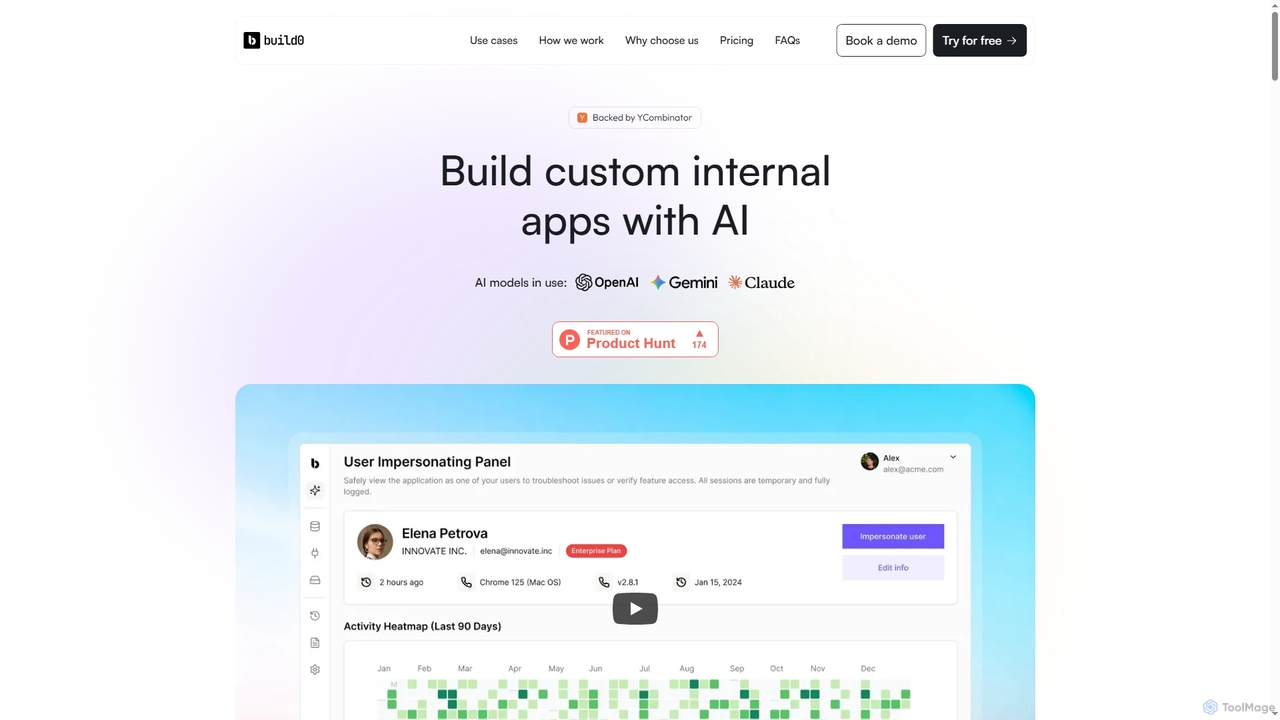
Build0

Build0 is an AI-powered platform that enables teams to create custom internal applications and dashboards in minutes. Simply describe your desired tool, connect existing data sources like Slack or databases, and let the AI generate a fully functional, secure app. It's designed for product, operations, and engineering teams to overcome development bottlenecks and build tools 10x faster, with the option to export high-quality React code.

Dashboard
Visits 6.2KFavorites 105Likes 131
Zetta
Freemium

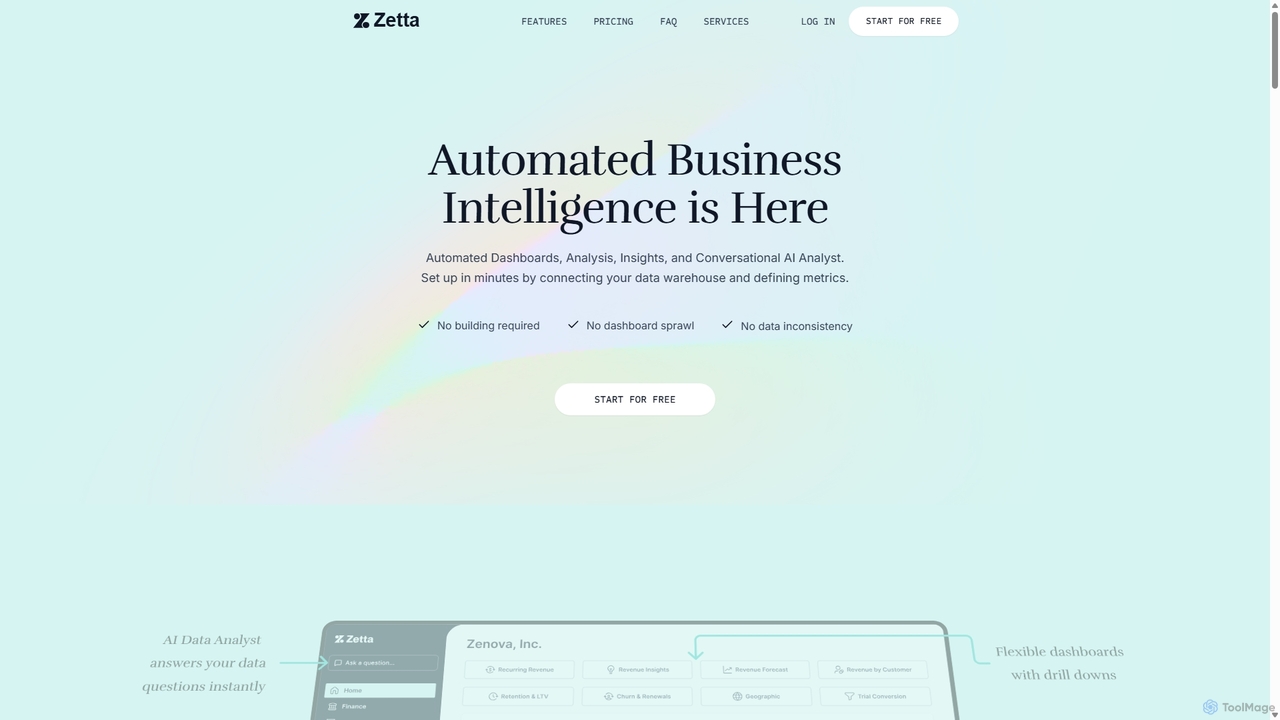
Zetta

Zetta is an AI-powered data analytics platform that automates business intelligence. It connects to your data warehouse to instantly generate dashboards, analysis, and actionable insights, featuring a conversational AI analyst to answer your data questions in minutes.

Dashboard
Visits 6.5KFavorites 146Likes 147

About Dashboard

AI Dashboards are intelligent tools that leverage artificial intelligence to transform raw business data into actionable insights and predictive analytics. These platforms utilize machine learning algorithms to identify trends, forecast future outcomes, and automate the generation of critical reports. They empower businesses to make data-driven decisions faster, optimize operations, and proactively respond to market changes, moving beyond traditional data visualization to offer prescriptive recommendations.

Core Features

  • Predictive Analytics: Forecast future trends and potential outcomes based on historical data.
  • Automated Anomaly Detection: Automatically identify unusual patterns or outliers in data that require attention.
  • Natural Language Querying: Allow users to ask questions in plain language and receive data-driven answers.
  • Personalized Insights: Deliver tailored recommendations and reports based on user roles and specific business goals.
  • Prescriptive Recommendations: Suggest optimal actions to take based on analyzed data and predicted scenarios.

Applicable Scenarios

AI Dashboards are crucial for business leaders, data analysts, and operational managers across various sectors. They are used in scenarios requiring real-time performance monitoring, strategic planning, and proactive problem-solving. For instance, a marketing team might use one to predict campaign success, or a finance department to optimize budget allocation.

How to Choose

When selecting an AI Dashboard, consider its integration capabilities with existing data sources, the depth and accuracy of its AI models, and the ease of customization for specific business needs. Evaluate the user interface for intuitiveness, the scalability of the platform, and the level of security offered for sensitive business data.

Dashboard use cases

1

Predictive Sales Forecasting

Sales managers use AI Dashboards to analyze historical sales data, market trends, and external factors, generating accurate future sales predictions. This enables proactive inventory management, resource allocation, and strategic planning to meet revenue targets.

2

Automated Marketing Performance Analysis

Marketing teams leverage AI Dashboards to monitor campaign performance in real-time, automatically identifying underperforming ads or channels. The AI provides insights into customer behavior and suggests optimization strategies to maximize ROI.

3

Real-time Customer Behavior Monitoring

E-commerce businesses deploy AI Dashboards to track customer interactions, purchase patterns, and website navigation. The AI detects shifts in behavior, predicts churn risk, and recommends personalized offers to enhance customer retention and engagement.

4

Operational Anomaly Detection

Manufacturing or logistics companies utilize AI Dashboards to continuously monitor operational metrics, such as equipment performance or supply chain efficiency. The AI automatically flags unusual deviations, enabling immediate investigation and preventing costly disruptions.

5

Financial Performance Optimization

CFOs and finance analysts employ AI Dashboards to gain a holistic view of financial health, including cash flow, expenses, and revenue streams. The AI identifies areas for cost reduction, predicts financial risks, and suggests strategies for profit maximization.

6

HR Workforce Analytics & Planning

HR departments use AI Dashboards to analyze employee data, including performance, engagement, and turnover rates. The AI predicts staffing needs, identifies skill gaps, and provides insights for talent development and retention strategies, optimizing human capital management.

Dashboard FAQ

What are AI Dashboards?

AI Dashboards are advanced business intelligence tools that integrate artificial intelligence, primarily machine learning, to provide dynamic and predictive insights from data. Unlike traditional dashboards, they don't just visualize data; they analyze it to uncover hidden patterns, forecast future trends, and offer actionable recommendations, empowering smarter decision-making.

How does an AI Dashboard differ from a traditional dashboard?

A traditional dashboard primarily focuses on visualizing historical and real-time data, presenting metrics and KPIs. An AI Dashboard goes further by using AI to interpret data, predict future outcomes, detect anomalies automatically, and even suggest optimal actions. It transforms passive reporting into active, intelligent guidance, offering prescriptive insights beyond descriptive analytics.

What are the key benefits of using an AI Dashboard?

Key benefits include enhanced decision-making through predictive insights, automated identification of critical trends and anomalies, and improved operational efficiency. They help businesses proactively address challenges, optimize resource allocation, personalize customer experiences, and gain a competitive edge by transforming complex data into clear, actionable intelligence.

What should I consider when choosing an AI Dashboard tool?

When selecting an AI Dashboard, evaluate its data integration capabilities with your existing systems, the robustness and explainability of its AI models, and its customization options to fit specific business needs. Also, consider user-friendliness, scalability for future growth, security features for sensitive data, and the vendor's support and update policies.

Which industries can benefit most from AI Dashboards?

Virtually any industry dealing with large volumes of data can benefit. Retail and e-commerce use them for sales forecasting and customer behavior. Finance for risk management and investment analysis. Healthcare for patient outcomes and operational efficiency. Manufacturing for predictive maintenance. Marketing for campaign optimization. Their versatility makes them valuable across diverse sectors.