ToolMage
Sign in

Best 3 Data Enrichment AI tools for Business

Popular Data Enrichment AI tools in Business include Looti, Kuration AI, and SalesMirror, helping you work more efficiently.

Looti
Freemium

Looti

Looti is an AI-powered platform designed to help B2B businesses find hyper-qualified leads in minutes. It uses AI to discover accurate audiences from various sources and allows users to refine lists with over 20 advanced filters, providing actionable contact data and seamless CRM integrations.

Data Enrichment
Visits 11KFavorites 139Likes 144
SalesMirror
Paid

SalesMirror

SalesMirror is a real-time B2B prospecting and lead generation platform. It helps sales and marketing teams find and verify contact information for startups, local businesses, and SaaS companies. The tool features an email/phone finder, technology stack identification, and an investor database, all powered by a real-time search engine with over 250 million data points.

Data Enrichment
Visits 5.7KFavorites 149Likes 134
Kuration AI
Paid

Kuration AI

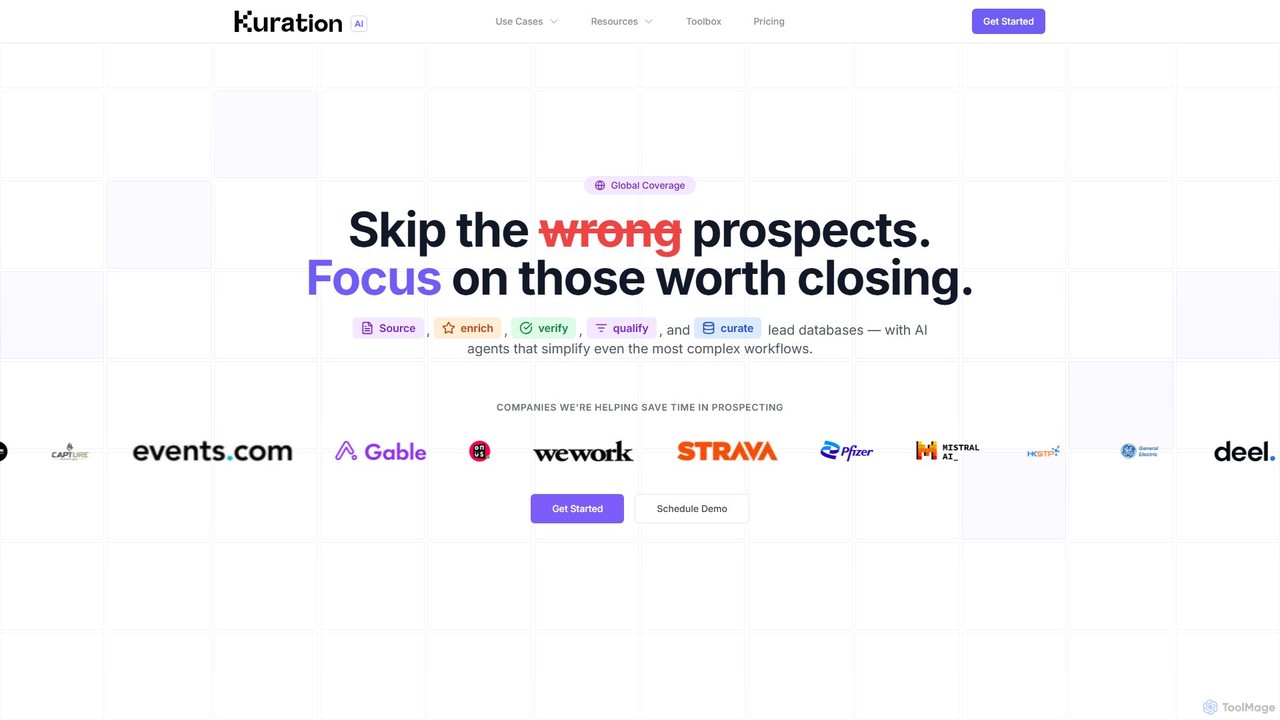
Kuration AI is an advanced platform that automates B2B research and data enrichment using AI agents. It helps businesses source, enrich, verify, and qualify lead databases, transforming manual prospecting into an efficient, data-driven process. With a visual workflow builder, natural language chat, and access to over 200 data sources, it streamlines go-to-market strategies for sales, M&A, and market research teams.

Data Enrichment
Visits 8.9KFavorites 104Likes 100

About Data Enrichment

Data Enrichment tools are AI-powered solutions that enhance raw or incomplete datasets by appending valuable, relevant information from various sources. These tools leverage machine learning to identify, match, and integrate additional data points, transforming sparse data into rich, actionable insights. For businesses, this means a more comprehensive understanding of customers, markets, and operations, leading to improved strategic decisions and personalized engagements.

Core Features

  • Data Matching & Merging: Accurately identifies and combines records from disparate sources, resolving inconsistencies and duplicates.
  • Demographic & Firmographic Appending: Adds detailed information like age, income, company size, industry, and revenue to existing profiles.
  • Geocoding & Location Intelligence: Converts addresses into precise geographic coordinates and enriches with location-based insights.
  • Behavioral & Intent Data Integration: Incorporates user activity, purchase history, and online intent signals to build richer customer profiles.
  • Validation & Cleansing: Verifies data accuracy and corrects errors during the enrichment process, ensuring high data quality.

Use Cases

Businesses across various sectors utilize data enrichment to gain a competitive edge. Marketing teams enrich customer profiles with demographic and behavioral data for hyper-targeted campaigns. Sales departments append firmographic details to prospect lists, enabling more effective lead qualification and personalized outreach. Customer service benefits from a 360-degree view of customers, allowing for more informed and proactive support.

How to Choose

When selecting a Data Enrichment tool, consider its data sources and coverage to ensure relevance to your business needs. Evaluate the accuracy and reliability of its matching algorithms and the quality of the appended data. Assess integration capabilities with your existing CRM, marketing automation, or BI platforms. Finally, review pricing models, data privacy compliance, and scalability to match your organizational growth.

Data Enrichment use cases

1

Enhancing Customer Profiles for Personalized Marketing

Marketing teams use data enrichment to append demographic, behavioral, and psychographic data to existing customer records. This allows for the segmentation of audiences into highly specific groups, enabling the creation of hyper-personalized email campaigns, targeted ad placements, and relevant content recommendations, significantly boosting engagement and conversion rates.

2

Qualifying Sales Leads with Firmographic Data

Sales development representatives (SDRs) enrich raw lead lists with firmographic details such as company size, industry, revenue, and technology stack. This process helps prioritize high-value prospects, understand their business context, and tailor sales pitches more effectively, leading to higher lead-to-opportunity conversion rates and shorter sales cycles.

3

Improving Fraud Detection and Risk Assessment

Financial institutions and e-commerce platforms leverage data enrichment to cross-reference transaction data with external risk databases, identity verification services, and behavioral patterns. By appending additional data points, they can more accurately identify suspicious activities, flag potential fraud, and assess customer risk profiles, thereby minimizing financial losses and enhancing security.

4

Optimizing Supply Chain Logistics with Location Intelligence

Logistics and supply chain managers enrich shipment and delivery data with real-time traffic, weather, and geographical information. This allows for dynamic route optimization, predictive delay analysis, and improved inventory management, leading to reduced operational costs, faster delivery times, and enhanced customer satisfaction.

5

Personalizing Customer Service Interactions

Customer support teams enrich incoming customer queries with historical interaction data, purchase history, and demographic information. This provides agents with a comprehensive view of the customer's journey and preferences, enabling them to offer more informed, empathetic, and efficient support, resolving issues faster and improving overall customer satisfaction.

6

Market Research and Competitive Analysis

Market researchers enrich public datasets or internal customer data with external market trends, competitor activities, and industry reports. This provides a deeper understanding of market dynamics, identifies emerging opportunities, and helps benchmark performance against competitors, informing strategic business development and product innovation.

Data Enrichment FAQ

What is Data Enrichment?

Data Enrichment is the process of enhancing existing raw or incomplete datasets by adding valuable, relevant information from internal or external sources. It leverages AI and machine learning to automatically identify, match, and append additional data points, transforming basic data into comprehensive, actionable insights for businesses.

How do AI Data Enrichment tools work?

AI Data Enrichment tools typically work by first ingesting your existing data. They then use machine learning algorithms to analyze this data, identify key entities (like names, emails, company IDs), and match them against vast internal or third-party databases. The AI intelligently appends missing attributes, validates existing information, and cleanses inconsistencies, providing a richer, more accurate dataset.

What are the key benefits of using Data Enrichment tools?

The key benefits include gaining a 360-degree view of customers and prospects, improving the accuracy and completeness of your data, and enabling more personalized marketing and sales strategies. It also enhances business intelligence, supports better decision-making, and can significantly improve operational efficiency by providing richer context.

How does Data Enrichment differ from Data Cleansing?

While both aim to improve data quality, Data Enrichment focuses on adding new, relevant information to existing data to make it more comprehensive and valuable. Data Cleansing, on the other hand, focuses on correcting or removing inaccurate, incomplete, or duplicate data within an existing dataset to ensure its integrity and consistency. They are often complementary processes.

Who can benefit most from Data Enrichment tools?

Businesses across various departments can benefit significantly. Marketing teams use it for audience segmentation and personalization. Sales teams leverage it for lead qualification and targeted outreach. Customer service departments gain a holistic customer view for better support. Business intelligence and analytics teams use enriched data for deeper insights and more accurate reporting.