
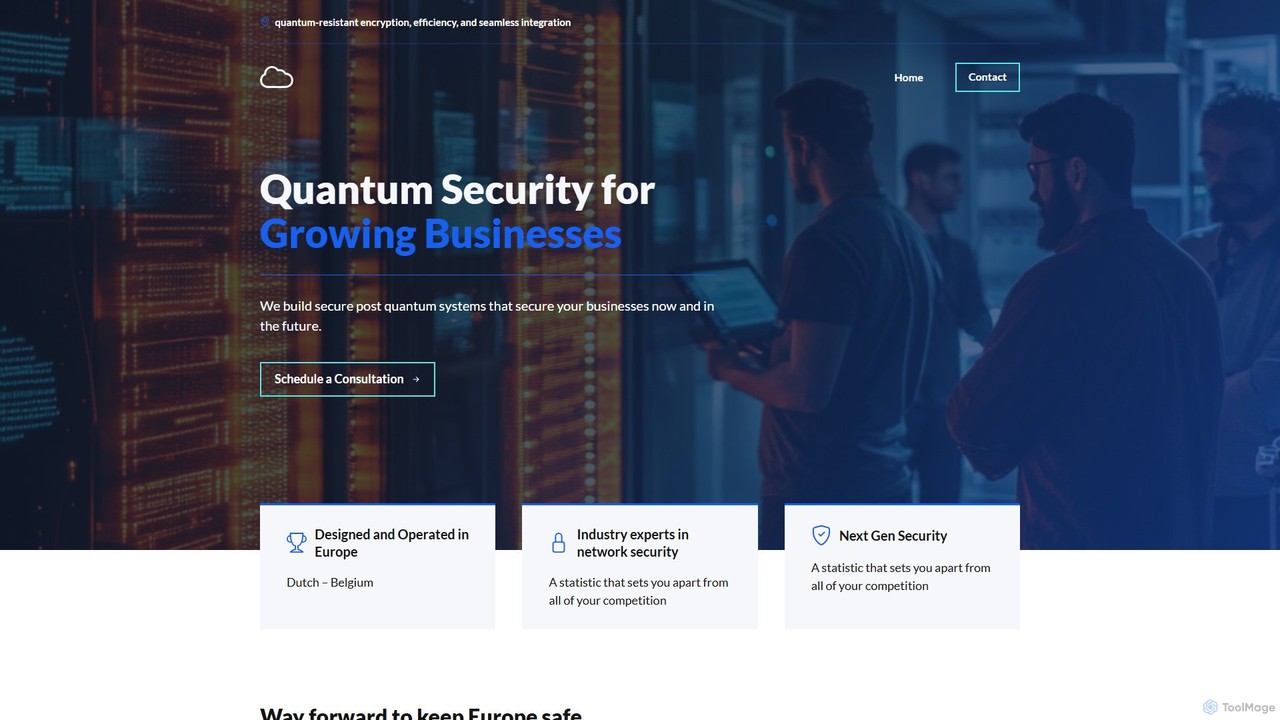
eighttoseven
A specialized cybersecurity firm providing post-quantum cryptography (PQC) solutions for businesses. eighttoseven offers future-proof security through services like …
A specialized cybersecurity firm providing post-quantum cryptography (PQC) solutions for businesses. eighttoseven offers future-proof security through services like Encryption as a Service (EaaS), secure data storage, and custom communication platforms, all powered by their proprietary NaVeOl algorithm. Designed and operated in Europe, it helps organizations in sensitive sectors like healthcare, finance, and government protect their data against both current and emerging quantum threats, ensuring long-term confidentiality and regulatory compliance.
About Data Security
AI Data Security tools are a specialized category of software that leverages machine learning to proactively protect sensitive information. These tools analyze vast datasets of user behavior, network traffic, and system logs to identify anomalous patterns and potential threats that traditional rule-based systems often miss. Their primary value lies in automating critical security tasks like data classification, threat detection, and compliance monitoring, enabling businesses to secure their digital assets against sophisticated cyberattacks and data breaches. This proactive and intelligent approach is crucial for maintaining data integrity and trust in today's complex digital landscape.
Core Features
- Intelligent Threat Detection: Uses behavioral analytics to identify and flag suspicious activities, such as insider threats or advanced persistent threats (APTs), in real-time.
- Automated Data Classification: Automatically discovers, classifies, and tags sensitive data (e.g., PII, PHI, financial records) across various storage systems.
- Dynamic Access Control: Implements risk-based access policies that adjust user permissions dynamically based on context, role, and threat level.
- Compliance Automation & Reporting: Continuously monitors data handling processes to ensure alignment with regulations like GDPR, CCPA, and HIPAA, and generates audit-ready reports.
Use Cases
These tools are essential in highly regulated industries such as finance, for preventing fraud and securing financial data, and healthcare, for protecting patient health information (PHI). Technology companies and e-commerce platforms also rely on them to safeguard intellectual property and customer data from breaches. Any organization aiming to automate its security operations and improve its defense against evolving cyber threats can benefit.
How to Choose
When selecting an AI Data Security tool, consider its integration capabilities with your existing security infrastructure (like SIEM or SOAR platforms). Evaluate the accuracy of its detection models to minimize false positives. Assess its scalability to handle your organization's data volume and growth. Finally, verify that it supports the specific compliance frameworks relevant to your industry and region.
Data SecurityUse Cases
Automate Sensitive Data Discovery for Compliance Audits
A Data Protection Officer (DPO) at a multinational corporation is preparing for a GDPR audit. Instead of manual sampling, they deploy an AI data security tool to scan the entire corporate network, including cloud storage and on-premise servers. The tool uses natural language processing (NLP) to identify and classify Personally Identifiable Information (PII) across documents, databases, and emails. It automatically generates a comprehensive data map and a risk report, highlighting non-compliant data storage. This process reduces audit preparation time from months to days and provides verifiable evidence of data governance.
Detect and Mitigate Insider Threats in Real-Time
A security operations center (SOC) analyst at a financial firm needs to protect against data exfiltration by employees. They use an AI-powered User and Entity Behavior Analytics (UEBA) tool. The system establishes a baseline of normal activity for each user. When an employee suddenly accesses and downloads an unusual volume of client files late at night from a personal device, the AI flags this as a high-risk anomaly. It automatically triggers an alert and temporarily restricts the user's access, allowing the SOC team to investigate and prevent a potential data leak before it occurs.
Secure Cloud Infrastructure from Misconfigurations
A DevOps team integrates an AI security tool into their CI/CD pipeline to maintain a secure cloud posture. The tool continuously scans their AWS and Azure environments for security vulnerabilities like publicly exposed S3 buckets, overly permissive IAM roles, or unencrypted databases. Instead of just listing issues, the AI prioritizes them based on potential impact and provides context-aware remediation steps. For common misconfigurations, it can trigger automated workflows to correct the issue, significantly reducing the window of exposure and freeing up the team to focus on development.
Prioritize Vulnerability Patching with Risk Context
A cybersecurity team is overwhelmed with thousands of vulnerabilities identified by their scanners. They use an AI data security platform that enriches this vulnerability data with threat intelligence and business context. The AI analyzes which vulnerabilities are actively being exploited in the wild, which ones affect critical, internet-facing assets, and which ones have available patches. It then generates a prioritized list, allowing the team to focus on patching the 10% of vulnerabilities that pose 90% of the risk, rather than working through an endless list alphabetically. This risk-based approach optimizes remediation efforts and drastically reduces the attack surface.
Prevent Sophisticated Phishing Attacks on Employees
An IT administrator deploys an AI-powered email security gateway to protect the organization from phishing. Unlike traditional filters that rely on known bad domains or keywords, this tool uses NLP to analyze the content, tone, and sender relationships of incoming emails. It successfully identifies a highly targeted spear-phishing email impersonating the CEO, which requests an urgent wire transfer. The AI flags the email's unusual linguistic patterns and the deviation from the CEO's normal communication style, quarantining it before it reaches the CFO's inbox. This prevents significant financial loss and a potential breach.
Manage Data Access in a Healthcare Organization
A hospital's IT team uses an AI system to manage access to Electronic Health Records (EHR), ensuring HIPAA compliance. The system analyzes a user's role, location, device, and the specific patient data being requested. It can differentiate between a nurse accessing a patient's records on their assigned floor (normal) and the same nurse accessing records of a VIP patient from an unrecognized network (suspicious). The AI automatically grants, denies, or requires step-up authentication based on this real-time risk assessment, applying the principle of least privilege dynamically and preventing unauthorized access to sensitive patient data.