
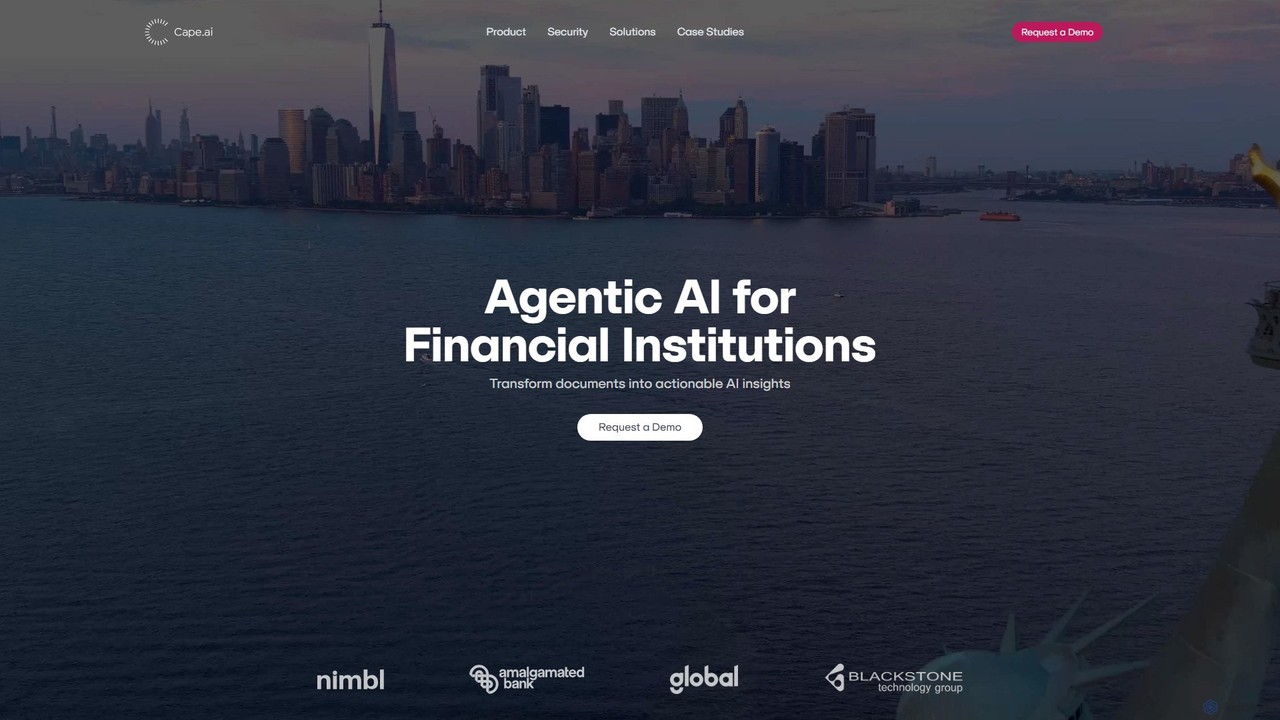
Cape AI
Cape AI is an agentic AI platform for financial institutions, designed to automate complex workflows by transforming unstructured …
Cape AI is an agentic AI platform for financial institutions, designed to automate complex workflows by transforming unstructured documents into actionable, structured data. It enhances efficiency and accuracy in risk management, compliance, investment research, and customer onboarding. By leveraging fine-tuned LLMs, it can be deployed on-premise or in a private cloud, ensuring top-tier security for sensitive financial data.
About Dataanalysis
AI Data Analysis tools are a class of software that leverages machine learning to automate the exploration, interpretation, and visualization of complex datasets. They work by identifying patterns, predicting future trends, and allowing users to ask questions about their data in plain language. This empowers businesses to make faster, more accurate decisions without requiring deep statistical expertise from every user. Unlike traditional BI tools, these platforms can uncover hidden correlations and generate narrative summaries from raw numbers.
Core Features
- Automated Insights: Automatically surfaces key trends, anomalies, and correlations in data without manual exploration.
- Predictive Modeling: Builds and deploys machine learning models to forecast future outcomes, such as sales or customer churn.
- Natural Language Query (NLQ): Allows users to ask questions about data using conversational language instead of complex code.
- Interactive Visualization: Creates dynamic charts, graphs, and dashboards to explore data visually and share findings.
- Data Cleaning & Preparation: Automates the process of cleaning, structuring, and preparing raw data for accurate analysis.
Use Cases
These tools are essential in data-driven business environments. Marketing teams use them to analyze campaign performance and predict customer behavior. Financial analysts apply them for fraud detection and market trend forecasting. In operations, they help optimize supply chains and predict maintenance needs, transforming raw data into actionable business strategy.
How to Choose
When selecting an AI Data Analysis tool, first assess its data source integration capabilities with your existing databases and platforms. Evaluate the user interface for ease of use, particularly its natural language query and dashboard-building features. Consider the depth of its analytical capabilities, from basic reporting to advanced predictive modeling. Finally, ensure the tool can scale with your data volume and that its pricing model aligns with your budget.
DataanalysisUse Cases
Optimizing Marketing Campaign ROI
A marketing manager for an e-commerce brand uses an AI data analysis tool to consolidate data from Google Ads, social media, and their sales platform. By asking, 'Which campaigns had the highest customer lifetime value?', the tool automatically generates a report. It reveals that video ads targeting a specific demographic yield the best long-term results. This insight allows them to reallocate their budget effectively, increasing overall campaign ROI by over 15%.
Forecasting Sales and Identifying At-Risk Deals
A sales director integrates a predictive analytics tool with their CRM. The AI analyzes historical deal data, communication patterns, and engagement levels to assign a 'win probability' score to each open opportunity. It automatically flags deals where engagement has dropped, allowing sales reps to proactively re-engage and prevent potential losses. This process improves forecast accuracy by over 20% and helps prioritize sales efforts.
Automating Financial Anomaly Detection
An accounting team at a mid-sized company feeds their transaction logs into an AI analysis platform. The system learns the normal patterns of expenditure and revenue. It automatically flags unusual transactions, such as a large payment to a new vendor on a weekend or duplicate invoices, for human review. This significantly reduces the time spent on manual audits and helps detect potential fraud or errors early, improving financial governance.
Improving Supply Chain Efficiency
An operations manager for a retail chain uses an AI tool to analyze inventory levels, sales data, and shipping times across hundreds of stores. The tool predicts demand for specific products in different locations and identifies potential bottlenecks in the supply chain. It recommends optimal stock levels for each store, reducing both stockouts and overstocking issues. This leads to a 10% reduction in carrying costs and improved customer satisfaction.
Analyzing User Behavior to Guide Product Development
A product manager for a SaaS application uses an AI tool to analyze user interaction data. Instead of writing complex queries, they can ask, 'What features are most used by customers who recently upgraded?'. The tool visualizes user journeys and highlights features that correlate with higher retention. This provides clear, data-backed priorities for the next development cycle, ensuring resources are focused on high-impact improvements.
Understanding Employee Attrition Drivers
An HR department analyzes anonymized employee data, including tenure, performance reviews, and survey responses, using an AI tool. The platform identifies key factors that correlate with voluntary turnover, such as a lack of promotion opportunities after two years or low manager feedback scores. These data-driven insights help HR design more effective retention programs and targeted training for managers, proactively addressing the root causes of attrition.