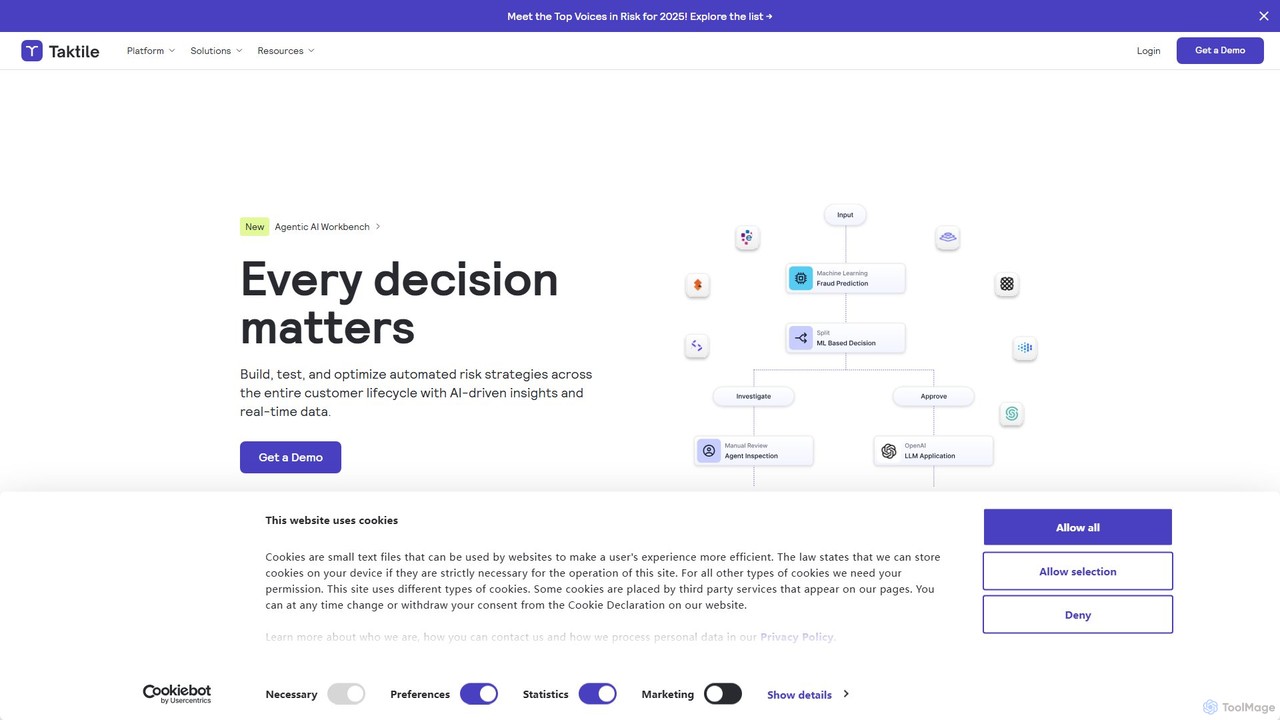
Decision Management AI tools are specialized platforms that automate, optimize, and streamline complex decision-making processes within organizations. These tools leverage advanced algorithms, machine learning, and rule-based systems to analyze vast datasets, predict outcomes, and execute decisions with speed and consistency. By enhancing the accuracy and efficiency of operational and strategic choices, they significantly reduce human error and improve overall business performance, serving as a critical component within broader business intelligence strategies.
Core Features
- Automated Decision Rules: Define and execute complex business logic and policies automatically, ensuring consistent application across operations.
- Predictive Analytics: Utilize historical data and machine learning models to forecast future outcomes, informing proactive decision-making in areas like risk or demand.
- Real-time Data Integration: Connect seamlessly with various internal and external data sources to provide up-to-the-minute insights for dynamic decision execution.
- Scenario Modeling & Simulation: Allow users to test different decision paths and evaluate their potential impacts before implementation, optimizing strategies.
- Decision Workflow Automation: Streamline the entire decision lifecycle, from data ingestion and analysis to recommendation generation and automated action.
Applicable Scenarios
Decision Management AI is crucial for industries requiring rapid, data-driven choices. Financial institutions use it for automated loan approvals and fraud detection, while e-commerce platforms apply it for dynamic pricing and personalized customer offers. Logistics and manufacturing benefit from optimized supply chain and inventory management, ensuring efficient resource allocation and reduced operational costs.
How to Choose
When selecting a Decision Management AI tool, prioritize its integration capabilities with your existing IT infrastructure and data sources. Evaluate its scalability to handle growing data volumes and decision complexity, along with the flexibility to customize business rules and models. Consider compliance features, audit trails, and the level of technical expertise required for implementation and ongoing management to ensure a smooth adoption.