Winus
Winus is your advanced AI financial partner, offering custom AI agents, deep research capabilities, professional stock trading strategy …
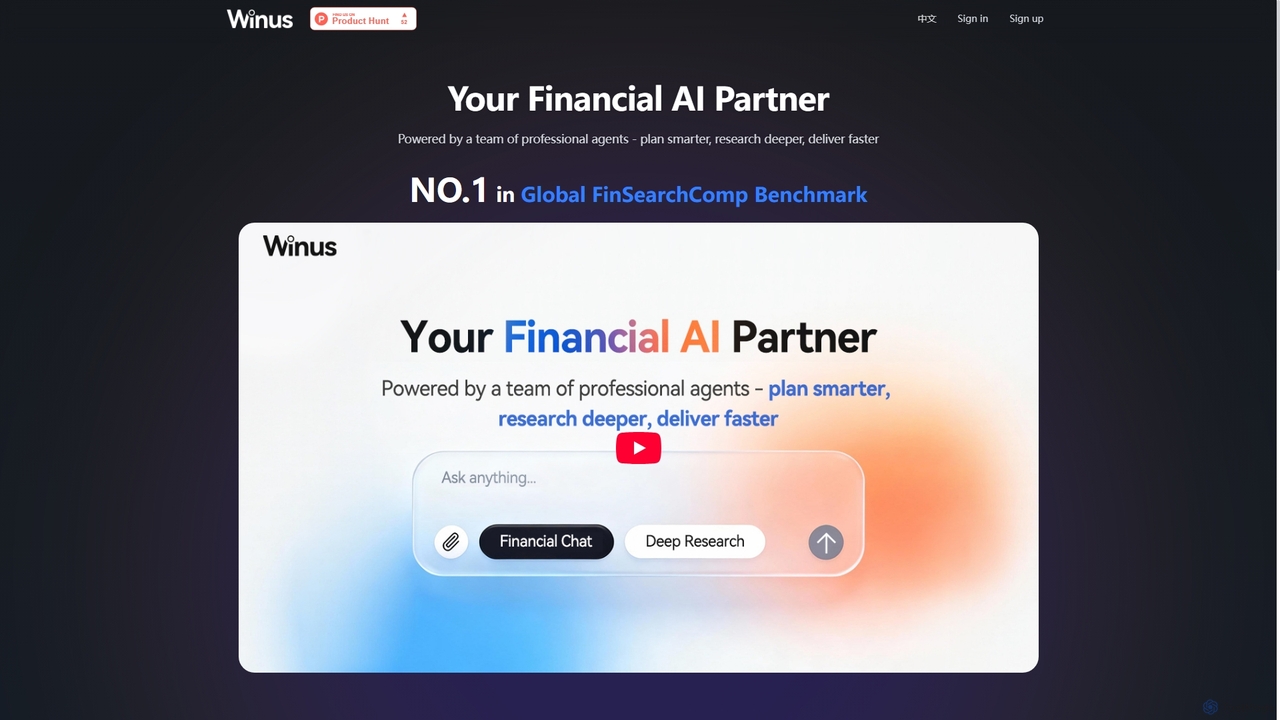
Winus is your advanced AI financial partner, offering custom AI agents, deep research capabilities, professional stock trading strategy analysis, and robust AI-powered data verification. It empowers users to plan smarter, research deeper, and deliver faster financial insights, recognized as a leader in global financial search benchmarks.
About Decision Support
Decision Support tools are AI-powered platforms designed to assist individuals and organizations in making more informed and effective choices. These tools leverage advanced analytics, machine learning, and predictive modeling to process complex data, identify patterns, and forecast potential outcomes. By providing actionable insights and recommendations, they empower users to navigate intricate scenarios, mitigate risks, and optimize strategies across various business functions.
Core Features
- Data Integration & Analysis: Consolidates data from diverse sources for comprehensive analysis and pattern recognition.
- Predictive Modeling: Forecasts future trends and potential outcomes based on historical data and AI algorithms.
- Scenario Planning: Simulates different "what-if" scenarios to evaluate potential impacts of various decisions.
- Recommendation Engine: Generates data-driven suggestions or optimal courses of action for specific problems.
- Risk Assessment: Identifies and quantifies potential risks associated with different decision paths.
Use Cases
Decision Support tools are invaluable for strategic planning, operational optimization, and financial forecasting. They assist executives in market entry strategies, supply chain managers in inventory optimization, and financial analysts in investment portfolio management. These tools transform raw data into strategic intelligence, enabling proactive and data-driven governance.
How to Choose
When selecting a Decision Support tool, consider its data integration capabilities, the accuracy and explainability of its predictive models, and its ability to simulate complex scenarios. Evaluate the user interface for ease of use, the level of customization offered, and its compatibility with existing business intelligence systems. Scalability and robust security features are also crucial for enterprise-level deployment.

Decision SupportUse Cases
Optimizing Supply Chain Logistics
Supply chain managers can utilize Decision Support tools to analyze historical demand, supplier performance, and logistics data. The AI predicts potential disruptions, identifies optimal routing, and recommends inventory levels to minimize costs and ensure timely delivery. This proactive approach helps reduce stockouts and overstocking, leading to significant operational savings and improved customer satisfaction.
Strategic Market Entry Planning
Business development teams employ Decision Support tools to evaluate new market opportunities. By analyzing demographic data, competitor landscapes, regulatory environments, and economic indicators, the AI provides insights into market attractiveness and potential risks. It recommends optimal entry strategies, pricing models, and product positioning, enabling data-backed expansion decisions.
Financial Investment Portfolio Management
Financial analysts leverage Decision Support tools to manage investment portfolios. The tools analyze market trends, company financials, and economic forecasts to predict asset performance and assess risk exposure. They recommend portfolio rebalancing strategies, optimal asset allocation, and potential investment opportunities, helping to maximize returns while adhering to risk tolerance.
Customer Churn Prediction & Prevention
Customer success teams use Decision Support tools to identify customers at high risk of churning. By analyzing customer behavior, interaction history, and usage patterns, the AI predicts churn likelihood. It then recommends personalized retention strategies, such as targeted offers or proactive support outreach, significantly improving customer lifetime value.
Healthcare Treatment Path Optimization
Medical professionals can use Decision Support tools to optimize patient treatment paths. The AI analyzes patient data, medical history, and clinical guidelines to suggest personalized treatment plans, predict treatment efficacy, and identify potential complications. This aids doctors in making evidence-based decisions, leading to better patient outcomes and resource allocation.
Resource Allocation for Project Management
Project managers utilize Decision Support tools to optimize resource allocation across multiple projects. The AI analyzes project requirements, team skills, availability, and budget constraints to recommend the most efficient distribution of personnel and assets. This ensures projects stay on track, within budget, and resources are utilized effectively, preventing bottlenecks and delays.