ToolMage
Sign in

Best 5 Due Diligence AI tools for Business

Popular Due Diligence AI tools in Business include Whitebridge, Hebbia, Investigalo, cherrytree.ai, and Is My Ceo A Fraud?, helping you work more efficiently.

Investigalo
Paid

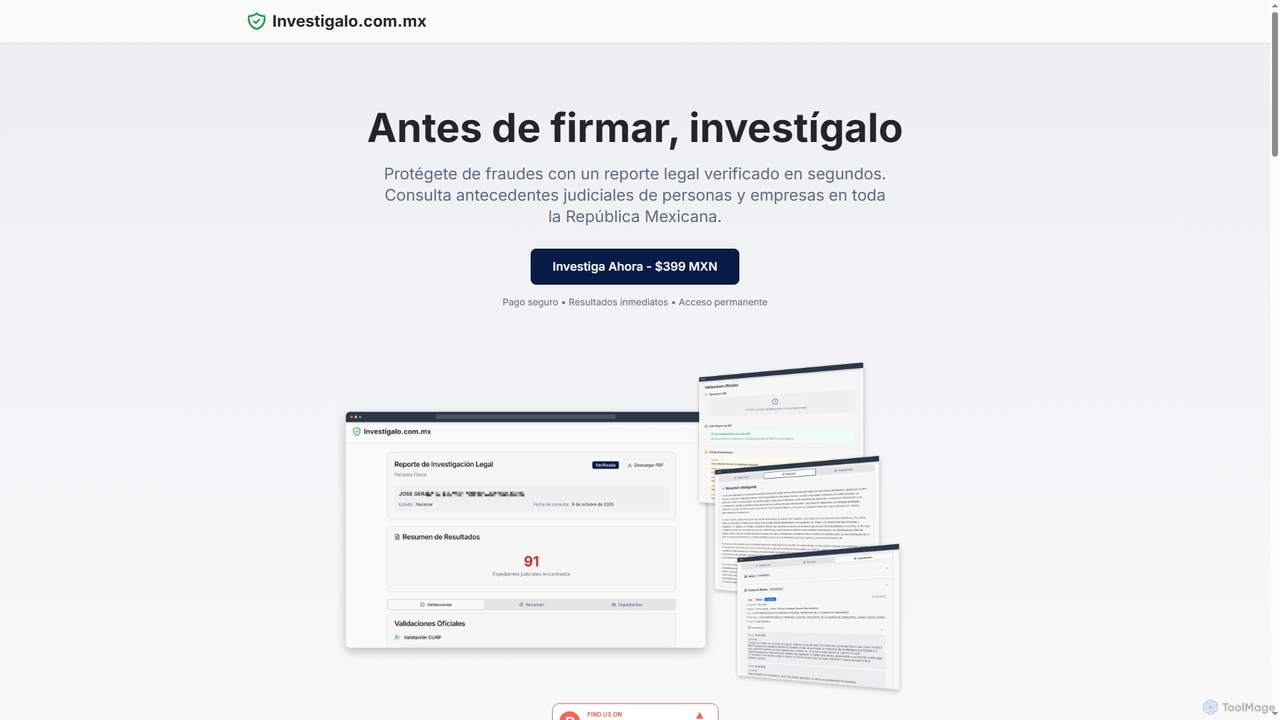
Investigalo

Investigalo is a leading online platform in Mexico for conducting fast, confidential, and comprehensive legal background checks on individuals and companies. It accesses public and official government databases across the entire Mexican Republic to provide detailed reports on judicial records, tax status, professional licenses, and more, helping users make informed decisions.

Due Diligence
Visits 15.1KFavorites 144Likes 130
Whitebridge
Paid

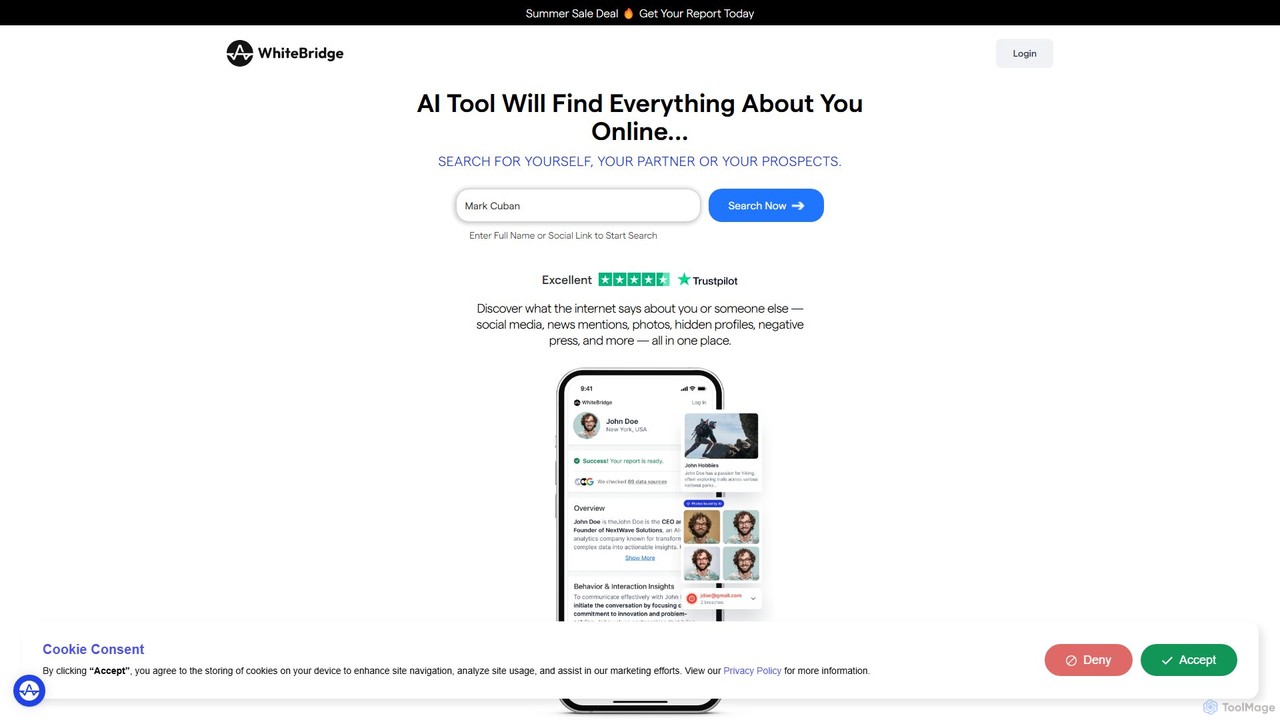
Whitebridge

Whitebridge is an AI-powered intelligence platform for comprehensive online reputation management and people search. It helps users safeguard their digital footprint, verify identities, and conduct in-depth due diligence for personal and business decisions, from meeting preparation to executive screening.

Due Diligence
Visits 238.4KFavorites 143Likes 155
Hebbia
Paid

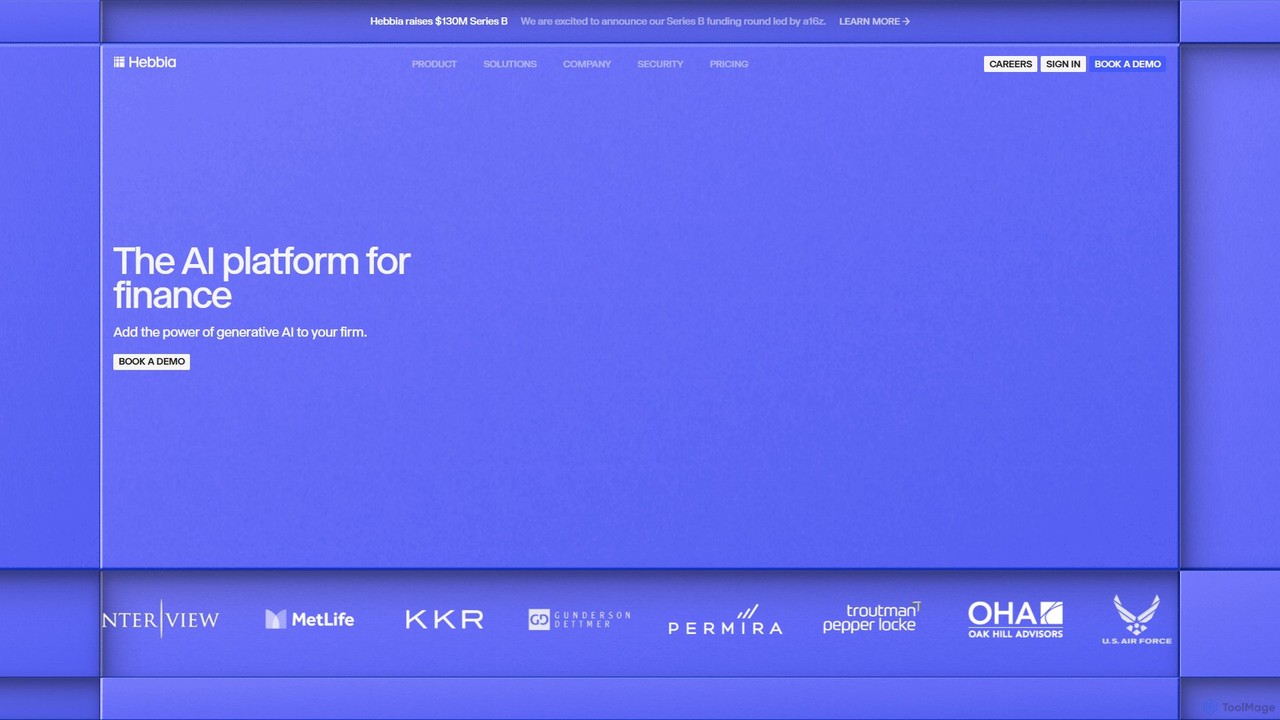
Hebbia

Hebbia is an enterprise-grade AI platform designed for finance, legal, and corporate sectors. It enables firms to build custom AI agents that automate complex data analysis, document review, and multi-step workflows. By leveraging its proprietary Matrix architecture, Hebbia transforms vast amounts of unstructured data into actionable, transparent insights, significantly accelerating processes like due diligence, contract analysis, and market research.

Due Diligence
Visits 148.5KFavorites 130Likes 129
cherrytree.ai
Paid

cherrytree.ai

An AI-powered platform designed for investors and M&A teams to automate and accelerate the due diligence process. It analyzes vast amounts of public and proprietary data to deliver deep, actionable insights on companies, markets, and competitors, transforming weeks of research into hours.

Due Diligence
Visits 5.8KFavorites 129Likes 135
Is My Ceo A Fraud?
Free

Is My Ceo A Fraud?

An AI-powered tool that analyzes LinkedIn profiles to assess professional credibility. Simply paste a LinkedIn URL to get an instant AI-driven judgment, helping you perform quick due diligence on executives, founders, and other professionals.

Due Diligence
Visits 5.5KFavorites 123Likes 114

About Due Diligence

AI Due Diligence tools are specialized platforms that use artificial intelligence to automate and enhance the investigation of a business or asset before a transaction. These tools leverage Natural Language Processing (NLP) to analyze vast volumes of documents like contracts and financial reports, and machine learning to identify risks, anomalies, and critical information. Their primary value lies in dramatically accelerating the due diligence process, reducing human error, and uncovering insights that manual reviews might miss. This enables businesses to make faster, more informed decisions in high-stakes scenarios like mergers, acquisitions, and investments.

Core Features

  • Automated Document Analysis: Utilizes NLP to automatically extract key clauses, dates, obligations, and potential risks from thousands of legal and financial documents.
  • Risk Identification & Scoring: Employs machine learning models to flag potential legal, financial, or compliance issues and assign a quantifiable risk score.
  • Adverse Media & Sanctions Screening: Continuously monitors global news, social media, and regulatory watchlists for negative information or sanctions related to a target entity.
  • Financial Anomaly Detection: Analyzes financial statements and transaction data to identify unusual patterns or outliers that could indicate fraud or instability.
  • Virtual Data Room (VDR) Integration: Securely connects with VDRs to centralize, organize, and analyze all relevant documents in a single, searchable environment.

Applicable Scenarios

These tools are essential for professionals involved in corporate transactions. M&A teams, corporate lawyers, venture capital analysts, and investment bankers use them to expedite deal-making. They are also critical for compliance officers for Know Your Customer (KYC) and Anti-Money Laundering (AML) checks, as well as for procurement teams vetting strategic suppliers.

Selection Criteria

When choosing an AI Due Diligence tool, consider the scope of its data sources (public records, private data rooms). Evaluate the sophistication of its AI models and the transparency of its risk analysis. Data security protocols and compliance with regulations like GDPR are paramount. Also, assess its integration capabilities with your existing workflows and the quality of its reporting and visualization features.

Due Diligence use cases

1

Accelerating M&A Contract Review

A corporate legal team preparing for a major acquisition uses an AI Due Diligence tool to analyze over 20,000 contracts from the target company's virtual data room. Instead of spending months on manual review, the AI platform processes all documents within 48 hours. It automatically identifies non-standard clauses, change of control provisions, and potential liabilities, presenting them in a prioritized risk dashboard. This allows the legal team to focus their expertise on the highest-risk issues, reducing review time by over 80% and enabling faster, more confident deal negotiation.

2

Vetting Venture Capital Investments

A venture capital analyst evaluates a potential investment in a tech startup. They use an AI tool to conduct a comprehensive background check on the founders, scanning for undisclosed past business failures, litigation, or negative press. The tool also analyzes the startup's public data footprint, including social media sentiment and news coverage, to gauge market perception. Simultaneously, it screens for potential intellectual property conflicts. The resulting report provides a holistic risk profile in under an hour, helping the firm avoid problematic investments and focus on high-potential opportunities.

3

Automating KYC/AML Compliance Checks

A compliance officer at a global bank is responsible for onboarding new corporate clients. They use an AI-powered due diligence platform to automate the Know Your Customer (KYC) and Anti-Money Laundering (AML) process. The system automatically verifies the corporate entity, screens its directors and ultimate beneficial owners (UBOs) against thousands of global watchlists and sanctions lists, and performs continuous adverse media monitoring. This reduces the manual workload by over 90%, ensures a consistent and auditable compliance process, and significantly lowers the risk of regulatory fines.

4

Assessing Supply Chain Partner Risk

A procurement manager at a large manufacturing firm needs to vet a new critical supplier from overseas. Using an AI due diligence tool, they initiate a comprehensive risk assessment. The tool analyzes the supplier's financial stability by reviewing public financial records, checks for any history of litigation or regulatory penalties, and scans for reports of labor disputes or environmental violations. The AI generates a consolidated risk score and a detailed report, allowing the manager to make an evidence-based decision and protect the company's supply chain from potential disruption and reputational damage.

5

Analyzing Real Estate Portfolio Acquisitions

A real estate investment trust (REIT) is considering the acquisition of a portfolio of 50 commercial properties. An AI due diligence platform is used to digitize and analyze all associated documents, including lease agreements, title deeds, zoning regulations, and environmental reports. The AI extracts critical data points such as lease expiration dates, rent escalation clauses, and any restrictive covenants. It flags properties with potential zoning conflicts or environmental liabilities, providing the investment team with a clear, data-driven overview of the portfolio's risks and opportunities, facilitating a more accurate valuation.

6

Uncovering Evidence for Litigation

A legal team is preparing for a complex commercial litigation case involving millions of internal documents and emails. They deploy an AI due diligence tool for e-discovery. The tool rapidly processes and indexes the entire dataset, allowing lawyers to use natural language queries to find relevant information. Its topic modeling and sentiment analysis features help identify key communication patterns, crucial timelines, and potentially incriminating evidence that would be nearly impossible to find through manual keyword searches alone. This accelerates case preparation and strengthens their legal strategy.

Due Diligence FAQ

What are AI Due Diligence tools?

AI Due Diligence tools are software platforms that use artificial intelligence, primarily Natural Language Processing (NLP) and machine learning, to automate the analysis of large volumes of data for business transactions. They go beyond simple keyword searches to understand context, identify risks, and extract critical information from legal contracts, financial statements, and public records. Their main purpose is to make the due diligence process faster, more accurate, and more comprehensive than traditional manual methods.

How to choose the right AI Due Diligence tool?

Choosing the right tool depends on your specific needs. Consider the following factors:

  • Scope of Analysis: Does the tool analyze only internal documents from a data room, or does it also scan public records, news, and social media?
  • Industry Specialization: Some tools are tailored for specific sectors like finance (for AML/KYC) or real estate, with pre-trained models for relevant documents.
  • Data Security: Ensure the platform has robust security certifications (e.g., SOC 2, ISO 27001) to protect sensitive information.
  • Integration: Check if it can integrate smoothly with your existing systems, such as virtual data rooms or case management software.
  • Transparency: A good tool should provide clear explanations for its risk assessments, not just a black-box score.
What's the difference between AI Due Diligence and traditional manual review?

The primary differences are speed, scale, and depth of insight. A manual review by a team of lawyers might take weeks or months to analyze a few thousand documents, and is prone to human error and fatigue. An AI platform can process tens of thousands of documents in hours, operating 24/7 without fatigue. Furthermore, AI can detect subtle patterns, connections, and anomalies across the entire dataset that a human reviewer, looking at documents one by one, would likely miss. AI augments human expertise, it doesn't replace it, allowing experts to focus on strategic analysis rather than tedious document review.

What types of risks can AI Due Diligence tools identify?

AI tools can identify a wide spectrum of risks. In legal documents, they can flag non-standard clauses, missing signatures, or change-of-control provisions that could jeopardize a deal. In finance, they detect anomalies in financial statements that might suggest fraud or instability. For compliance, they screen for connections to sanctioned individuals or entities (AML) and uncover adverse media reports that pose reputational risks. They can also identify operational risks by analyzing supplier contracts or environmental reports for potential liabilities.

Who are the primary users of AI Due Diligence tools?

These tools are primarily used by professionals involved in high-stakes business decisions and risk management. This includes:

  • Corporate Lawyers and M&A Teams: For analyzing contracts and identifying legal risks in transactions.
  • Investment Bankers and Private Equity Analysts: For evaluating investment targets and accelerating deal flow.
  • Venture Capitalists: For vetting startups and their founders.
  • Compliance Officers: For conducting KYC/AML checks and monitoring for regulatory risks.
  • Procurement and Supply Chain Managers: For assessing the financial and operational risks of key suppliers.