
Business Best in category 1 results E Learning AI Tool

Popular AI tools in the E Learning field of Business include Steppit, etc., helping you quickly improve efficiency.

Steppit

Steppit

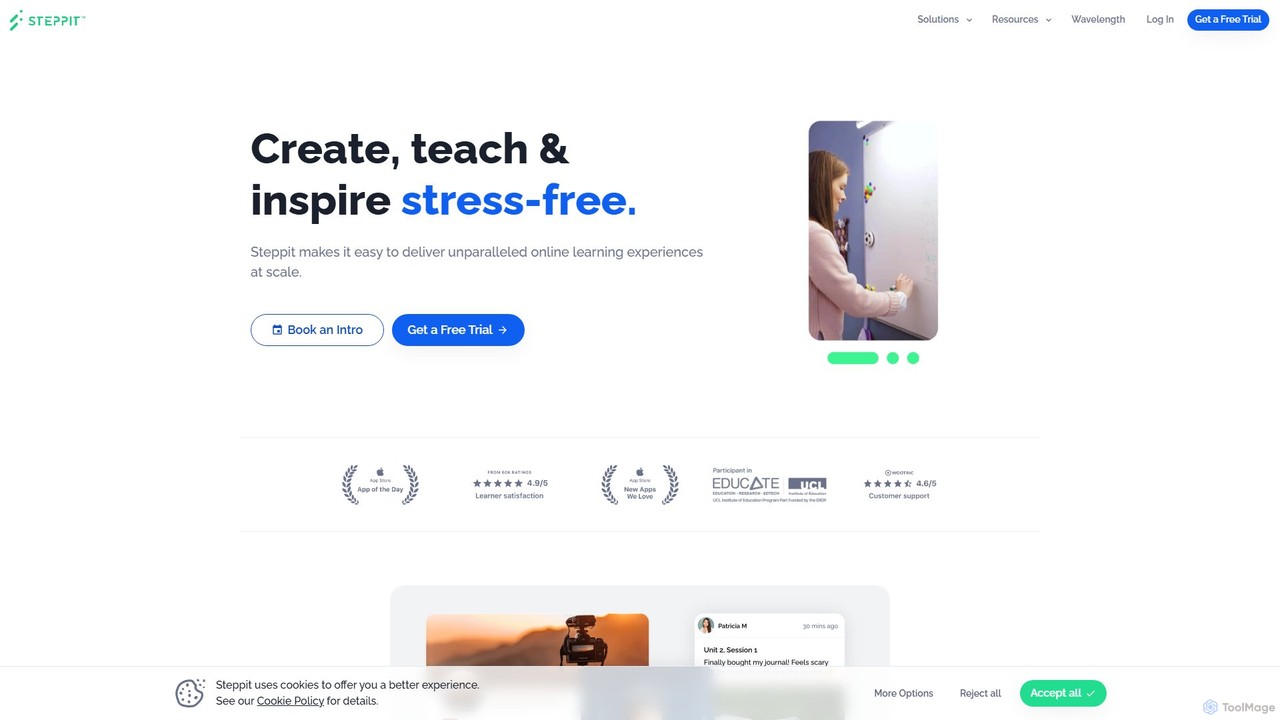
Steppit is an AI-powered platform that simplifies the creation and delivery of engaging, step-by-step online courses. It combines …

5.9K

About E Learning

AI E-Learning tools are specialized platforms that use artificial intelligence to create, personalize, and deliver educational content within a business context. These tools leverage machine learning algorithms to adapt learning paths to individual user needs and NLP to automate the generation of course materials like quizzes and summaries. They empower organizations to scale their training programs efficiently, enhance employee knowledge retention, and measure the direct impact of learning on business performance. The core advantage lies in transforming static training content into dynamic, interactive, and data-driven learning experiences.

Core Features

  • Adaptive Learning Paths: Automatically customizes course content and difficulty based on an individual's performance and learning pace.
  • Automated Content Generation: Instantly creates course outlines, video scripts, quizzes, and summaries from existing documents or simple prompts.
  • Intelligent Tutoring & Feedback: Provides real-time, AI-driven assistance and detailed feedback on assignments, simulating a one-on-one tutor.
  • Predictive Analytics: Analyzes learner data to predict performance, identify at-risk employees, and recommend interventions for training managers.

Use Cases

These tools are primarily used by corporate training departments, human resources (HR) for employee onboarding and compliance, and sales enablement teams for product knowledge training. They are also valuable for customer education, helping companies create scalable tutorials and support materials.

How to Choose

When selecting an AI E-Learning tool, evaluate its content authoring capabilities, the sophistication of its personalization engine, and its integration options with your existing Learning Management System (LMS) or HR software. Also, consider the depth of its analytics and reporting features to ensure you can measure training ROI effectively.

E LearningUse Cases

1

Automate Corporate Onboarding Programs

An HR manager is tasked with onboarding 20 new hires across different departments. Instead of manually creating separate training plans, they use an AI E-Learning tool to upload company handbooks, policy documents, and role descriptions. The AI automatically generates a core onboarding curriculum and then personalizes modules for each role, creating interactive quizzes and video summaries. This reduces the setup time by over 70% and ensures every new employee receives a consistent yet relevant learning experience from day one.

2

Develop Personalized Sales Skills Training

A sales enablement leader needs to train their team on a new, complex product line. They use an AI platform that analyzes sales call recordings to identify common customer objections. The AI then generates personalized role-playing scenarios and coaching modules for each salesperson, focusing on their specific areas of weakness. The platform provides instant feedback on their practice pitches, helping them master the material faster and leading to a measurable increase in confidence and closing rates.

3

Scale Mandatory Compliance Training

A compliance officer in a financial institution must ensure all 500 employees complete annual anti-money laundering (AML) training. Using an AI E-Learning tool, they create an engaging, scenario-based course that adapts to different job functions. The AI tracks completion rates in real-time and uses predictive analytics to identify employees who are falling behind or struggling with key concepts. It automatically sends personalized reminders and supplementary materials, ensuring a 100% completion rate and a fully auditable training record.

4

Create Interactive Software Tutorials for Customers

A customer success team for a SaaS company wants to reduce support tickets by improving user education. They use an AI E-Learning tool to create interactive, on-demand product tutorials. The AI can generate step-by-step guides, voiceovers for video walkthroughs, and an intelligent FAQ bot within the tutorial itself. This allows customers to learn at their own pace and get instant answers, leading to higher product adoption rates and a significant reduction in basic 'how-to' support queries.

5

Generate Course Content from Existing Materials

A corporate trainer needs to convert a dense 100-page technical manual into an accessible online course for non-technical staff. They upload the PDF to an AI E-Learning platform. The AI analyzes the document, identifies key concepts, and automatically generates a course structure with distinct modules. It creates simplified summaries, multiple-choice questions, and even suggests visuals for each section. This transforms a week-long manual process into a few hours of review and refinement.

6

Measure the Impact of Leadership Development

A Learning & Development (L&D) department invests in a leadership program for mid-level managers. They use an AI E-Learning platform that not only delivers content on strategic thinking and team management but also tracks behavioral changes. The AI analyzes pre- and post-training data, such as project outcomes and 360-degree feedback, to provide quantitative insights into the program's effectiveness. This allows the L&D team to demonstrate tangible ROI to senior leadership and continuously improve the training curriculum.

E LearningFrequently Asked Questions