
ToolMage
Sign in

Best 1 Employee Onboarding AI tools for Business

Popular Employee Onboarding AI tools in Business include Let's Copilot, helping you work more efficiently.

Let's Copilot
Paid

Let's Copilot

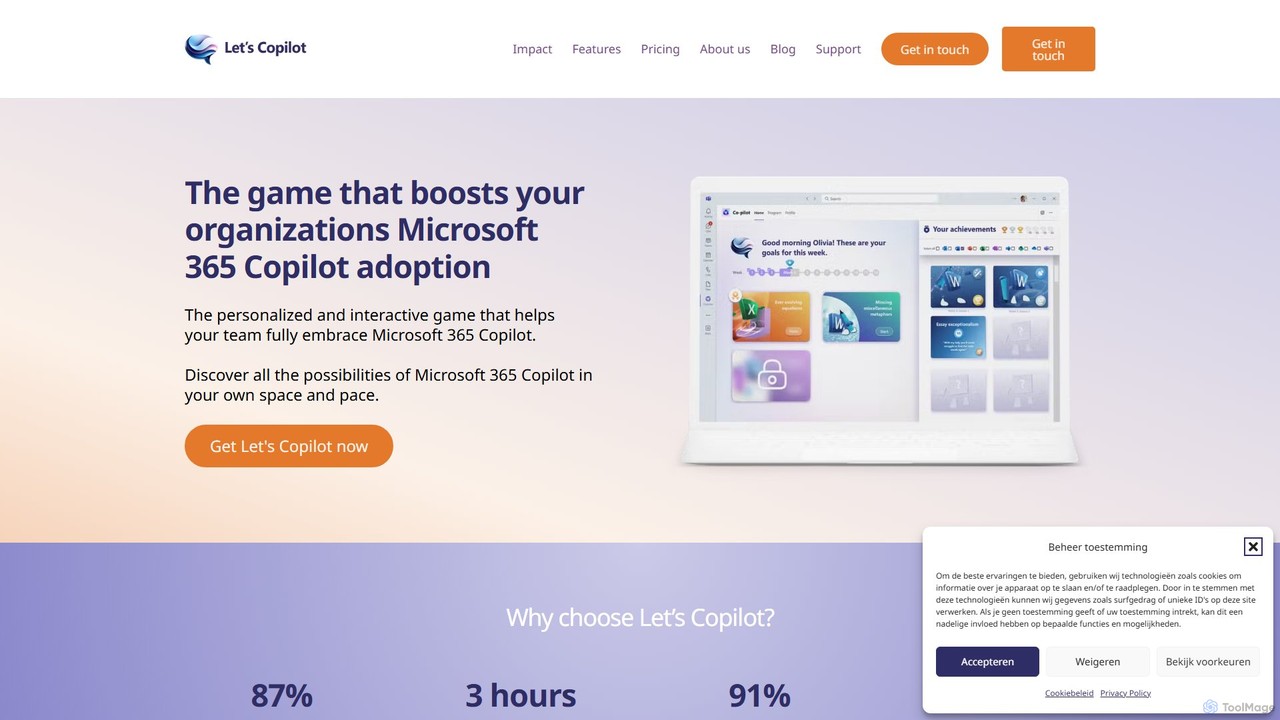
Let's Copilot is a gamified training application integrated into Microsoft Teams, designed to maximize your organization's adoption of Microsoft 365 Copilot. It offers a personalized and interactive learning journey to equip employees with the skills needed to enhance productivity in the AI era.

Employee Onboarding
Visits 7KFavorites 151Likes 140

About Employee Onboarding

Employee Onboarding AI tools are specialized platforms designed to automate, personalize, and optimize the process of integrating new hires into an organization. Leveraging artificial intelligence, these tools streamline administrative tasks, deliver tailored training, and foster early engagement. They aim to create a consistent, efficient, and positive experience for new employees, significantly reducing manual HR workload and accelerating productivity.

Core Features

  • Automated Task Workflows: Automatically assign pre-boarding and onboarding tasks, document requests, and system access.
  • Personalized Learning Paths: Generate customized training modules and resources based on role, department, and individual needs.
  • Compliance Management: Facilitate the collection, verification, and secure storage of essential legal and HR documents.
  • Engagement & Feedback Tools: Provide interactive elements and gather new hire sentiment to identify areas for improvement.

Use Cases

These tools are invaluable for HR departments in organizations of all sizes, particularly those with high hiring volumes or distributed workforces. They are used to ensure a smooth transition for new employees from offer acceptance through their first few months, covering everything from IT setup to cultural integration.

How to Choose

When selecting an AI employee onboarding tool, consider its integration capabilities with existing HRIS and payroll systems, the level of customization offered for workflows and content, scalability to accommodate future growth, and robust analytics for tracking new hire progress and satisfaction. User-friendliness for both HR and new employees is also crucial.

Employee Onboarding use cases

1

Automating Pre-boarding Communications

HR teams utilize AI onboarding tools to automatically send personalized welcome messages, essential document requests, and initial company information to new hires even before their first day. This ensures new employees feel valued and prepared, reducing first-day anxiety and administrative burden on HR staff.

2

Creating Personalized Training Journeys

Learning & Development specialists deploy AI to analyze a new hire's role, department, and existing skills, then generate a customized training curriculum. This ensures relevant and efficient learning, accelerating the new employee's time to proficiency and maximizing their contribution to the team.

3

Streamlining Compliance Document Collection

Organizations leverage AI platforms to guide new employees through the submission of necessary legal and HR compliance documents, such as tax forms and non-disclosure agreements. The AI can verify completeness and accuracy, ensuring regulatory adherence and reducing manual review errors for HR.

4

Facilitating Virtual Buddy & Mentor Matching

Companies use AI to intelligently match new hires with experienced colleagues or mentors based on shared interests, departmental roles, or career aspirations. This fosters early social integration, provides a go-to resource for questions, and enhances the new employee's sense of belonging.

5

Gathering & Analyzing New Hire Feedback

HR managers implement AI tools to collect structured and unstructured feedback from new employees throughout their onboarding journey. The AI analyzes sentiment and identifies common pain points or areas of excellence, enabling continuous improvement of the onboarding program.

6

Automating IT Provisioning & Access

IT departments integrate AI onboarding solutions to automatically provision necessary software licenses, create user accounts, and arrange hardware delivery for new hires. This ensures new employees have immediate access to all required tools from day one, minimizing delays and IT support tickets.

Employee Onboarding FAQ

What are AI Employee Onboarding tools?

AI Employee Onboarding tools are software solutions that use artificial intelligence to automate, personalize, and enhance the process of integrating new hires into a company. They streamline administrative tasks, provide tailored learning experiences, and boost early engagement, making the transition smoother for both employees and HR.

How do AI tools improve the employee onboarding experience?

AI tools significantly improve onboarding by offering personalization, automation, and data-driven insights. They can create custom training paths, automate document collection, provide instant answers to FAQs, and analyze feedback to continuously refine the process, leading to higher new hire satisfaction and retention.

What key features should I look for in an AI onboarding platform?

Key features include automated workflow creation, personalized content delivery (e.g., training modules), robust compliance management for documents, integration capabilities with HRIS/payroll, analytics for tracking progress and engagement, and interactive communication tools like chatbots or virtual assistants.

How can AI onboarding tools integrate with existing HR systems?

Most AI onboarding tools offer API integrations or pre-built connectors to popular HRIS (Human Resources Information Systems), payroll software, and learning management systems (LMS). This allows for seamless data flow, avoiding manual data entry and ensuring consistency across all HR platforms.

How do AI onboarding tools differ from traditional onboarding software?

While traditional software digitizes forms and checklists, AI onboarding tools go further by actively learning and adapting. They use AI for personalization (e.g., dynamic content, smart recommendations), predictive analytics (e.g., identifying at-risk hires), and intelligent automation, offering a more dynamic and responsive experience than static, rule-based systems.