autarc
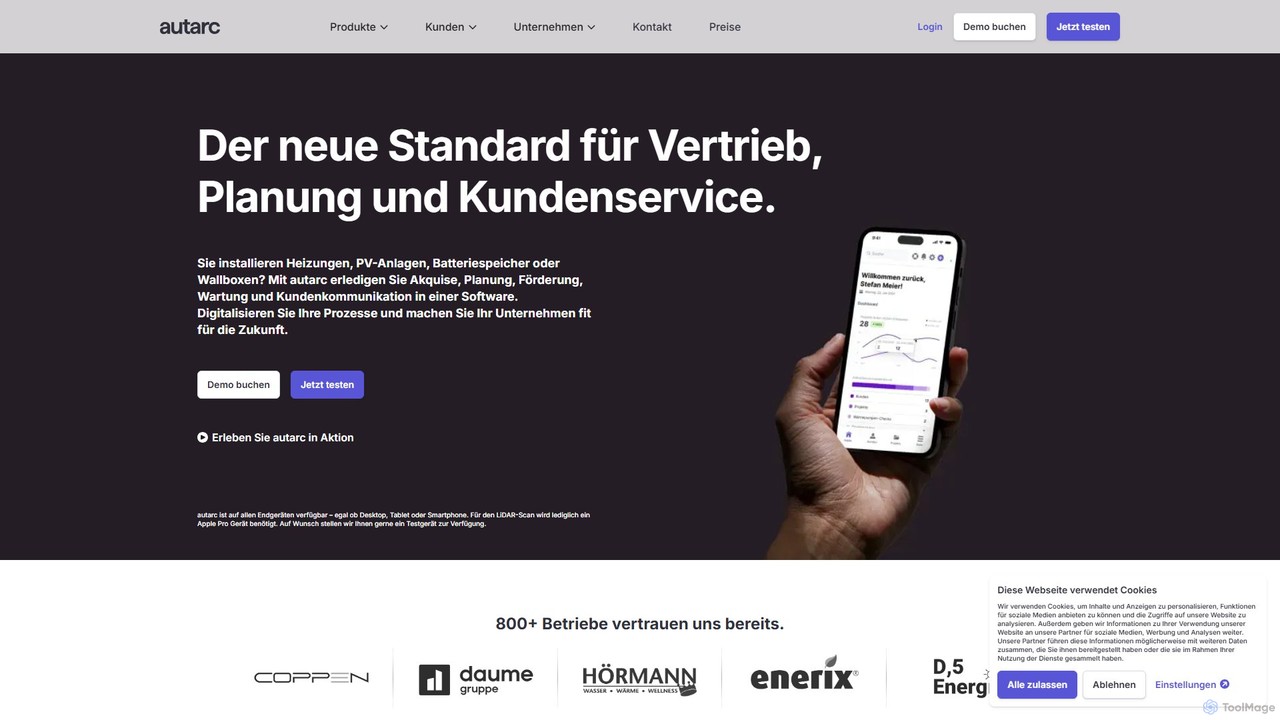
autarc is an all-in-one B2B software for renewable energy professionals, streamlining the planning of heat pumps, PV systems, …
autarc is an all-in-one B2B software for renewable energy professionals, streamlining the planning of heat pumps, PV systems, and storage. It uses AI and LiDAR scanning to enable fully digital, compliant, and efficient project management from lead qualification to final proposal.
About Energy Management
Energy Management AI tools are a class of intelligent solutions designed to optimize energy consumption, production, and distribution across various sectors. Leveraging advanced machine learning algorithms, IoT data, and predictive analytics, these tools provide real-time insights into energy usage patterns and forecast future demands. They empower organizations to significantly reduce operational costs, minimize their environmental footprint, and enhance the overall reliability and sustainability of their energy systems, playing a crucial role in modern business operations.
Core Features
- Real-time Monitoring & Visualization: Continuously tracks energy usage patterns from diverse sources and presents data through intuitive dashboards for immediate insights.
- Predictive Demand Forecasting: Utilizes historical data, weather patterns, and operational schedules to accurately predict future energy demand and supply fluctuations.
- Automated Optimization & Control: Intelligently adjusts HVAC systems, lighting, machinery, and other energy-consuming assets to maintain optimal efficiency and comfort levels.
- Renewable Energy Integration: Facilitates the seamless incorporation, management, and optimization of renewable energy sources like solar and wind into existing grids or building systems.
- Anomaly Detection & Diagnostics: Automatically identifies unusual energy consumption or production patterns, alerting operators to potential equipment malfunctions, leaks, or inefficiencies.
Applicable Scenarios
These AI tools are indispensable for facility managers in large commercial buildings and campuses aiming to drastically cut utility bills and improve occupant comfort. Industrial operators utilize them to fine-tune manufacturing processes, reduce energy intensity, and comply with environmental regulations. Utility companies deploy them for grid stability, demand-side management, and efficient integration of distributed energy resources. Furthermore, they support smart city initiatives by optimizing public infrastructure energy use, such as street lighting and public transport systems.
How to Choose
When selecting an Energy Management AI tool, it's crucial to consider its compatibility with your existing infrastructure and data sources, including smart meters, IoT sensors, and building management systems. Evaluate the accuracy and adaptability of its predictive models to your specific operational context, and assess its ability to automate control actions directly or provide actionable recommendations. Key factors also include the scalability of the solution for future growth, the level of customization offered for specific energy assets, and compliance with relevant industry standards and data security protocols.
Energy ManagementUse Cases
Optimizing Commercial Building HVAC Systems
Facility managers use AI to analyze occupancy data, weather forecasts, and historical energy consumption to dynamically adjust heating, ventilation, and air conditioning (HVAC) systems. This proactive optimization ensures occupant comfort while significantly reducing energy waste and lowering utility costs by up to 20-30% annually.
Predictive Maintenance for Industrial Equipment
In manufacturing plants, AI energy management tools monitor the power signatures of machinery in real-time. By detecting subtle anomalies in energy consumption, the system can predict potential equipment failures before they occur, enabling proactive maintenance, preventing costly downtime, and optimizing energy use by ensuring equipment runs at peak efficiency.
Integrating Renewable Energy Sources into Grids
Utility companies and large enterprises leverage AI to forecast the output of intermittent renewable sources (like solar and wind) and predict grid demand. This allows for intelligent dispatching of energy, balancing supply and demand, minimizing reliance on fossil fuel peaker plants, and maximizing the utilization of clean energy.
Demand-Side Management for Utilities
AI tools help utility providers implement effective demand-side management programs. By analyzing consumer behavior and predicting peak demand periods, they can incentivize or automatically adjust energy consumption for large users, reducing strain on the grid during critical times and preventing blackouts.
Energy Cost Reduction in Data Centers
Data center operators employ AI to optimize power usage effectiveness (PUE) by intelligently managing cooling systems, server workloads, and power distribution. AI identifies inefficiencies and recommends adjustments, leading to substantial energy savings and a reduced carbon footprint without compromising performance or reliability.
Smart Street Lighting Optimization
Municipalities use AI energy management to control public street lighting based on real-time traffic, pedestrian movement, and ambient light conditions. This dynamic adjustment ensures adequate illumination only when needed, leading to significant energy savings, extended lamp life, and enhanced public safety in urban environments.