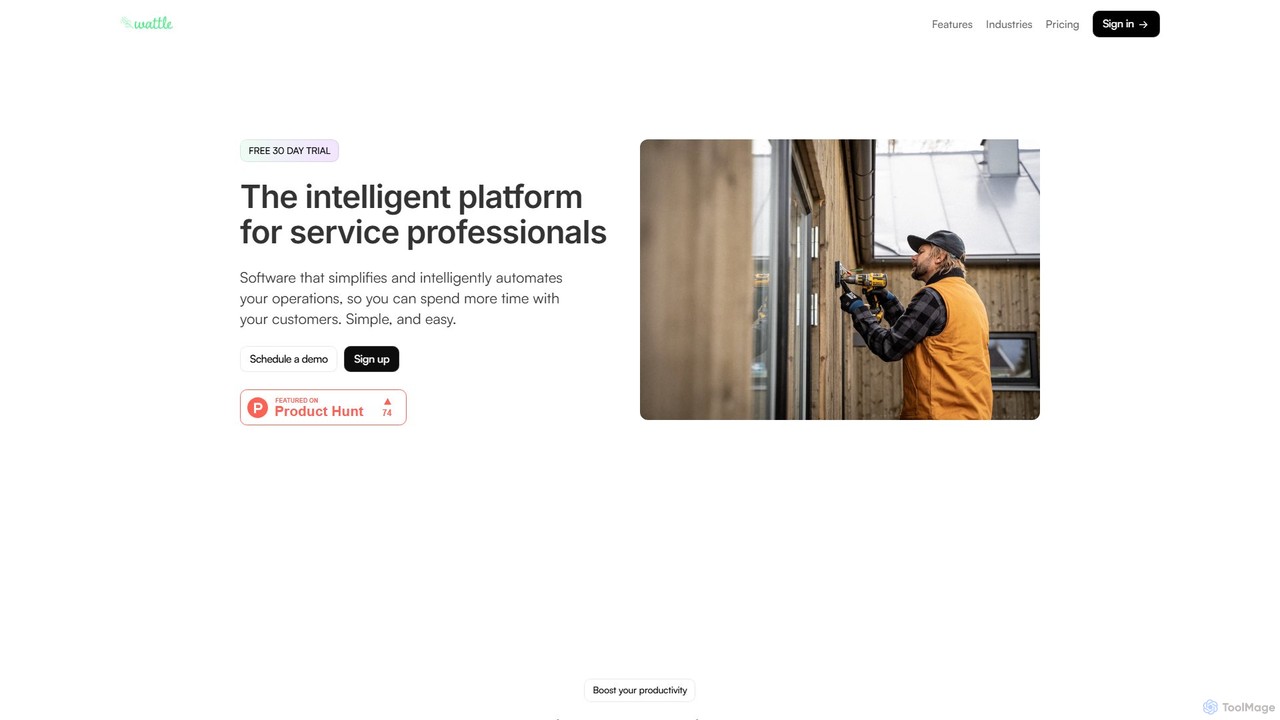
AI Field Service Management (FSM) tools are specialized platforms that use artificial intelligence to optimize the management of mobile workforces and off-site operations. These tools leverage AI algorithms for predictive scheduling, intelligent dispatching, and real-time route optimization to streamline service delivery. They are designed to increase operational efficiency, reduce costs, and significantly improve customer satisfaction by ensuring the right technician arrives at the right place, at the right time, with the right equipment. The integration of AI allows for proactive problem-solving, moving from a reactive to a predictive service model.
Core Features
- AI-Powered Scheduling & Dispatch: Automatically assigns the best technician based on skills, location, availability, and job priority.
- Intelligent Route Optimization: Dynamically calculates the most efficient travel routes, factoring in traffic, weather, and new service calls.
- Predictive Maintenance: Analyzes data from assets and IoT devices to forecast potential failures and schedule service proactively.
- Automated Work Order Management: Digitizes the entire service lifecycle from request creation and tracking to invoicing and reporting.
- Mobile Workforce Enablement: Equips technicians with a mobile app for real-time access to job details, customer history, and knowledge bases.
Applicable Scenarios
These tools are crucial for industries with significant field operations, such as HVAC, utilities, telecommunications, property management, and medical equipment maintenance. Service managers use them to oversee team performance, dispatchers to manage daily schedules, and field technicians to execute jobs efficiently and report progress from their mobile devices.
Selection Criteria
When choosing an AI Field Service Management tool, consider its integration capabilities with your existing CRM and ERP systems. Evaluate the usability and offline functionality of the mobile app for technicians. Assess its scalability to support your team's growth and the depth of its industry-specific features. Finally, examine the platform's analytics and reporting capabilities to ensure you can measure performance and ROI.