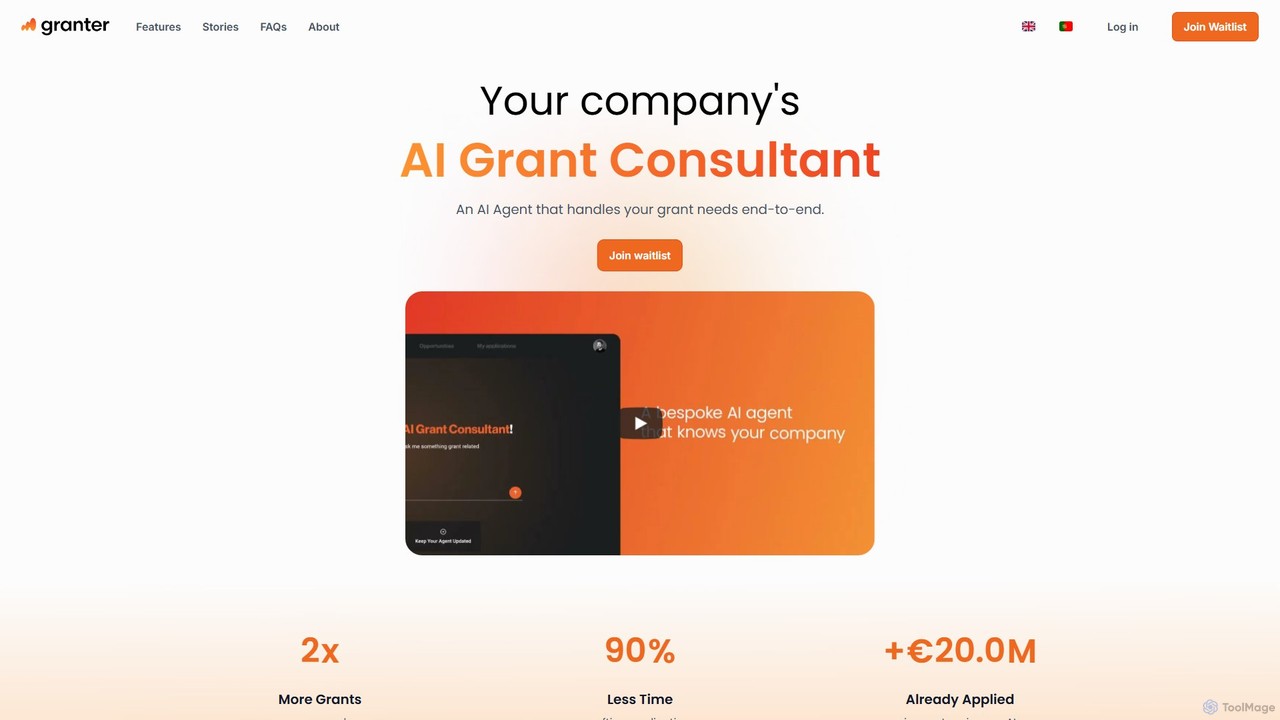
Funding AI tools are specialized platforms that leverage artificial intelligence to streamline and optimize the process of securing capital and managing financial resources within the broader business context. These tools utilize advanced algorithms for market analysis, investor matching, risk assessment, and financial forecasting. They empower startups, small businesses, and even large enterprises to identify funding opportunities, prepare compelling proposals, and make informed investment decisions. By automating complex financial tasks, they significantly reduce the time and effort traditionally associated with fundraising and financial management.
Core Features
- Investor Matching: Connects businesses with suitable investors, venture capitalists, or lenders based on specific criteria and funding needs.
- Grant & Loan Discovery: Automatically identifies relevant government grants, private funding programs, and loan products tailored to a business's profile.
- Financial Forecasting & Modeling: Generates accurate financial projections and models to demonstrate viability and attract potential funders.
- Proposal & Pitch Deck Assistance: Provides AI-driven support for drafting business plans, funding proposals, and compelling pitch decks.
- Risk Assessment & Due Diligence: Evaluates investment risks for both funding seekers and providers, enhancing decision-making processes.
Use Cases
Businesses across various sectors utilize Funding AI tools to navigate the complex financial landscape. Startups can efficiently secure seed or Series A funding by identifying and engaging with relevant investors. Small and medium-sized enterprises (SMEs) can optimize their loan applications and discover government support programs. Large corporations might use these tools for strategic investment analysis or to manage complex capital allocation projects, ensuring robust financial health and growth.
How to Choose
When selecting an AI Funding tool, consider its specialization (e.g., grants, venture capital, loans), data integration capabilities with existing financial systems, and the accuracy of its predictive analytics. Evaluate the user interface and ease of use, especially for non-financial experts, and assess the level of automation offered for tasks like document generation or investor outreach. Finally, review security protocols to protect sensitive financial data and ensure compliance with regulations.