ToolMage
Sign in

Best 1 Hiring AI tools for Business

Popular Hiring AI tools in Business include 2ndpilot, helping you work more efficiently.

2ndpilot
Freemium

2ndpilot

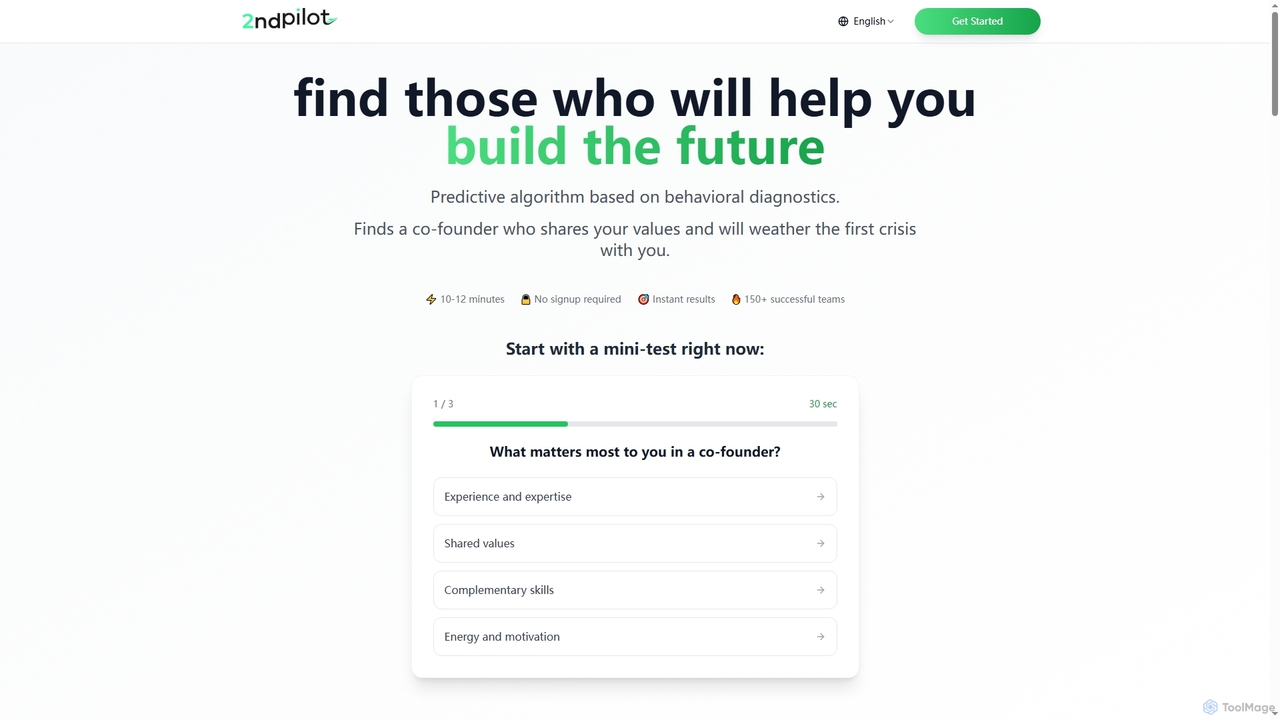
2ndpilot is an AI-powered co-founder matching platform that uses behavioral diagnostics to connect entrepreneurs with compatible partners. It helps founders, accelerators, and VCs build strong, sustainable teams by predicting compatibility, reducing conflicts, and fostering growth opportunities. The platform offers a quick, no-signup test to identify core motivations and decision-making styles.

Hiring
Visits 5.6KFavorites 139Likes 124

About Hiring

AI Hiring tools are a category of advanced software solutions that leverage artificial intelligence to streamline, automate, and enhance various stages of the recruitment and talent acquisition process. These tools utilize machine learning, natural language processing, and predictive analytics to transform traditional hiring practices. Their primary value lies in improving efficiency, reducing unconscious bias, and identifying best-fit candidates more effectively, ultimately leading to better hiring outcomes and a superior candidate experience.

Core Features

  • Automated Resume Screening: Intelligently parses, screens, and ranks resumes based on job requirements, filtering unqualified candidates.
  • Proactive Candidate Sourcing: Scans vast databases and professional networks to identify and engage passive talent.
  • AI-Powered Interview Scheduling: Automates the coordination of interviews, sending invitations and managing rescheduling across multiple calendars.
  • Interview Analysis & Assessment: Provides objective insights from video or text interviews, evaluating communication and identifying key traits.
  • Predictive Talent Matching: Uses historical data to predict candidate success, retention, and cultural fit within an organization.

Applicable Scenarios

AI Hiring tools are invaluable for large enterprises managing high volumes of applications, startups needing to scale their teams rapidly, and HR departments aiming to optimize their candidate experience. They are particularly useful for roles requiring specific skill sets, reducing time-to-hire, and ensuring a more diverse and objective talent pipeline.

How to Choose

When selecting an AI Hiring tool, prioritize integration capabilities with your existing Applicant Tracking System (ATS) or HRIS. Evaluate the accuracy and fairness of its AI algorithms to mitigate bias, and ensure robust data privacy and compliance features. Consider the breadth of its features, from sourcing and screening to analysis, and assess its scalability and user-friendliness for both recruiters and candidates.

Hiring use cases

1

Streamline High-Volume Resume Screening

HR teams in large corporations receiving thousands of applications for open positions utilize AI hiring tools to automatically parse, screen, and rank resumes. The AI identifies relevant skills, experience, and keywords, filtering out unqualified candidates and highlighting top matches. This significantly reduces manual review time, ensures a consistent and objective initial assessment, and allows recruiters to focus on engaging promising candidates.

2

Proactively Source Passive Candidates

Talent acquisition specialists leverage AI tools to scour professional networks, public profiles, and vast databases for passive candidates who match specific job requirements. These tools use machine learning to identify potential fits based on skills, career trajectory, and industry experience. This enables recruiters to build robust talent pipelines, engage with high-potential individuals before positions are even open, and gain a competitive edge in attracting top talent.

3

Automate Interview Scheduling and Coordination

Hiring managers and recruitment coordinators utilize AI-powered scheduling assistants to automatically find mutually convenient times for interviews across multiple calendars. The AI sends invitations, reminders, and handles rescheduling requests, eliminating the tedious back-and-forth emails and phone calls. This significantly improves the candidate experience by providing instant booking options and frees up valuable time for recruiters to focus on strategic tasks.

4

Enhance Interview Assessment with AI Insights

Recruiters and hiring panels use AI tools to analyze recorded video or transcribed text interviews. The AI can identify patterns in candidate responses, assess communication styles, and flag specific keywords or behaviors relevant to job requirements and company culture. This provides objective data points to complement human judgment, helping to reduce unconscious bias and improve the consistency and fairness of candidate evaluations.

5

Improve Hiring Quality with Predictive Matching

Organizations employ AI hiring platforms to predict candidate success and retention rates based on historical data and job-specific attributes. By analyzing a candidate's profile against successful employees in similar roles, the AI helps identify individuals who are not only qualified but also a strong cultural and long-term fit. This reduces turnover, improves overall team performance, and ensures more strategic talent investments.

6

Deliver Personalized Candidate Experiences

Companies use AI-driven chatbots and communication tools to provide instant, personalized responses to candidate inquiries throughout the application process. From answering FAQs about the role or company culture to guiding them through application steps, AI ensures candidates feel supported and informed. This enhances their perception of the employer brand, increases engagement, and helps attract and retain top talent in a competitive market.

Hiring FAQ

What are AI Hiring tools?

AI Hiring tools are software solutions that use artificial intelligence, such as machine learning and natural language processing, to automate and enhance various stages of the recruitment process. They aim to improve efficiency, reduce bias, and identify best-fit candidates more effectively. Key functions include intelligent resume screening, proactive candidate sourcing, automated interview scheduling, and predictive analytics for talent matching.

How do I choose the right AI Hiring tool for my business?

When selecting an AI Hiring tool, consider your specific needs: the volume of hiring, seamless integration with your existing HR systems (ATS/HRIS), robust data privacy and compliance features (e.g., GDPR, CCPA), and the proven accuracy and fairness of its AI algorithms to mitigate bias. Evaluate its core features like sourcing, screening, scheduling, and analysis, and ensure it aligns with your budget, scalability requirements, and provides a positive user experience for both recruiters and candidates.

What are the main benefits of using AI in recruitment?

The main benefits of using AI in recruitment include significant time savings by automating repetitive tasks like resume screening and scheduling, improved candidate quality through more objective matching and predictive analytics, and a reduction in unconscious bias during initial assessments. Additionally, AI enhances the candidate experience with faster responses and personalized communication, and provides better data-driven insights for strategic talent acquisition decisions, leading to more efficient and effective hiring.

What are the potential challenges or ethical concerns with AI in hiring?

Potential challenges with AI in hiring include ensuring the AI models are free from inherent biases present in historical data, which could inadvertently lead to discriminatory outcomes. Data privacy and security are also critical concerns, requiring strict adherence to regulations. Over-reliance on AI might depersonalize the recruitment process, and there's a continuous need for human oversight to validate AI recommendations and maintain a human touch. Transparency in how AI makes decisions is also a key ethical consideration.

How do AI Hiring tools differ from Applicant Tracking Systems (ATS)?

Applicant Tracking Systems (ATS) are primarily databases designed for managing applications, tracking candidates through the hiring pipeline, and ensuring compliance with hiring regulations. AI Hiring tools, while often integrated with an ATS, go beyond basic tracking by actively applying intelligence. They use machine learning for tasks like intelligent candidate matching, predictive analytics, automated communication, and advanced screening, transforming passive data management into an active, intelligent, and proactive talent acquisition strategy.