ToolMage
Sign in

Best 3 Idea Validation AI tools for Business

Popular Idea Validation AI tools in Business include Pitchyouridea.ai, Bunzee, and The Mom Tester, helping you work more efficiently.

Bunzee
Freemium

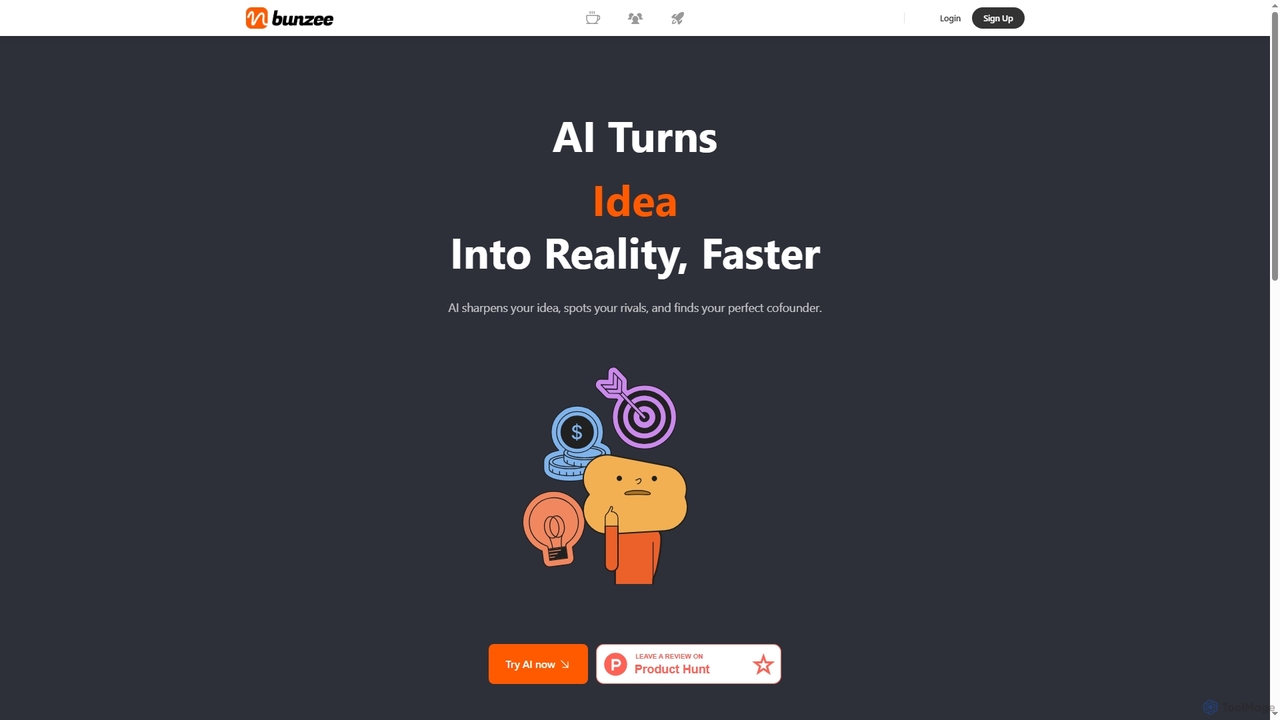
Bunzee

Bunzee is an AI-powered platform designed to help entrepreneurs and innovators validate ideas, build strong teams, and successfully launch projects globally. It offers comprehensive market analysis, competitor insights, and co-founder matching, fostering a collaborative environment for turning concepts into reality.

Idea Validation
Visits 5.4KFavorites 101Likes 106
The Mom Tester
Free

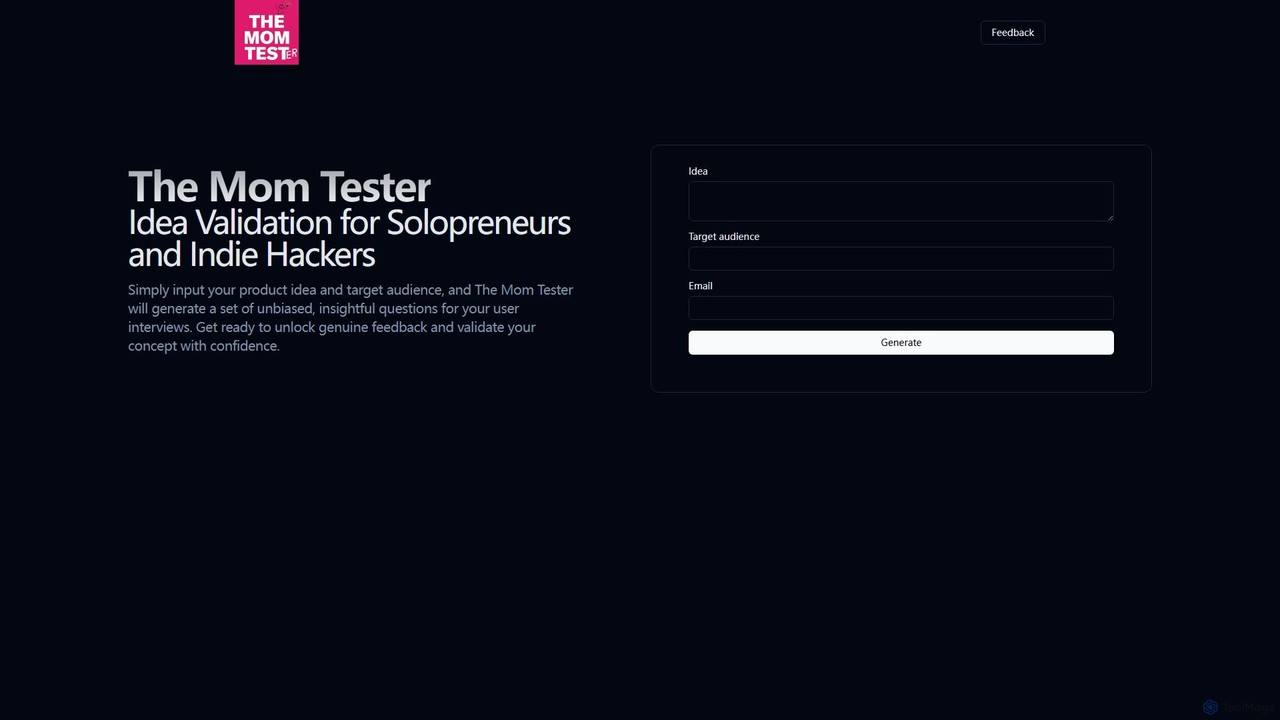
The Mom Tester

The Mom Tester is an AI-powered tool designed for solopreneurs and indie hackers to validate their business ideas. By inputting a product concept and target audience, it generates a set of unbiased, insightful questions based on 'The Mom Test' methodology, helping you conduct effective user interviews and gather genuine feedback to confidently assess your concept's viability.

Idea Validation
Visits 5.2KFavorites 146Likes 121
Pitchyouridea.ai
Freemium

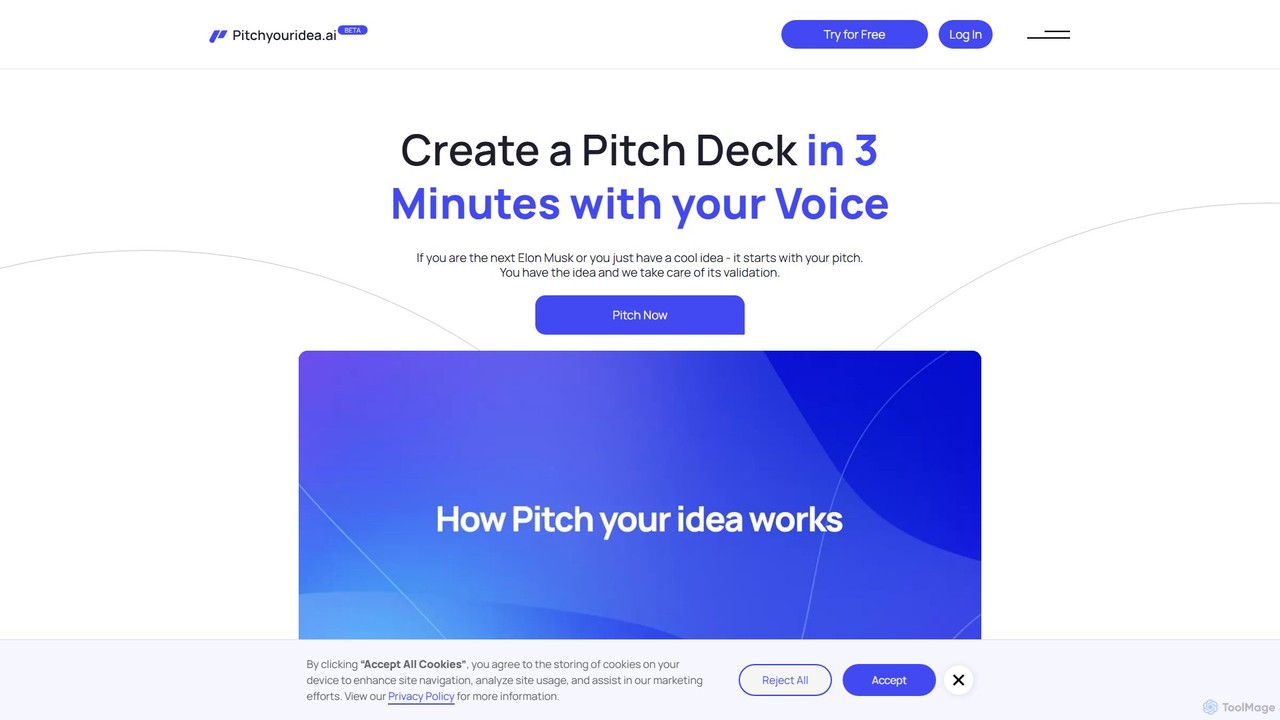
Pitchyouridea.ai

Pitchyouridea.ai is an AI-powered platform that transforms your voice pitch into a professional pitch deck in minutes. Practice your pitch with AI investor personas, receive instant feedback, and get a fully-generated presentation including business plan analysis, SWOT, and more. It's the ideal tool for entrepreneurs and founders to validate ideas and prepare for fundraising.

Idea Validation
Visits 6.2KFavorites 156Likes 150

About Idea Validation

AI Idea Validation tools are specialized platforms that use artificial intelligence to assess the viability of a business or product concept before development. They leverage machine learning models to analyze vast datasets, including market trends, competitor activity, and consumer sentiment, to provide data-driven insights. This process helps entrepreneurs and product managers mitigate risks, save resources, and increase the likelihood of market success by focusing on ideas with proven potential. These tools transform the validation process from guesswork into a strategic, analytical exercise.

Core Features

  • Market Opportunity Scoring: Provides a quantitative score on an idea's potential based on demand, competition, and trends.
  • Competitive Landscape Analysis: Automatically identifies key competitors and analyzes their products, pricing, and customer reviews.
  • Audience Persona Generation: Creates detailed profiles of the target audience, including their pain points and online behavior.
  • Problem-Solution Fit Evaluation: Assesses how effectively an idea addresses a genuine market need.

Use Cases

These tools are invaluable for startup founders in the pre-seed stage, product managers planning new feature roadmaps, and marketing teams testing campaign concepts. For instance, a founder can quickly compare five different startup ideas to see which has the lowest competition and highest search volume, allowing them to pursue the most promising venture.

How to Choose

When selecting an AI Idea Validation tool, consider the data sources it analyzes (e.g., social media, search data, app stores). Evaluate the depth of its analysis—does it just show trends or provide actionable insights and viability scores? Also, check for integration capabilities with other business tools and consider the pricing model, whether it's a one-time report or a subscription service.

Featured tool rankings

Idea Validation use cases

1

Validate a Startup Concept Before Funding

An aspiring entrepreneur has a novel idea for a SaaS platform but needs to convince investors of its market potential. They use an AI idea validation tool to generate a comprehensive report. The tool analyzes search engine data for related keywords, scours social media for discussions around the problem, and identifies existing competitors. The resulting report provides a market viability score, a profile of the ideal customer, and data-backed evidence of demand, which becomes a cornerstone of their pitch deck, significantly strengthening their case for seed funding.

2

Prioritize a Product Feature Roadmap

A product manager at an established tech company is faced with a long list of potential new features. To make data-driven decisions, they input each feature concept into an AI validation tool. The AI analyzes customer support tickets, public feature request boards, and competitor feature sets. It then scores each feature based on potential user impact and alignment with market trends. This allows the product team to build a roadmap that focuses on high-impact features, maximizing user satisfaction and competitive advantage.

3

Discover a Profitable E-commerce Niche

An e-commerce entrepreneur wants to launch a new online store but is unsure which product category to enter. They use an AI idea validation tool to explore various niches, such as 'sustainable pet toys' or 'smart gardening kits'. The tool analyzes online shopping trends, Amazon reviews, and social media buzz to identify niches with high demand and low competition. It highlights rising product trends and specific customer pain points, enabling the entrepreneur to confidently select a profitable niche and source products that meet a clear market need.

4

Test Marketing Angles for a New Campaign

A marketing team is preparing to launch a new product and has several different messaging strategies. Instead of expensive A/B testing with live ads, they use an AI tool to validate the potential resonance of each angle. They input taglines and value propositions like 'Save Time' vs. 'Increase Quality'. The AI analyzes online conversations and competitor advertising to predict which message will better capture the target audience's attention. This pre-testing helps the team allocate their advertising budget to the most promising campaign creative from day one.

5

Screen Investment Opportunities for VCs

A venture capital analyst receives dozens of startup pitches daily and needs a fast, effective way to screen them. They use an AI idea validation tool as a first-pass filter. By inputting the core concept from a pitch deck, the tool quickly generates a report on the market size, competitive landscape, and potential red flags. This allows the analyst to rapidly discard ideas in overly saturated or non-existent markets and focus their in-depth due diligence on startups with the highest, data-validated potential for success.

6

Refine a Course Idea for Content Creators

An online educator plans to create a new course but wants to ensure there's an audience willing to pay for it. They use an AI validation tool to compare several potential course topics, such as 'AI for Writers' versus 'Advanced Podcasting Techniques'. The tool analyzes search volume for educational content, questions asked on forums like Reddit and Quora, and the success of existing courses in each niche. The data helps the creator choose the topic with the most significant demand and tailor the curriculum to address the most common questions and pain points.

Idea Validation FAQ

What are AI Idea Validation tools?

AI Idea Validation tools are software platforms that use artificial intelligence to analyze the market viability of a new business, product, or feature idea. They automate the process of gathering and interpreting data from sources like search engines, social media, and competitor websites. This provides founders and product teams with objective, data-driven forecasts on an idea's potential for success, helping to reduce the risks associated with launching new ventures.

How do I choose the right AI Idea Validation tool?

To choose the right tool, consider four key factors. First, evaluate the data sources; ensure they align with your target market (e.g., B2B vs. B2C). Second, assess the depth of analysis; look for tools that offer not just raw data but also actionable insights like viability scores or persona generation. Third, consider ease of use and the clarity of the reports. Finally, review the pricing model to ensure it fits your budget, whether it's per-report or a subscription.

What's the difference between AI Idea Validation and traditional market research?

The main difference is speed and scale. Traditional market research often involves manual, time-consuming methods like surveys, focus groups, and manual competitor analysis, which can take weeks or months. AI Idea Validation tools automate this process, analyzing massive, real-time datasets in minutes. While traditional research provides deep qualitative insights, AI tools offer broad, quantitative validation quickly, making them ideal for early-stage screening and rapid iteration.

What key metrics can AI Idea Validation tools provide?

These tools typically provide a range of data-driven metrics to assess an idea. Common metrics include:

  • Market Demand Score: An aggregated score based on search volume and social media interest.
  • Competition Level: An assessment of how saturated the market is.
  • Problem-Solution Fit Score: A rating of how well the proposed idea solves a known customer problem.
  • Audience Demographics: Insights into the age, location, and interests of the potential target market.
  • Trend Analysis: Data showing whether interest in the topic is growing, stable, or declining.

Who should use AI Idea Validation tools?

AI Idea Validation tools are most beneficial for individuals and teams at the early stages of product or business development. This includes:

  • Startup Founders: To test concepts before seeking investment or building an MVP.
  • Product Managers: To prioritize features and justify roadmap decisions with data.
  • Indie Hackers & Solopreneurs: To quickly identify and pursue profitable niche ideas.
  • Marketing Teams: To test and refine campaign messaging before launch.
  • Venture Capitalists: For initial screening of investment opportunities.