Pentrix
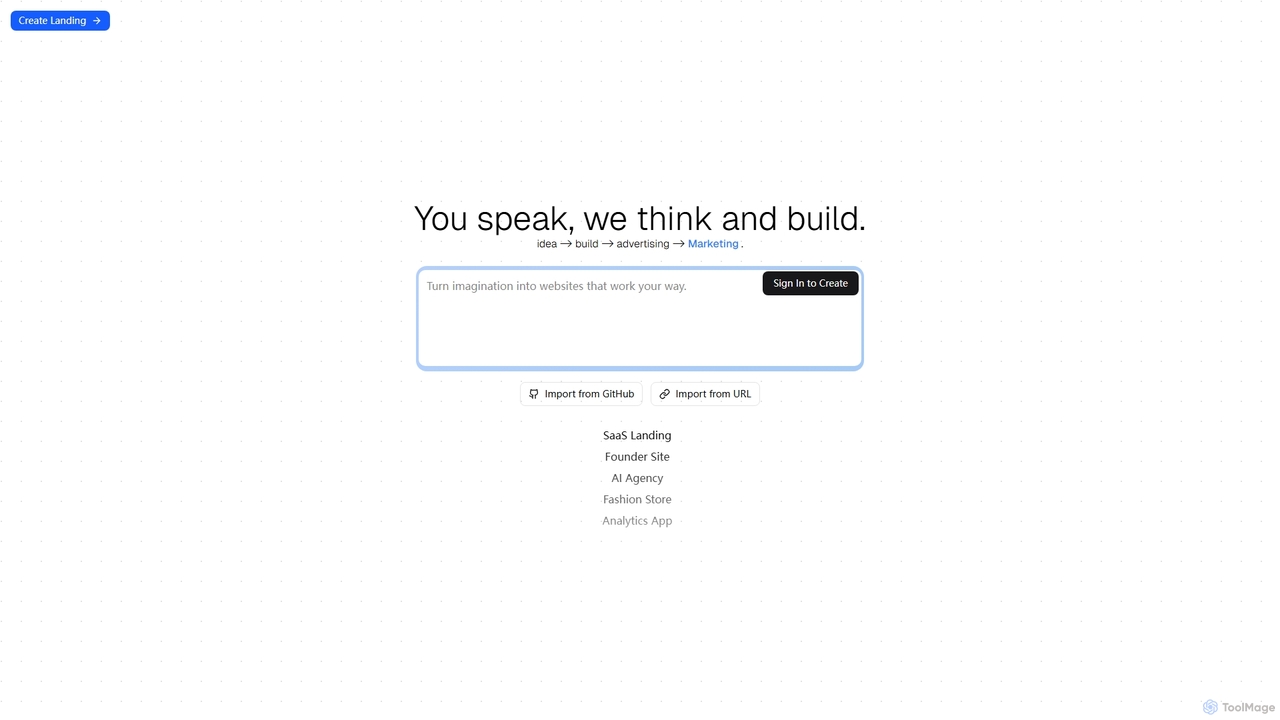
Pentrix is an AI-powered platform designed to streamline the entire product development and marketing lifecycle, from initial idea …
Pentrix is an AI-powered platform designed to streamline the entire product development and marketing lifecycle, from initial idea generation to advertising and market launch. It acts as an intelligent assistant, transforming concepts into tangible outputs and facilitating efficient content creation. With capabilities to import data from GitHub and URLs, Pentrix integrates seamlessly into existing workflows for developers, marketers, and innovators.
About Ideation
AI Ideation tools are a class of software that uses artificial intelligence to generate, develop, and structure creative concepts. Leveraging large language models and semantic analysis, these tools produce novel ideas, help overcome creative blocks, and organize brainstorming sessions effectively. They are invaluable for businesses and creators aiming to accelerate innovation, from developing new product features to crafting unique marketing campaigns. These platforms transform unstructured thoughts into actionable starting points for any project.
Core Features
- Concept Generation: Automatically produces a wide range of ideas from a single prompt, keyword, or problem statement.
- Visual Organization: Creates interactive mind maps, whiteboards, or canvases to visually structure ideas and show relationships.
- Perspective Shifting: Applies various creative frameworks (e.g., SCAMPER, Six Thinking Hats) to a problem to stimulate alternative viewpoints.
- Idea Clustering: Intelligently groups similar concepts and helps prioritize them based on criteria like feasibility or potential impact.
- Collaborative Workspace: Offers a shared digital environment for teams to contribute, comment, and build upon ideas in real-time.
Use Cases
AI Ideation tools are primarily used by product managers, marketing teams, R&D departments, content creators, and entrepreneurs. They are ideal for kickstarting new projects, solving complex business challenges, developing content strategies, and maintaining a continuous pipeline of innovative ideas within an organization.
How to Choose
When selecting an AI Ideation tool, consider the quality and diversity of its idea generation engine. Evaluate its visualization and organizational capabilities, such as mind mapping. Assess its collaboration features for team-based work and check for integrations with other business software like project management or design tools.

IdeationUse Cases
Brainstorming New Product Features
A product manager for a fitness app needs to develop features for the next release. They input current user feedback, competitor features, and market trends into an AI ideation tool. The AI generates a mind map of potential ideas, such as a 'Personalized AI Coach' that adapts workouts, a 'Social Challenge' feature to boost engagement, and 'Nutrition Plan Integration'. This process helps the team quickly visualize a wide range of options, categorize them by user impact, and select the most promising concepts for further development, saving hours of traditional brainstorming.
Developing Marketing Campaign Angles
A marketing team is launching a new eco-friendly cleaning product. To find unique campaign angles, they use an AI ideation tool. They input the target audience ('environmentally conscious millennials') and product benefits ('plant-based, zero-waste packaging'). The tool generates diverse concepts, including a '30-Day Zero-Waste Challenge' social media campaign, a partnership with environmental influencers, and content ideas like 'The Science Behind Plant-Powered Cleaning'. This allows the team to move beyond generic messaging and explore creative, engaging narratives that resonate with their specific audience.
Overcoming Writer's Block for Content Creation
A content creator is tasked with writing a series of blog posts about 'The Future of Remote Work'. Feeling stuck, they turn to an AI ideation tool. By inputting the main topic, the AI generates a cluster of sub-topics, including 'AI's Role in Virtual Collaboration', 'Mental Health Strategies for Remote Teams', and 'Designing the Perfect Home Office'. For each sub-topic, it suggests potential headlines, key points to cover, and relevant statistics to include. This provides a structured outline and a wealth of fresh ideas, effectively breaking the writer's block and enabling them to start writing immediately.
Generating Startup Business Ideas
An aspiring entrepreneur wants to start a business in the sustainable technology sector but needs a concrete idea. They use an AI ideation tool and input prompts like 'circular economy for electronics' and 'reducing urban carbon footprint'. The AI generates a list of potential business models, such as a subscription service for refurbished electronics, a platform for community solar panel sharing, and an app that gamifies recycling for local businesses. This structured output helps the entrepreneur evaluate different market opportunities and focus their research on the most viable concepts.
Facilitating Team Strategy Sessions
A management team is holding a workshop to define strategic priorities for the next year. They use a collaborative AI ideation tool as a digital whiteboard. As team members add initial thoughts on challenges and opportunities, the AI automatically clusters similar ideas and suggests underlying themes, such as 'Improving Customer Experience' or 'Operational Efficiency'. It can also apply frameworks like SWOT analysis to the collected points in real-time. This transforms a potentially chaotic session into a structured, productive discussion, ensuring all contributions are captured and organized logically.
Developing Narrative Arcs for Creative Writing
A novelist is outlining a new fantasy story but is struggling with the plot's middle act. They use an AI ideation tool, inputting their main character's profile, the initial setup, and the desired ending. The AI suggests several potential plot twists and subplots, such as the introduction of a surprise mentor, the betrayal by a trusted ally, or the discovery of a hidden power. For each suggestion, it outlines the potential impact on the character's development. This serves as a creative partner, helping the writer explore multiple narrative paths and build a more complex and engaging story structure.