ToolMage
Sign in

Best 2 Insurance AI tools for Business

Popular Insurance AI tools in Business include Overjet and vbots, helping you work more efficiently.

vbots

vbots

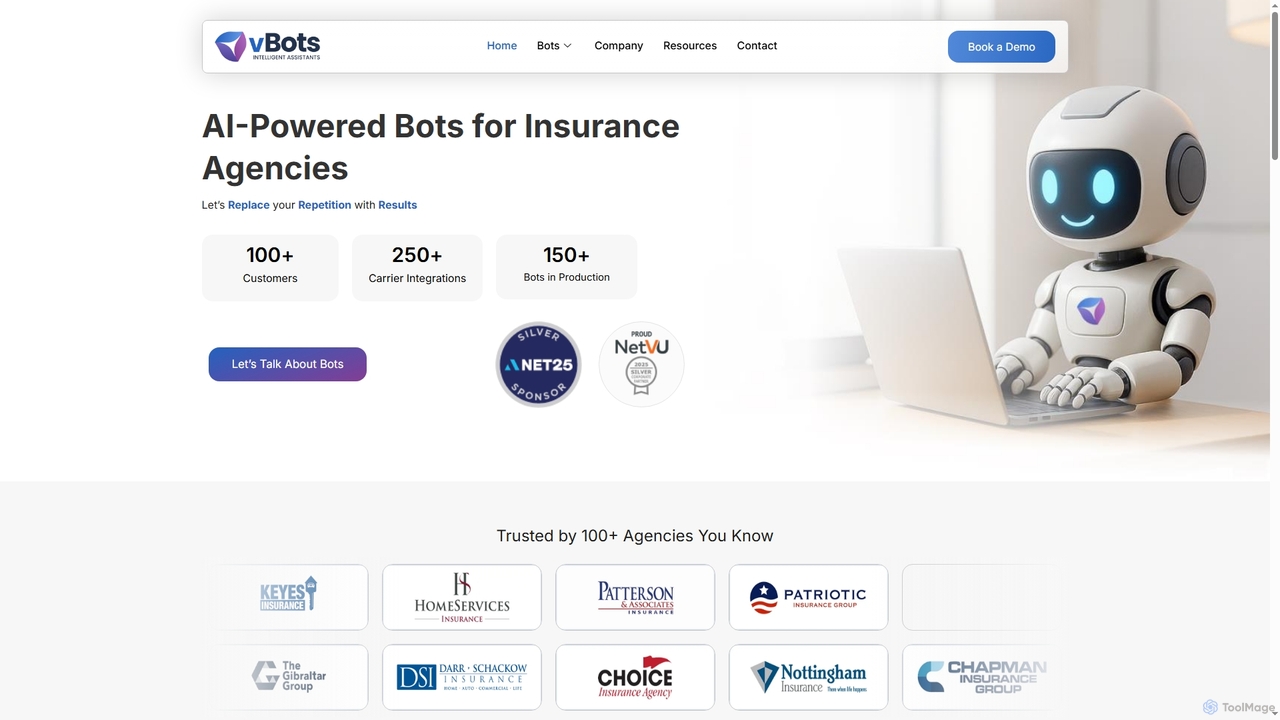
vbots provides AI-powered automation bots specifically designed for insurance agencies. It automates repetitive, mundane tasks such as policy renewals, commission reconciliation, and document management, allowing staff to focus on client-facing activities and driving business growth.

Insurance
Visits 6KFavorites 107Likes 117
Overjet
Paid

Overjet

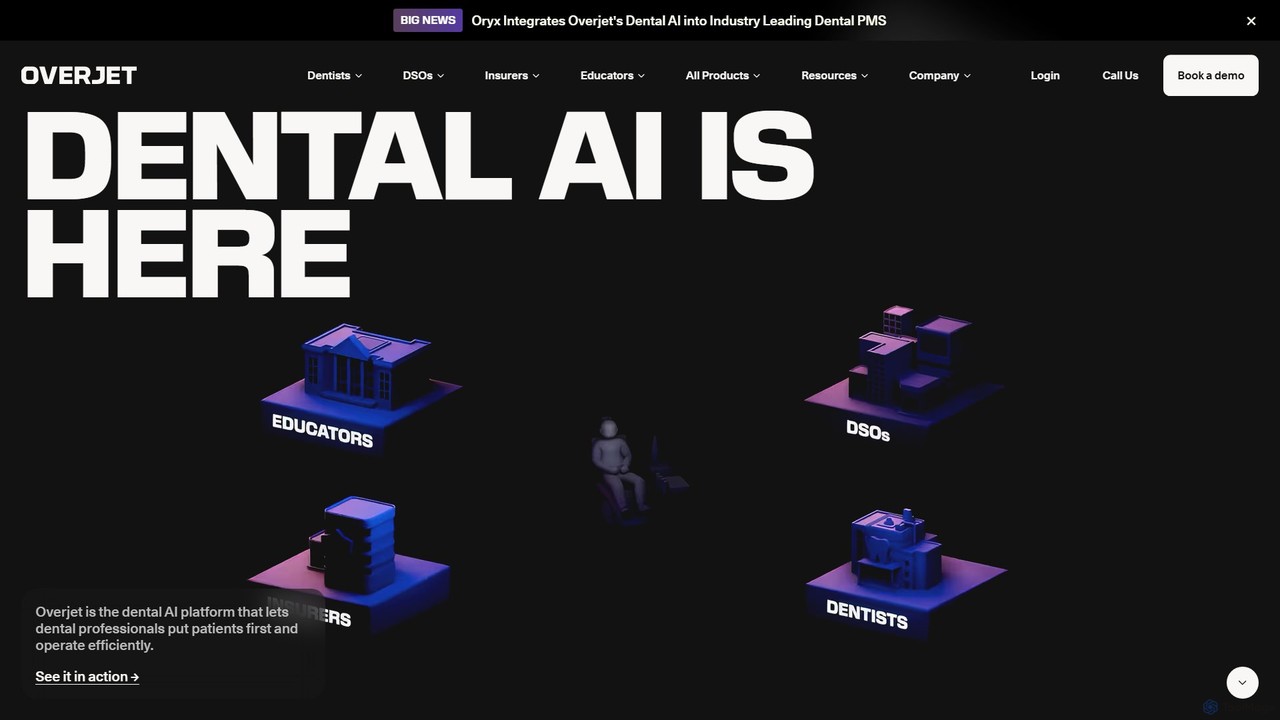
Overjet is the leading AI platform for dentistry, empowering providers and payers to enhance patient care. It utilizes FDA-cleared AI to analyze dental X-rays for precise disease detection, streamlines patient education with annotated visuals to boost case acceptance, and automates the insurance claim process for faster approvals. Overjet bridges the gap between dentists, patients, and insurers, fostering efficiency and improved oral health outcomes for all.

Medical Imaging
Visits 65.6KFavorites 156Likes 155

About Insurance

AI-powered Insurance tools are specialized solutions within the broader business technology landscape that leverage artificial intelligence to transform various aspects of the insurance industry. These tools utilize machine learning, natural language processing, and advanced analytics to automate processes, enhance decision-making, and personalize customer experiences. They are designed to improve efficiency, accuracy, and profitability for insurers while offering more tailored and responsive services to policyholders.

Core Features

  • Automated Claims Processing: Expedites claim assessment and settlement through AI-driven analysis of documentation and incident reports.
  • Personalized Underwriting: Uses vast datasets to assess individual risk profiles more accurately, enabling customized policy pricing and terms.
  • Fraud Detection: Identifies suspicious patterns and anomalies in claims data to flag potential fraudulent activities.
  • Customer Service Chatbots: Provides instant support, answers policy questions, and guides users through processes 24/7.
  • Dynamic Risk Assessment: Continuously monitors and analyzes external data sources to provide real-time risk insights for portfolios.

Applicable Scenarios

Insurance companies, brokers, and adjusters utilize these tools to streamline operations and gain competitive advantages. For instance, claims departments deploy AI for rapid damage assessment and payout calculations, significantly reducing processing times. Underwriting teams leverage AI to analyze complex risk factors, leading to more precise policy offerings and improved profitability. Marketing departments use AI to segment customers and offer highly personalized insurance products.

How to Choose

When selecting AI insurance tools, consider the specific business challenges you aim to solve, such as claims efficiency or risk assessment accuracy. Evaluate the tool's integration capabilities with existing legacy systems, its scalability to handle growing data volumes, and the vendor's expertise in both AI and insurance. Prioritize solutions with robust data security features and clear ROI potential, ensuring they align with regulatory compliance and your long-term strategic goals.

Insurance use cases

1

Streamlining Claims Processing with AI

Insurance adjusters can use AI tools to rapidly analyze incident reports, photos, and medical records, automating initial claim assessments. This significantly reduces manual review time, identifies discrepancies faster, and accelerates payout approvals, allowing adjusters to focus on complex cases and improving customer satisfaction through quicker resolutions.

2

Enhancing Underwriting Accuracy and Speed

Underwriting teams leverage AI to process vast amounts of applicant data, including credit scores, health records, and behavioral patterns, in real-time. This enables more precise risk profiling and personalized premium calculations, leading to fairer pricing for customers and reduced exposure to high-risk policies for insurers, ultimately boosting profitability.

3

Proactive Fraud Detection and Prevention

Fraud investigators deploy AI systems to continuously monitor claims data for unusual patterns, anomalies, and suspicious connections that human analysts might miss. The AI can flag high-risk claims for further investigation, significantly improving the detection rate of fraudulent activities and preventing substantial financial losses for insurance providers.

4

Delivering Personalized Insurance Recommendations

Insurance agents and brokers utilize AI to analyze customer demographics, past purchasing behavior, and lifestyle data to recommend highly personalized insurance products. This approach helps match customers with policies that truly meet their needs, increasing conversion rates and customer loyalty by offering relevant and timely solutions.

5

Automating Customer Service and Support

Insurance companies implement AI-powered chatbots and virtual assistants to handle routine customer inquiries 24/7, such as policy information requests, claim status updates, and FAQ answers. This reduces the workload on human agents, provides instant support to policyholders, and improves overall service accessibility and efficiency.

6

Dynamic Risk Monitoring for Commercial Portfolios

Commercial insurers use AI to continuously analyze external data sources like weather patterns, economic indicators, and geopolitical events in relation to their policy portfolios. This allows for dynamic risk assessment and proactive adjustments to coverage or pricing, helping businesses mitigate emerging threats and ensuring policies remain relevant and competitive.

Insurance FAQ

What are AI tools in the Insurance industry?

AI tools in the insurance industry are software solutions that apply artificial intelligence technologies like machine learning, natural language processing, and computer vision to automate, optimize, and enhance various insurance operations. They are designed to improve efficiency, accuracy, and customer experience across the entire insurance value chain, from underwriting and claims processing to fraud detection and personalized customer service.

How do AI tools benefit insurance companies?

AI tools offer significant benefits to insurance companies by improving operational efficiency, reducing costs, and enhancing decision-making. They can automate repetitive tasks, accelerate claims processing, detect fraud more effectively, and provide deeper insights for risk assessment and personalized product development. This leads to increased profitability, better customer satisfaction, and a stronger competitive position in the market.

What are the main applications of AI in insurance?

The main applications of AI in insurance span several key areas. These include automated claims processing, where AI analyzes documents and images to expedite settlements; enhanced underwriting, using AI for more accurate risk assessment and personalized pricing; sophisticated fraud detection, identifying suspicious patterns; and intelligent customer service, through chatbots and virtual assistants. AI also plays a role in dynamic risk monitoring and product innovation.

How can I choose the right AI insurance solution for my business?

Choosing the right AI insurance solution involves several considerations. First, identify your specific pain points, whether it's claims backlog, inaccurate underwriting, or customer service bottlenecks. Evaluate the solution's core functionalities, its ability to integrate with your existing IT infrastructure, and its scalability. Look for vendors with proven industry expertise, strong data security protocols, and clear metrics for measuring ROI. Also, consider user-friendability and ongoing support.

What is the difference between traditional insurance technology and AI insurance tools?

Traditional insurance technology primarily focuses on digitizing existing processes and managing data, often relying on rule-based systems and manual inputs. In contrast, AI insurance tools go beyond digitization by introducing intelligent automation, predictive analytics, and adaptive learning capabilities. They can analyze unstructured data, identify complex patterns, and make data-driven decisions autonomously, leading to more dynamic, personalized, and efficient insurance operations compared to static, rule-bound legacy systems.