Siit
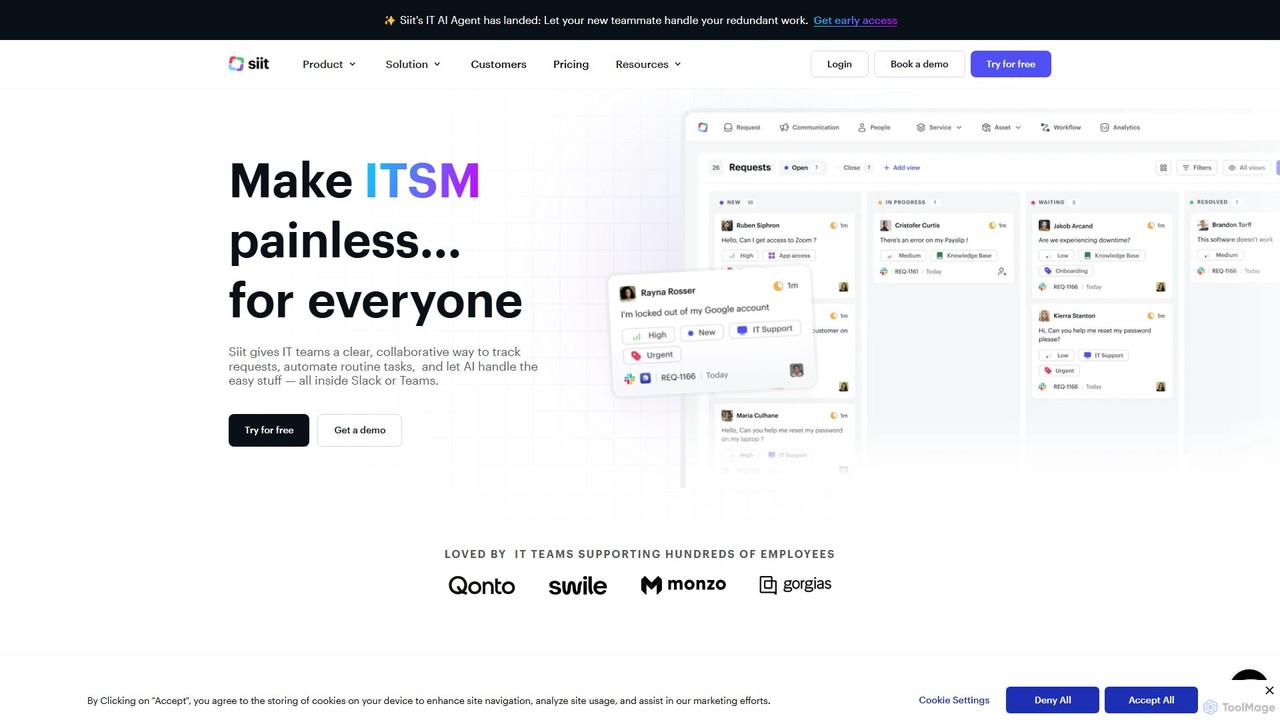
Siit is an AI-powered IT Service Management (ITSM) platform designed to streamline internal operations directly within Slack and …
Siit is an AI-powered IT Service Management (ITSM) platform designed to streamline internal operations directly within Slack and Microsoft Teams. It automates routine tasks, manages service requests, and uses AI agents to handle level 1 support, freeing up IT teams to focus on complex issues. Siit provides a unified, conversational, and efficient service desk experience for modern businesses.
ShieldForce
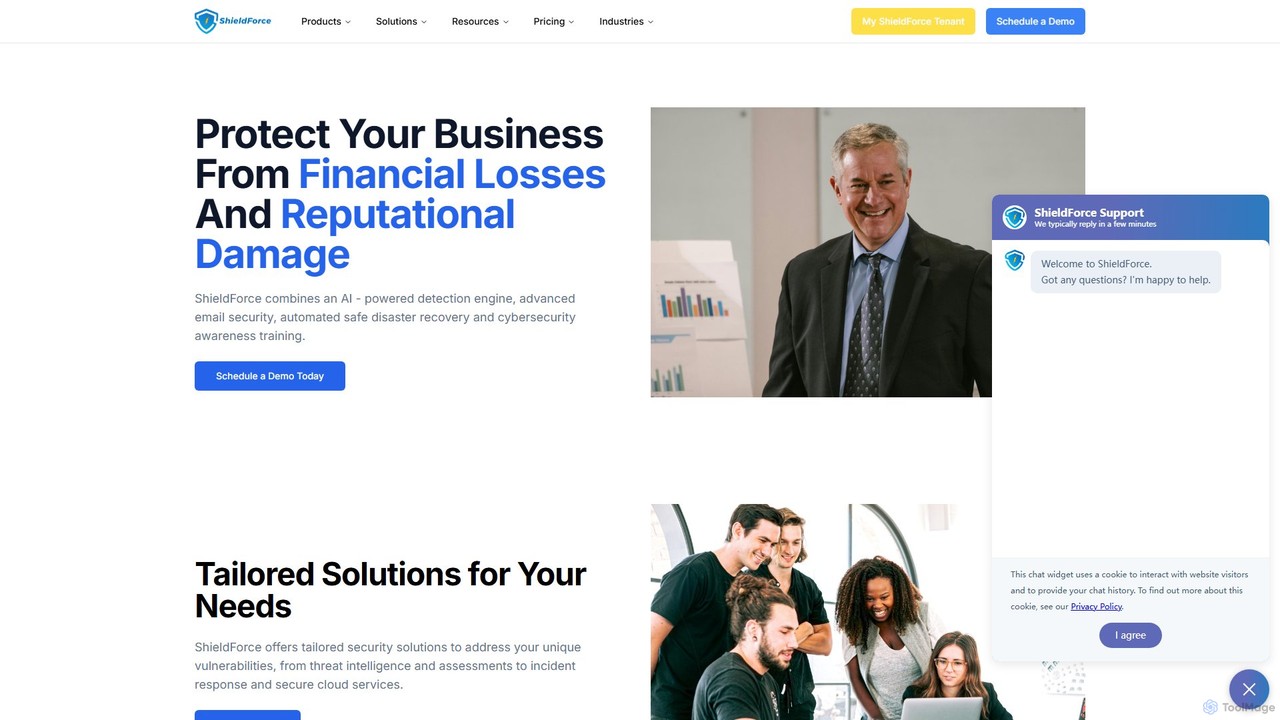
ShieldForce is an all-in-one, AI-powered cybersecurity platform designed for businesses of all sizes. It integrates an advanced threat …
ShieldForce is an all-in-one, AI-powered cybersecurity platform designed for businesses of all sizes. It integrates an advanced threat detection engine, email security, automated disaster recovery, and continuous employee training to provide comprehensive protection. ShieldForce safeguards your digital assets against financial loss and reputational damage from evolving cyber threats like ransomware and phishing, simplifying complex security management into a single, scalable subscription service.
About It Management
AI IT Management tools are a class of software that uses artificial intelligence to automate, monitor, and optimize an organization's technology infrastructure. These tools leverage machine learning algorithms to analyze vast amounts of operational data, predict potential issues, and identify the root causes of problems in real-time. This proactive approach helps businesses improve system reliability, reduce downtime, and free up IT teams from repetitive manual tasks. Unlike traditional monitoring systems, AI-powered solutions can detect subtle anomalies and security threats that might otherwise go unnoticed.
Core Features
- Predictive Analytics: Proactively identifies potential system failures and performance bottlenecks before they impact users.
- Automated Root Cause Analysis (RCA): Quickly pinpoints the source of IT incidents, reducing investigation time from hours to minutes.
- Intelligent Workflow Automation: Automates routine tasks like server patching, user provisioning, and incident ticket routing.
- AI-Enhanced Cybersecurity: Uses machine learning to detect and respond to sophisticated security threats in real-time.
- Resource Optimization: Analyzes usage patterns to recommend optimal allocation of cloud resources and server capacity, reducing costs.
Applicable Scenarios
These tools are essential for IT departments in mid-to-large enterprises, managed service providers (MSPs), and data centers managing complex environments. Roles like IT administrators, network engineers, cybersecurity analysts, and DevOps teams use them to maintain system health, secure corporate networks, and automate IT service management (ITSM) processes.
Selection Criteria
When choosing an AI IT Management tool, consider its integration capabilities with your existing infrastructure (e.g., AWS, Azure) and ITSM software (e.g., Jira, ServiceNow). Evaluate its scalability to handle your data volume and the depth of its automation features. Also, determine its specialization—whether it focuses on network performance, security, or cloud cost management—to align with your primary needs.

It ManagementUse Cases
Proactive Server Failure Prediction
An IT administrator for an e-commerce company is responsible for maintaining 100% uptime. Instead of waiting for alerts, their AI IT Management tool constantly analyzes server health metrics. The AI model predicts a critical hard drive failure on a primary database server is likely within the next 72 hours due to subtle performance degradation patterns. The system automatically creates a high-priority ticket with all diagnostic data. The administrator is able to schedule maintenance, clone the drive, and replace the hardware during a low-traffic window, preventing any downtime or data loss.
Automated Cybersecurity Threat Response
A cybersecurity analyst at a financial institution uses an AIOps platform for security monitoring. The system detects anomalous outbound traffic from an employee's workstation at 2 AM, consistent with a malware infection. Instead of just sending an alert, the AI automatically executes a predefined playbook: it quarantines the workstation from the network, suspends the user's credentials to prevent lateral movement, and logs all related network activity for forensic analysis. The analyst arrives in the morning to a complete incident report, with the immediate threat already contained, allowing them to focus on investigation rather than initial response.
Intelligent IT Helpdesk Ticket Routing
In a large corporation, the IT helpdesk receives hundreds of tickets daily. An employee submits a vague ticket: "My app is slow." Traditionally, this would require manual triage. However, the AI IT management system automatically enriches the ticket. It correlates the user's report with real-time application performance monitoring (APM) data, identifies that the slowness is due to a database query bottleneck affecting a specific user group, and routes the ticket directly to the Tier 3 database administration team with all the relevant logs attached. This bypasses Tier 1 and 2 support, accelerating resolution time significantly.
Dynamic Cloud Resource Optimization
A DevOps team manages a sprawling multi-cloud environment. Their AI IT management tool analyzes historical and real-time usage data across all virtual machines and containers. It identifies that a cluster of servers for a development environment is consistently underutilized at night and on weekends. The AI recommends an automated policy to scale down these resources during off-hours and scale them back up just before the workday begins. By implementing this policy, the company reduces its cloud computing costs by 18% without any impact on developer productivity.
Network Performance Anomaly Detection
A Network Operations Center (NOC) team for a telecommunications company monitors thousands of network devices. The AIOps tool establishes a dynamic baseline of normal network behavior. It then flags a subtle but persistent increase in latency on a specific fiber optic link that is still within acceptable thresholds and would be missed by traditional alerts. This early warning allows the network engineers to investigate and discover a degrading hardware component. They replace the component proactively, preventing a major outage that would have affected thousands of customers.
Automated Employee Onboarding and Offboarding
An HR manager initiates the onboarding process for a new software engineer. This action triggers a workflow in the AI IT management tool. The tool automatically creates a user account, assigns them to the correct security groups based on their role ('Software Engineer, Team Alpha'), provisions access to necessary applications like Jira, GitHub, and Slack, and adds their device to the management system. When an employee leaves, the offboarding process is similarly automated: a single action revokes all access, archives their data, and wipes their corporate devices, ensuring a secure and efficient transition and reducing the risk of orphaned accounts.