Business Best in category 1 results Logistics Automation AI Tool

Popular AI tools in the Logistics Automation field of Business include Covariant, etc., helping you quickly improve efficiency.

Covariant

Covariant

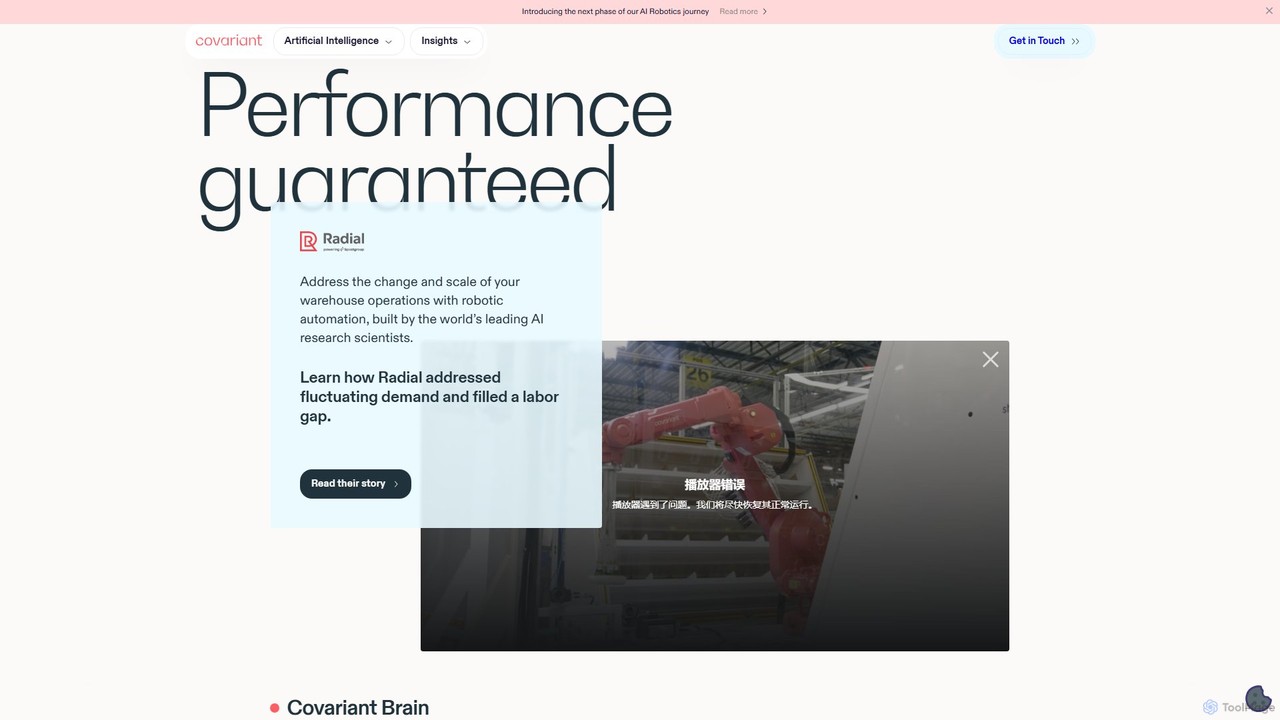
Covariant provides an advanced AI robotics platform, the Covariant Brain, designed to automate warehouse operations. Powered by Robotics …

25.9K

About Logistics Automation

Logistics Automation tools leverage AI to streamline and optimize various processes within the supply chain. These solutions utilize machine learning, computer vision, and robotics to automate tasks from warehousing and inventory management to transportation and last-mile delivery. By enhancing efficiency, reducing operational costs, and improving accuracy, they transform traditional logistics into intelligent, data-driven operations. This integration within the broader business automation landscape ensures seamless flow of goods and information.

Core Features

  • Intelligent Route Optimization: AI algorithms analyze real-time traffic, weather, and delivery schedules to determine the most efficient routes.
  • Automated Warehouse Management: Robotics and AI-powered systems handle inventory tracking, picking, packing, and sorting with minimal human intervention.
  • Demand Forecasting & Inventory Planning: Machine learning models predict future demand and optimize stock levels to prevent overstocking or shortages.
  • Predictive Maintenance for Fleets: AI monitors vehicle performance data to anticipate maintenance needs, reducing downtime and operational disruptions.
  • Autonomous Mobile Robots (AMRs): Robots navigate warehouses and distribution centers to transport goods, improving throughput and safety.

Applicable Scenarios

Businesses across e-commerce, manufacturing, and retail sectors utilize these tools to manage complex supply chains. For instance, a large online retailer can automate its entire fulfillment center, from goods reception to dispatch, ensuring faster delivery times. Manufacturers can optimize their internal logistics, ensuring raw materials reach production lines precisely when needed, minimizing delays and waste.

Selection Criteria

When selecting Logistics Automation tools, consider the specific areas of your supply chain you aim to automate (e.g., warehousing, transport, last-mile). Evaluate the tool's integration capabilities with existing ERP or WMS systems, its scalability to match business growth, and the level of AI sophistication offered for tasks like predictive analytics or autonomous operations. Assess the vendor's support and implementation services, along with the total cost of ownership.

Logistics AutomationUse Cases

1

Automating Inventory Management in Warehouses

For large e-commerce businesses or third-party logistics (3PL) providers, managing vast inventories manually is inefficient. Logistics automation tools, including AI-powered robots and vision systems, can automatically track goods from arrival to dispatch. This reduces human error in picking and packing, accelerates order fulfillment, and provides real-time inventory visibility, significantly cutting operational costs and improving delivery speed.

2

Real-time Route Optimization for Delivery Fleets

Delivery companies face challenges like traffic congestion, fluctuating demand, and tight schedules. AI-driven logistics automation platforms analyze real-time data such as traffic conditions, weather forecasts, and delivery priorities to dynamically optimize routes for an entire fleet. This minimizes fuel consumption, reduces delivery times, and enhances customer satisfaction by providing accurate estimated arrival times.

3

Enhancing Supply Chain Resilience with Demand Forecasting

Retailers and manufacturers often struggle with unpredictable demand, leading to either stockouts or excess inventory. AI-powered logistics automation uses machine learning to analyze historical sales data, market trends, seasonal patterns, and external factors. This enables highly accurate demand forecasting, allowing businesses to optimize inventory levels, reduce waste, and ensure product availability, thereby improving profitability and customer loyalty.

4

Streamlining Last-Mile Delivery with Autonomous Systems

The "last mile" is often the most expensive and time-consuming part of the delivery process. Logistics automation extends to autonomous delivery solutions like drones and ground robots for specific urban or rural areas. These systems can navigate complex environments, deliver packages quickly and efficiently, and operate outside traditional business hours, offering a competitive edge and reducing labor costs for local deliveries.

5

Proactive Maintenance for Logistics Equipment and Vehicles

Downtime of forklifts, conveyor belts, or delivery trucks can severely disrupt logistics operations. AI-driven predictive maintenance solutions monitor the performance and health of logistics equipment using IoT sensors. By analyzing data for anomalies, these tools can predict potential failures before they occur, scheduling maintenance proactively. This minimizes unexpected breakdowns, extends asset lifespan, and ensures continuous operational flow.

6

Intelligent Freight Management and Load Optimization

For freight carriers and shippers, efficiently filling trucks and containers is crucial for profitability. Logistics automation tools use AI to optimize load planning, considering factors like package dimensions, weight, fragility, and delivery sequence. They also automate freight booking, tracking, and documentation, reducing manual effort, maximizing cargo space utilization, and ensuring compliance, leading to significant cost savings and improved operational efficiency.

Logistics AutomationFrequently Asked Questions