Business Best in category 1 results Marketing Agency AI Tool

Popular AI tools in the Marketing Agency field of Business include CollabNut, etc., helping you quickly improve efficiency.

CollabNut

CollabNut

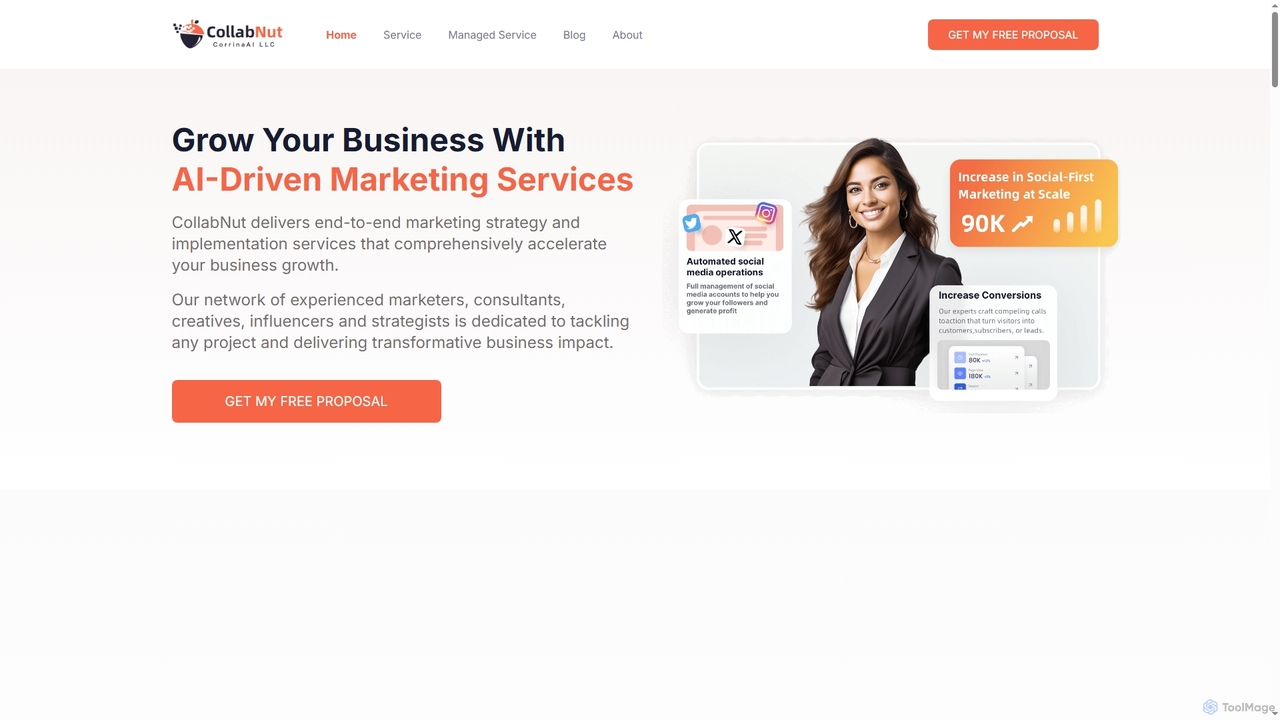
CollabNut is an AI-driven marketing agency and platform offering end-to-end services to accelerate business growth. Specializing in social-first …

3.6K

About Marketing Agency

AI Marketing Agency tools are specialized platforms designed to help marketing agencies streamline operations, manage multiple clients, and scale their services efficiently. These tools leverage artificial intelligence to automate repetitive tasks, optimize campaigns at scale, and generate data-driven insights across a diverse client portfolio. They enable agencies to enhance productivity, deliver superior results for clients, and improve overall profitability. The core advantage lies in centralizing multi-account management and reporting, which is a unique challenge for agency workflows.

Core Features

  • Multi-Client Dashboard: Manage all client accounts, campaigns, and data from a single, unified interface.
  • Automated & White-Label Reporting: Automatically generate custom, agency-branded performance reports for clients.
  • Scalable Campaign Optimization: Use AI to simultaneously manage and optimize ad bids, budgets, and targeting for numerous clients.
  • Proposal Generation: Quickly create data-driven marketing proposals and performance forecasts for potential clients.
  • Team Collaboration & Workflow Automation: Streamline internal processes, task assignments, and client communication within the agency.

Use Cases

These tools are essential for digital marketing agencies, SEO firms, social media management companies, and PPC specialists. For instance, an agency can use these tools to manage social media content for dozens of clients simultaneously or run complex Google Ads campaigns for an entire portfolio of e-commerce stores, all while maintaining clear, consistent reporting for each individual client.

How to Choose

When selecting an AI tool for a marketing agency, consider its scalability to handle a growing client base. Evaluate its integration capabilities with essential platforms like Google Analytics, CRM systems, and social media networks. Prioritize solutions with robust white-labeling options for client-facing reports and dashboards. Finally, analyze the pricing model—whether it's per-seat, per-client, or usage-based—to ensure it aligns with your agency's financial structure.

Marketing AgencyUse Cases

1

Automating Multi-Client Social Media Management

A social media manager at a digital agency is responsible for content calendars, posting, and reporting for 15 different clients. Using an AI-powered agency tool, they can access a single dashboard to schedule posts across all client accounts on various platforms like Instagram, Facebook, and LinkedIn. The AI suggests optimal posting times for each client's audience and can even generate content variations. This centralizes the workflow, saving over 10 hours per week and allowing the manager to focus on strategy and client engagement rather than manual scheduling and data compilation.

2

Scaling PPC Campaign Optimization

A PPC specialist at an agency manages ad spend for 20 e-commerce clients across Google Ads and Microsoft Ads. Manually adjusting bids and budgets for hundreds of campaigns is impractical. An AI platform for agencies automates this process by analyzing real-time performance data. It reallocates budgets to top-performing campaigns, adjusts keyword bids to maximize ROI, and pauses underperforming ads across all client accounts simultaneously. This allows the specialist to scale their management capacity, improve client results by an average of 15-20%, and focus on high-level strategy and creative testing.

3

Generating White-Label SEO Audits for Prospects

An agency's business development team needs to quickly create compelling proposals for potential clients. An AI tool for SEO agencies can perform a comprehensive technical and on-page SEO audit of a prospect's website in minutes. The tool generates a detailed report highlighting critical issues, opportunities, and competitor benchmarks. Crucially, the agency can customize this report with its own branding (white-labeling) and commentary. This allows the sales team to present a professional, data-backed audit during a pitch, demonstrating expertise and value upfront, significantly increasing their proposal-to-client conversion rate.

4

Streamlining Content Creation for Multiple Client Blogs

A content marketing agency manages blogs for clients in diverse industries, from finance to healthcare. Maintaining a consistent brand voice and quality for each is challenging. By using an AI writing assistant with features for agencies, the content team can create unique 'Brand Voice' profiles for each client. When generating blog post drafts, the AI adheres to the specific tone, terminology, and style guidelines of that client. This reduces editing time by up to 40% and ensures all content, regardless of the writer, is perfectly aligned with the client's brand identity, allowing the agency to scale its content production services.

5

Consolidating Client Performance Reporting

An account manager at a full-service agency spends the last week of every month manually pulling data from Google Ads, Facebook Insights, Google Analytics, and an email platform for each of their 10 clients. An AI-powered reporting tool automates this entire process. It integrates with all these data sources, pulls the relevant metrics, and compiles them into a single, comprehensive, white-labeled dashboard and PDF report for each client. The AI can also add narrative insights, explaining performance trends. This saves dozens of hours of manual work and provides clients with consistent, professional, and easy-to-understand reports.

6

Efficient Client Onboarding and Strategy Creation

When a marketing agency signs a new client, the initial research phase can be time-consuming. An AI strategy tool can accelerate this. By inputting the new client's website and industry, the AI analyzes their market, identifies key competitors, audits their current online presence, and suggests a target audience profile. It can then generate a foundational marketing strategy, including channel recommendations, content pillars, and initial campaign ideas. This provides the agency's strategy team with a data-driven starting point, reducing research time by over 50% and enabling them to onboard clients and launch campaigns faster.

Marketing AgencyFrequently Asked Questions