
Business Best in category 1 results No Code & Low Code Platform AI Tool

Popular AI tools in the No Code & Low Code Platform field of Business include aible, etc., helping you quickly improve efficiency.

aible

aible

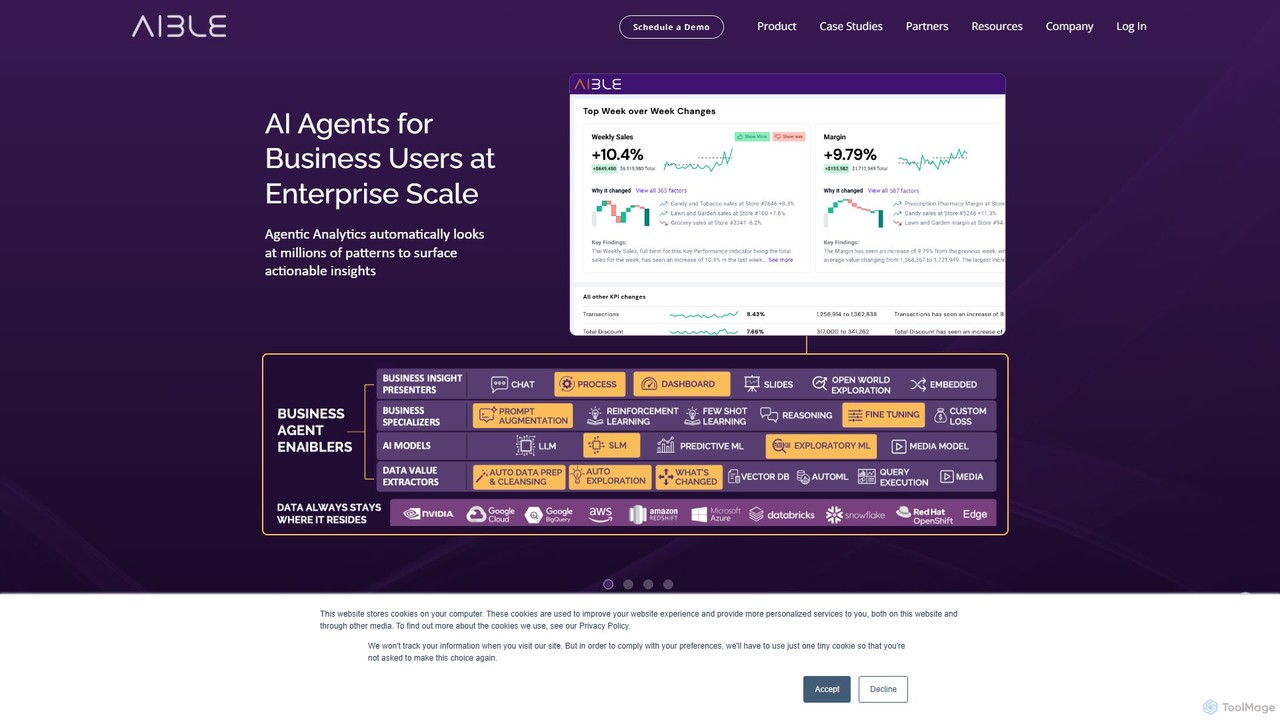
Aible is an enterprise-grade AI platform that empowers business users to create, deploy, and manage custom AI agents …

8.5K

About No Code & Low Code Platform

No Code & Low Code Platforms are powerful tools that enable users to build applications and automate workflows with minimal or no traditional coding. These platforms leverage visual development environments, drag-and-drop interfaces, and pre-built components to accelerate software creation. They democratize application development, allowing business users and citizen developers to rapidly innovate and solve operational challenges without deep programming expertise.

Core Features

  • Visual Development Interface: Drag-and-drop components and intuitive visual editors for building applications.
  • Pre-built Templates & Components: Ready-to-use modules for common functionalities like forms, databases, and user authentication.
  • Workflow Automation: Tools to design and automate business processes across various systems.
  • Integration Capabilities: Connect seamlessly with existing third-party applications and data sources.
  • Data Management: Built-in databases or easy integration with external data storage solutions.

Applicable Scenarios

These platforms are ideal for rapid prototyping, developing internal business tools like CRM or project management systems, and creating custom customer portals. They empower marketing teams to build landing pages, HR departments to automate onboarding, and operations to streamline data collection and reporting.

How to Choose

When selecting a No Code or Low Code platform, consider its ease of use for your team, scalability to meet future growth, and integration capabilities with your existing tech stack. Evaluate the range of pre-built components, security features, and the level of support and community available. Finally, assess the pricing model and ensure it aligns with your budget and specific project requirements.

No Code & Low Code PlatformUse Cases

1

Rapid Development of Internal Business Applications

A small business owner needs a custom inventory management system but lacks in-house developers. Using a No Code platform, they can visually design database structures, create input forms, and build reporting dashboards with drag-and-drop functionality. This allows them to deploy a functional system within days, significantly reducing development costs and time compared to traditional coding, and gaining immediate control over their stock.

2

Automating Complex Business Workflows

An HR department wants to streamline its employee onboarding process, which involves multiple forms, approvals, and system updates. With a Low Code platform, they can design a visual workflow that automatically triggers tasks, sends notifications, collects digital signatures, and integrates with HRIS systems. This reduces manual errors, ensures compliance, and frees up HR staff to focus on more strategic initiatives, improving the new hire experience.

3

Creating Custom Customer Portals

A service-based company aims to provide a self-service portal where clients can track project progress, submit support tickets, and access resources. Leveraging a No Code platform, they can build a branded, secure portal with user authentication, custom dashboards, and integrated communication tools. This enhances customer satisfaction by offering 24/7 access to information and reduces the load on customer support teams.

4

Quick Prototyping and MVP Development

A startup has an innovative app idea but needs to validate it quickly with potential users before investing heavily in full development. A Low Code platform allows them to rapidly build a Minimum Viable Product (MVP) with core functionalities and a user-friendly interface. This enables them to gather early feedback, iterate on the design, and secure funding much faster than traditional development cycles.

5

Building Data Collection and Reporting Tools

A marketing team needs to collect specific campaign data from various sources and generate custom performance reports. Using a No Code platform, they can design interactive forms for data input, connect to different marketing APIs, and create dynamic dashboards to visualize key metrics. This empowers them to make data-driven decisions faster, without relying on IT for every new report or data request.

6

Developing Event Registration and Management Systems

An organization frequently hosts events and requires a flexible system for registration, attendee management, and communication. A No Code platform allows them to build a tailored event portal where participants can register, pay, and receive updates. Event organizers can manage attendee lists, send automated reminders, and track attendance, significantly simplifying the logistical challenges of event planning.

No Code & Low Code PlatformFrequently Asked Questions