Business Best in category 1 results Organizational Design AI Tool

Popular AI tools in the Organizational Design field of Business include Agentnoon, etc., helping you quickly improve efficiency.

Agentnoon

Agentnoon

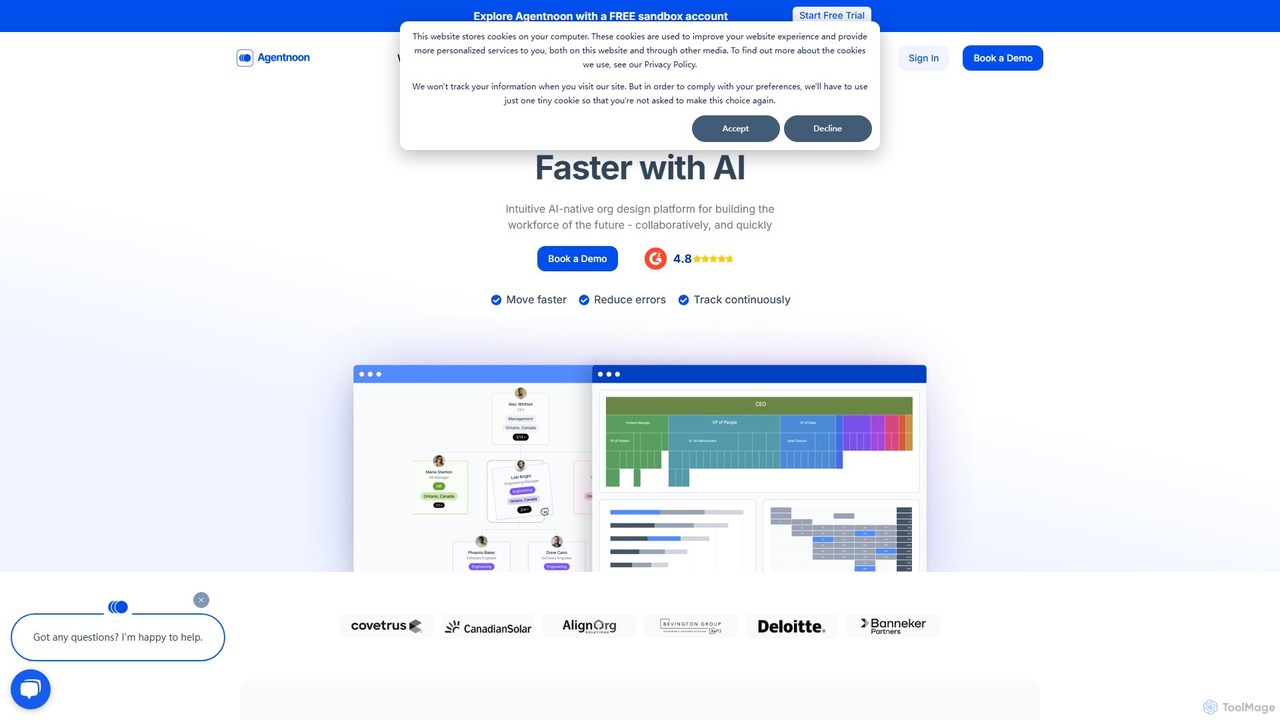
Agentnoon is an AI-powered platform for workforce planning and organizational design. It helps HR leaders and executives visualize, …

1.5K

About Organizational Design

Organizational Design tools are AI-powered platforms that assist businesses in structuring their workforce, processes, and culture to achieve strategic goals. These tools leverage data analytics and machine learning to model various organizational structures, identify inefficiencies, and simulate the impact of changes. They enable leaders to make informed decisions on team formation, resource allocation, and talent management, optimizing operational effectiveness within the broader business context.

Core Features

  • Structure Modeling: Simulate and visualize different organizational hierarchies, reporting lines, and team compositions.
  • Workforce Planning: Analyze current talent, forecast future needs, and identify skill gaps for strategic growth.
  • Process Optimization: Map workflows, pinpoint bottlenecks, and suggest improvements for operational efficiency.
  • Change Impact Analysis: Predict the effects of structural changes on teams, roles, and overall productivity.
  • Talent Allocation: Recommend optimal placement of employees based on skills, projects, and strategic objectives.

Use Cases

These tools are vital for HR leaders, strategy consultants, and business transformation teams. They are used to redesign departments during mergers, optimize team structures for new product launches, or plan for workforce scaling in rapidly growing companies, ensuring strategic alignment and operational agility.

How to Choose

When selecting organizational design tools, consider the depth of structural modeling capabilities, integration with existing HRIS/ERP systems, the robustness of predictive analytics for workforce planning, and the clarity of visualization features. Scalability for future growth and support for various organizational models are also crucial for long-term value.

Organizational DesignUse Cases

1

Redesigning Departments Post-Merger

A corporate HR director uses organizational design AI to merge two distinct company departments. By inputting existing structures, roles, and employee skill sets, the AI suggests optimal new reporting lines, identifies redundant positions, and highlights skill gaps. This process streamlines integration, reduces overlap, and ensures a cohesive new structure, saving months of manual planning and minimizing disruption.

2

Optimizing Team Structure for New Product Launch

A product manager needs to form a cross-functional team for a new AI product. The organizational design tool analyzes project requirements, required skills, and available talent across the company. It recommends team members, defines their roles, and visualizes potential collaboration paths, accelerating team formation and ensuring all critical functions are covered for a successful launch.

3

Strategic Workforce Planning for Growth

A fast-growing tech startup anticipates doubling its workforce in two years. The HR lead utilizes organizational design AI to model future organizational charts based on projected growth, new market entries, and technological shifts. The tool identifies future hiring needs, potential internal mobility paths, and necessary skill development programs, providing a clear roadmap for sustainable talent acquisition.

4

Identifying and Resolving Organizational Bottlenecks

An operations manager suspects inefficiencies in a key business process. By mapping the current workflow and team interactions into the organizational design platform, the AI analyzes data points like task handoffs and communication flows. It pinpoints specific structural or role-based bottlenecks and suggests alternative reporting structures or process reassignments to improve throughput and reduce delays.

5

Simulating Impact of Remote Work Policies

A company is considering a permanent hybrid or fully remote work model. The organizational design tool allows leadership to simulate the impact of these policies on team cohesion, communication channels, and productivity across different departments. It helps visualize how reporting lines might adapt, which roles are best suited for remote work, and potential challenges, informing policy decisions.

6

Aligning Structure with Strategic Business Objectives

A CEO wants to ensure the company's structure directly supports its new five-year strategic objectives, such as market expansion or innovation. The organizational design AI helps translate strategic goals into structural requirements, suggesting adjustments to departmental focus, resource allocation, and leadership roles. This ensures the organization is agile and aligned to execute its long-term vision effectively.

Organizational DesignFrequently Asked Questions