Prycing
Prycing is an AI-powered dynamic pricing and revenue optimization platform for e-commerce and retail. It analyzes market data, …
Prycing is an AI-powered dynamic pricing and revenue optimization platform for e-commerce and retail. It analyzes market data, competitor prices, and customer behavior to automatically set optimal prices, helping businesses scale profits and maintain a competitive edge.
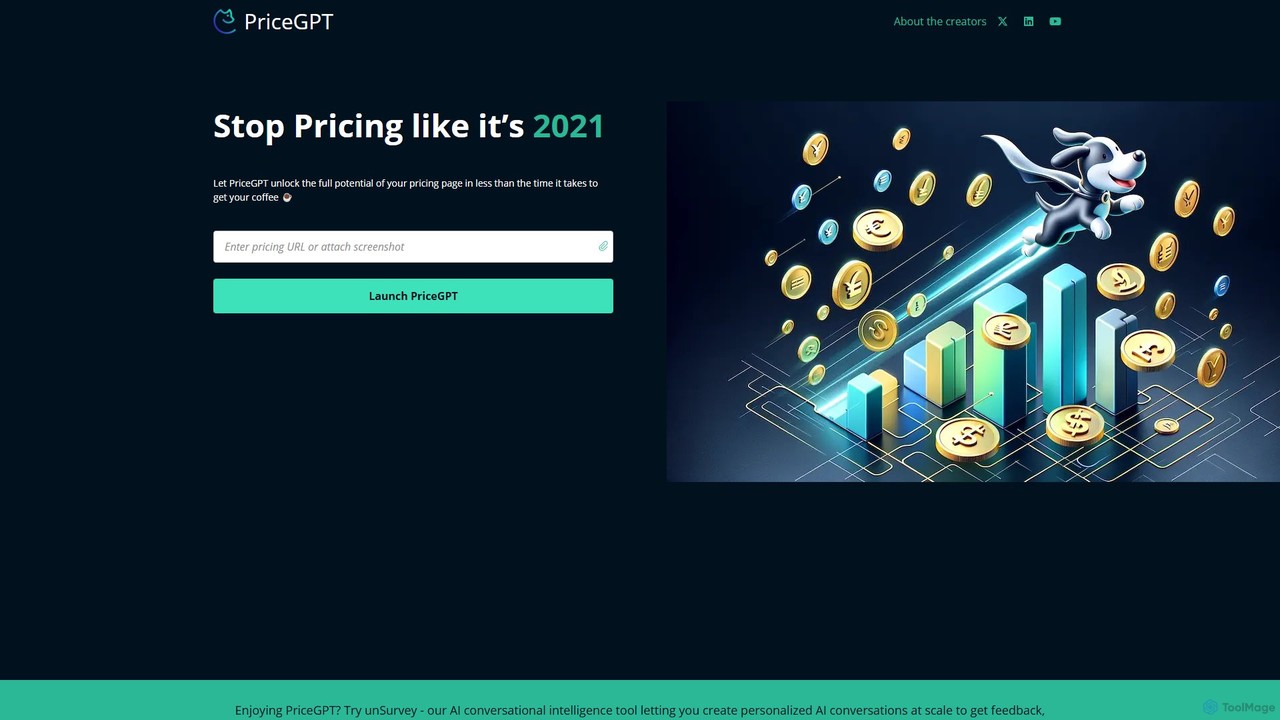
PriceGPT
PriceGPT is an AI-powered tool that analyzes your pricing page to provide actionable insights and intelligence for revenue …
PriceGPT is an AI-powered tool that analyzes your pricing page to provide actionable insights and intelligence for revenue optimization. Simply enter your URL, and the AI will audit your pricing structure, copy, and feature presentation in minutes. It helps businesses, especially SaaS and e-commerce companies, to stop guessing and start making data-driven decisions to unlock the full potential of their pricing strategy and boost conversions.
Corrily
Corrily is an AI-powered monetization growth engine for subscription companies. It provides an all-in-one platform to design, test, …
Corrily is an AI-powered monetization growth engine for subscription companies. It provides an all-in-one platform to design, test, deploy, and analyze monetization strategies, helping businesses optimize pricing, personalize paywalls, and increase revenue through data-driven experiments and insights.
About Pricing Optimization
Pricing Optimization tools are AI-powered platforms designed to determine the most effective price points for products and services. These tools leverage machine learning algorithms to analyze vast datasets, including historical sales data, competitor pricing, market demand, and customer behavior. The primary goal is to automate and enhance pricing strategies to maximize key business metrics like revenue, profit margins, or market share. Unlike manual analysis or simple rule-based systems, AI pricing optimization provides dynamic, data-driven recommendations that adapt to real-time market changes.
Core Features
- Dynamic Pricing Engine: Automatically adjusts prices in real-time based on demand, competition, and inventory levels.
- Competitive Analysis: Monitors and analyzes competitors' pricing strategies to inform your own positioning.
- Demand Forecasting: Uses predictive analytics to estimate future product demand at various price points.
- Price Elasticity Modeling: Calculates how changes in price are likely to affect customer demand and sales volume.
- Pricing Simulation & A/B Testing: Allows businesses to test the potential impact of different pricing strategies before implementation.
Use Cases
These tools are crucial in industries with fluctuating demand and high competition, such as e-commerce, retail, travel (airlines, hotels), and SaaS. Roles like revenue managers, pricing analysts, e-commerce managers, and marketing directors use them to move from instinct-based to data-backed pricing decisions, ensuring competitiveness and profitability.
How to Choose
When selecting a Pricing Optimization tool, consider its data integration capabilities with your existing systems (e.g., ERP, CRM). Evaluate the sophistication and transparency of its AI models. Assess its scalability to handle your product catalog (SKUs) and transaction volume. Finally, consider the level of automation and control it offers to align with your business strategy.

Pricing OptimizationUse Cases
Dynamic Pricing for E-commerce Stores
An e-commerce manager for an online electronics retailer uses a pricing optimization tool to manage thousands of SKUs. The system automatically monitors competitor prices, adjusts product prices based on real-time demand signals (like high traffic during a holiday sale), and lowers prices for items with high inventory. This strategy helps maximize revenue on popular items while efficiently clearing out older stock, leading to a significant uplift in overall profit margins without constant manual intervention.
Optimizing SaaS Subscription Tiers
A product manager at a SaaS company needs to introduce a new enterprise tier. They use a pricing optimization tool to analyze feature usage data and conduct willingness-to-pay surveys. The AI model simulates revenue outcomes for different combinations of features and price points. Based on the simulation, the company confidently launches a new tier priced 30% higher than the previous top tier, which includes exclusive features identified as high-value by the analysis, leading to increased average revenue per user (ARPU).
Hotel Room Rate Management
A revenue manager for a hotel chain uses a pricing tool to set daily room rates. The AI analyzes historical booking patterns, local events, flight schedules, and competitor rates to forecast demand. It then recommends optimal prices for different room types to maximize occupancy and revenue per available room (RevPAR). During a major conference, the system automatically increases rates as booking velocity picks up, capturing maximum value from the high-demand period.
Competitive Price Monitoring for Retail
A category manager at a large retail chain is responsible for pricing home appliances. They use a pricing optimization platform to continuously scrape and analyze competitor prices online. The tool provides alerts when a key competitor drops the price on a flagship product. Instead of a simple price match, the system recommends a strategic response, such as bundling the product with a high-margin accessory or offering a small discount on a related item, thereby preserving margin while remaining competitive.
Simulating Promotional Campaign Impact
A marketing team plans a seasonal promotion for a fashion brand. Before launching, they use a pricing optimization tool's simulation feature. They model two scenarios: a sitewide 25% discount versus a 'Buy One, Get One 50% Off' offer on select categories. The AI predicts the impact of each scenario on total sales volume, revenue, and overall profit margin by considering price elasticity and potential cannibalization. The simulation shows the BOGO offer would yield a 10% higher profit, guiding the team to choose the more effective strategy.
Optimizing B2B Quotation and Deal Pricing
A sales operations manager at a B2B manufacturing company implements a pricing tool to standardize quoting. When a sales rep creates a quote, the tool analyzes the customer's history, deal size, and current material costs. It provides a recommended price range—a 'floor price' to protect margin and a 'target price' for optimal win probability. This data-driven approach replaces guesswork, ensuring consistent and profitable pricing across the entire sales team and increasing the overall deal win rate.