Taskmole
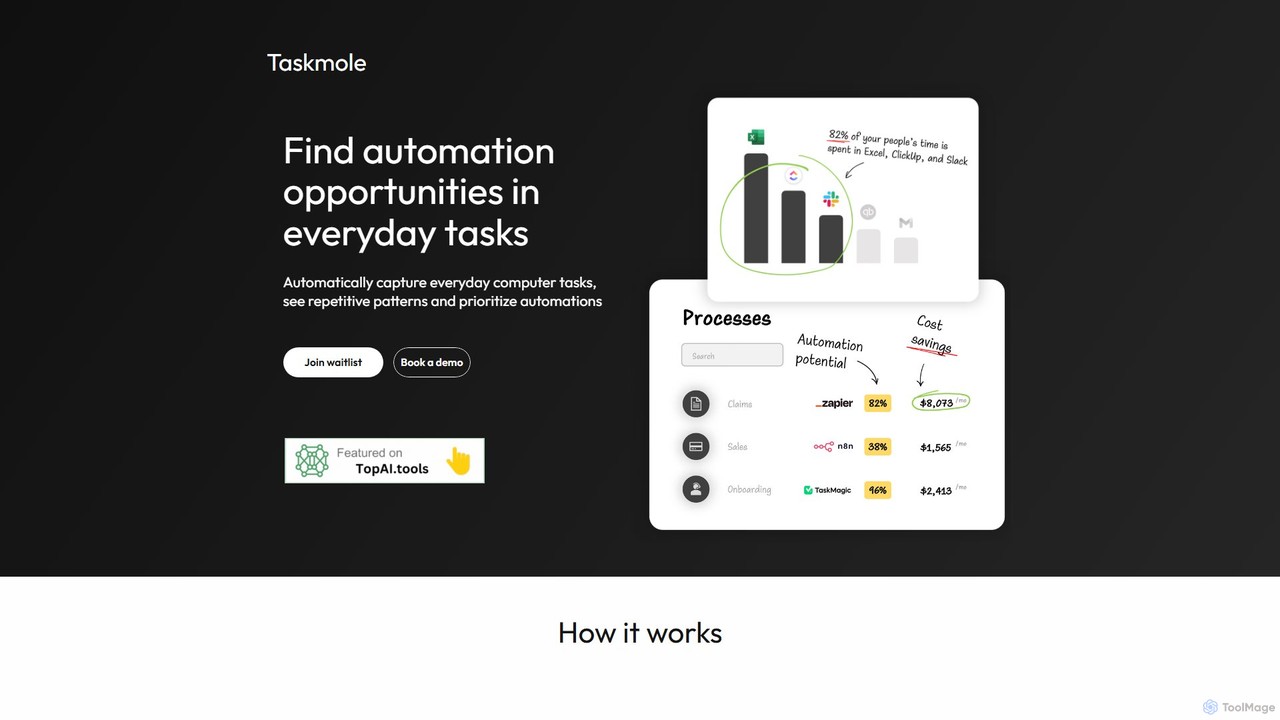
Taskmole is an AI-powered task mining tool that automatically captures your computer activities to identify repetitive processes. It …
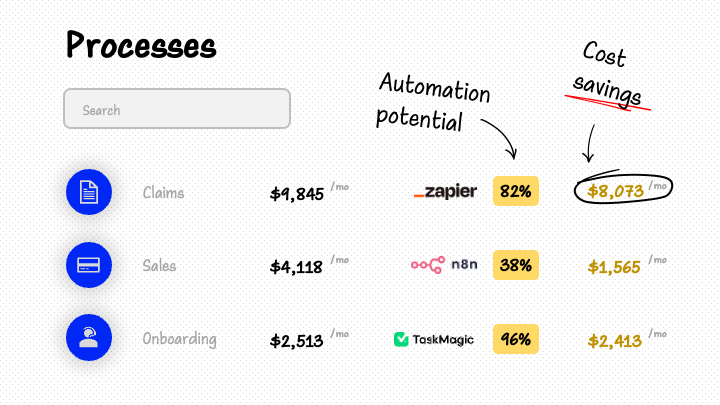
Taskmole is an AI-powered task mining tool that automatically captures your computer activities to identify repetitive processes. It analyzes your workflows to reveal the best automation opportunities, helping businesses and consultants streamline operations and increase efficiency by providing data-driven insights.
About Process Mining
Process Mining is an AI-powered analytical discipline that uses event log data to discover, monitor, and improve real-world business processes. By applying advanced data science techniques and machine learning, it provides objective, fact-based insights into how processes actually run, revealing hidden bottlenecks, deviations, and inefficiencies. This powerful approach enables organizations to optimize operations, enhance compliance, and drive successful digital transformation initiatives within the broader context of business intelligence and operational excellence.
Core Features
- Process Discovery: Automatically map out actual process flows and variants directly from event data.
- Conformance Checking: Compare executed processes against predefined models to identify deviations and compliance gaps.
- Performance Analysis: Quantify process metrics such as cycle time, throughput, and resource utilization to pinpoint inefficiencies.
- Root Cause Analysis: Identify the underlying factors contributing to process bottlenecks, delays, or non-conformance.
- Predictive Analytics: Forecast future process behavior and potential issues, enabling proactive intervention.
Applicable Scenarios
Process Mining is invaluable for organizations seeking to gain deep, data-driven insights into their operational workflows. It is widely applied in finance for optimizing order-to-cash or procure-to-pay cycles, in customer service for streamlining inquiry resolution, and in supply chain management for enhancing logistics and inventory efficiency.
How to Choose
When selecting a Process Mining tool, consider its data integration capabilities with existing systems (ERP, CRM), the richness of its visualization and reporting features, scalability for handling large datasets, and the intuitiveness of its user interface. Also, evaluate its ability to support advanced analytics like predictive modeling and automated root cause identification.

Process MiningUse Cases
Optimizing Order-to-Cash Cycles
Finance and operations managers utilize Process Mining to analyze event logs from ERP and CRM systems, visualizing the actual flow of sales orders, invoicing, and payment collection. This helps identify delays in approvals, manual steps, or payment discrepancies that extend cycle times. By pinpointing these inefficiencies, organizations can significantly reduce the order-to-cash duration, improve cash flow, and enhance customer satisfaction.
Improving Customer Service Workflows
Customer service directors leverage Process Mining to understand the complete customer journey from initial contact to resolution. By analyzing data from ticketing systems and communication platforms, they can map inquiry paths, identify common re-routing issues, excessive agent handoffs, or prolonged resolution times. This leads to faster issue resolution, reduced operational costs, and a significantly better customer experience.
Enhancing Supply Chain Efficiency
Supply chain analysts apply Process Mining to streamline procurement, inventory management, and logistics. By examining event data from warehouse management and transportation systems, they can uncover deviations from planned routes, unexpected delays in goods movement, or non-compliant purchasing patterns. The insights gained enable optimized inventory levels, reduced lead times, and substantial cost savings across the supply chain.
Ensuring Regulatory Compliance
Compliance officers and internal auditors use Process Mining to verify that business processes adhere to internal policies and external regulations like GDPR or SOX. By comparing actual process execution against predefined compliance models, the tools automatically flag any deviations, unauthorized steps, or missing controls. This proactive identification of risks simplifies auditing processes and significantly reduces potential legal and financial exposure.
Prioritizing Digital Transformation & Automation
Heads of digital transformation rely on Process Mining to identify the most impactful processes for automation or re-engineering. By analyzing process variants, frequency, and performance metrics, they can pinpoint high-volume, repetitive, and inefficient tasks that are prime candidates for Robotic Process Automation (RPA) or workflow automation. This data-driven approach ensures maximum ROI from transformation initiatives and accelerates digital maturity.
Optimizing Healthcare Patient Journeys
Hospital administrators and process improvement leads utilize Process Mining to enhance patient flow and care delivery. By mapping patient pathways from admission to discharge using electronic health records, they can identify bottlenecks in diagnostics, treatment, or inter-departmental transfers. The insights help reduce patient wait times, optimize resource allocation, and ultimately lead to improved patient outcomes and operational efficiency within healthcare systems.