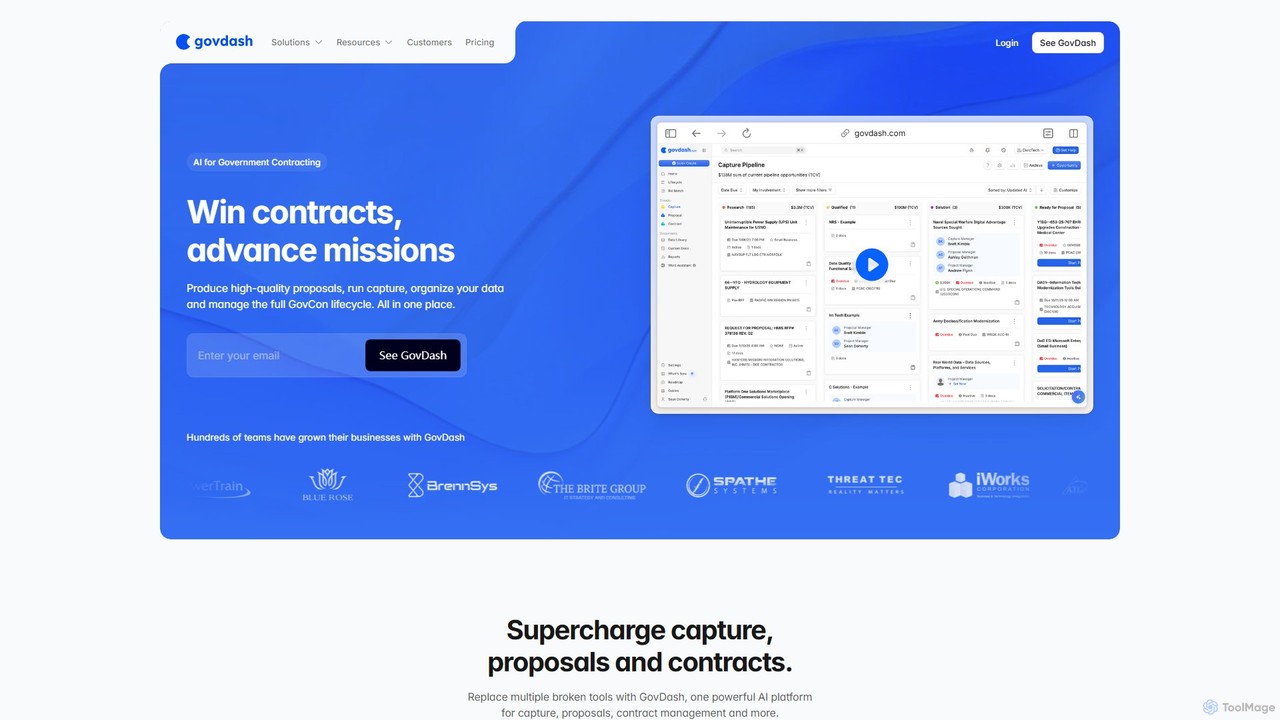
AI Proposal Writing tools are specialized platforms that automate and enhance the creation of persuasive business proposals. They leverage natural language processing (NLP) and machine learning to generate structured, personalized, and data-driven documents from user inputs. These tools streamline the entire proposal lifecycle, from content creation and design to tracking and analytics, helping users win more deals faster. They go beyond simple text editing by offering intelligent templates, content suggestions, and engagement insights.
Core Features
- Intelligent Templates: Generate industry-specific proposal structures with pre-written sections that can be quickly customized.
- Content Personalization: Automatically populate proposals with client data, project specifics, and relevant case studies for a tailored approach.
- Interactive Pricing Tables: Create dynamic and editable pricing options that allow clients to select services directly within the proposal.
- Engagement Analytics: Track when a proposal is opened, how long each section is viewed, and receive real-time notifications on client activity.
- E-Signature Integration: Facilitate a seamless closing process by allowing clients to legally sign and approve proposals online.
Use Cases
These tools are widely used by sales teams, freelancers, consultants, and agencies across various sectors like marketing, IT services, and construction. For instance, a sales representative can quickly generate a personalized proposal after a client call, while a marketing agency can create a detailed campaign outline with accurate budget projections. They are essential for any role that frequently responds to RFPs (Requests for Proposals) or needs to create compelling sales documents.
How to Choose
When selecting an AI proposal writing tool, consider the level of customization and branding options available. Evaluate its integration capabilities with your existing CRM and project management software. Assess the quality of its analytics and tracking features to understand client engagement. Finally, compare pricing models—whether per-user, per-proposal, or subscription-based—to find a plan that aligns with your business volume and budget.