ToolMage
Sign in

Best 1 Quoting Tools for Business

Popular Quoting Tools in Business include Unigo, helping you work more efficiently.

Unigo
Free

Unigo

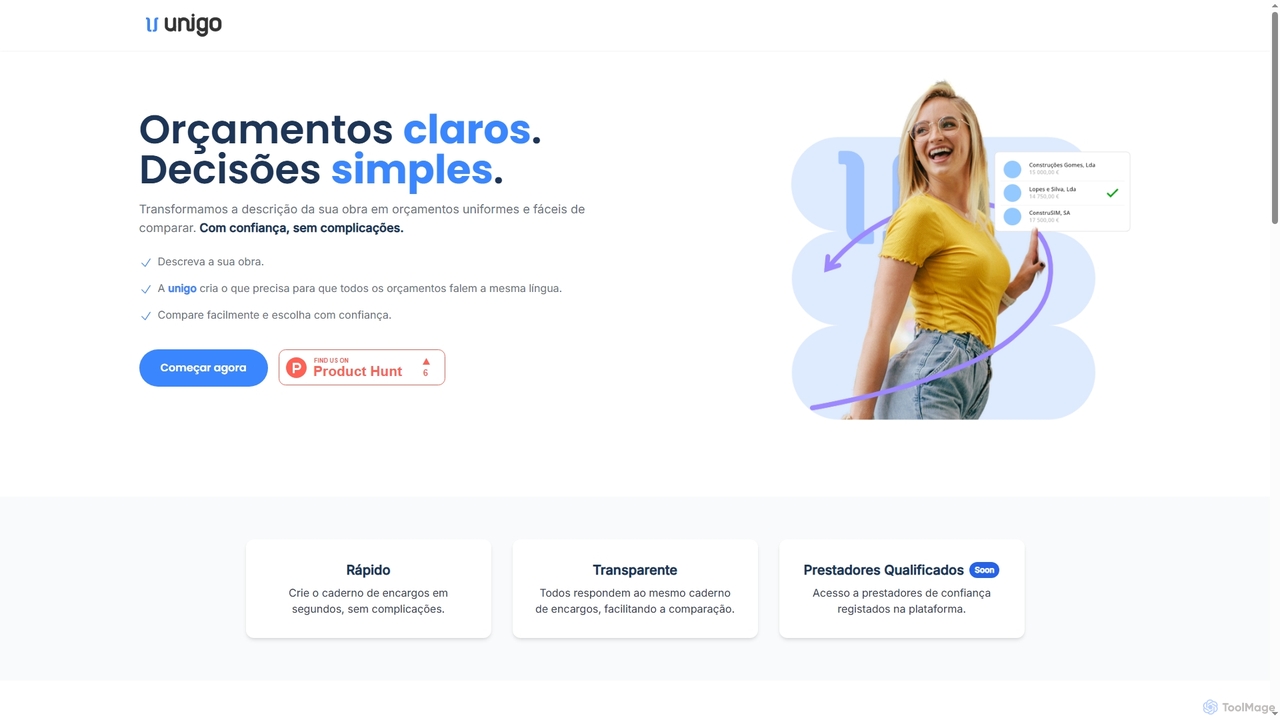
Unigo is an AI-powered platform that simplifies the process of obtaining and comparing construction and renovation quotes. It transforms your project description into standardized technical specifications (bill of quantities), ensuring all contractors bid on the same detailed document for transparent and easy comparison.

Quoting Tools
Visits 5.2KFavorites 152Likes 170

About Quoting Tools

AI Quoting Tools are specialized applications designed to automate and streamline the creation of sales quotes, proposals, and estimates. These tools leverage AI to populate templates with customer data, suggest optimal pricing, and personalize content to increase conversion rates. They enable sales teams and businesses to generate accurate, professional-looking documents in minutes, significantly reducing manual errors and shortening the sales cycle. Many platforms also offer advanced features like real-time tracking of quote views and integrated e-signatures for faster deal closure.

Core Features

  • Automated Document Generation: Instantly creates professional quotes and proposals using pre-designed, customizable templates.
  • Dynamic Pricing (CPQ): Manages complex pricing rules, tiered discounts, and configurable product or service bundles.
  • CRM Integration: Seamlessly syncs customer and deal data with platforms like Salesforce, HubSpot, and Zoho.
  • Quote Tracking & Analytics: Provides real-time notifications and insights when prospects open, view, or comment on a quote.
  • E-Signature & Payment Gateway: Allows clients to approve and pay directly from the quote, accelerating the sales process.

Use Cases

These tools are widely used by B2B sales teams, service-based businesses (e.g., marketing agencies, IT consultants, contractors), and freelancers. They are essential for any role that involves creating detailed cost estimates, formal proposals, or service agreements for potential clients, ensuring consistency and professionalism across all communications.

How to Choose

When selecting an AI Quoting Tool, evaluate its integration capabilities with your existing CRM and accounting software. Assess the level of template customization and branding options available. Consider its ability to handle your specific pricing complexity, including multi-currency support or subscription models. Finally, check for essential features like analytics, e-signature support, and mobile accessibility.

Quoting Tools use cases

1

Accelerating B2B Tech Sales Proposals

A sales representative at a SaaS company needs to create a complex, multi-tiered proposal for an enterprise client. Instead of spending hours manually compiling data in a spreadsheet, they use an AI quoting tool. The tool integrates directly with their CRM, automatically pulling client details and deal information. They use the CPQ (Configure, Price, Quote) feature to select the right software package, add optional modules, and apply pre-approved volume discounts. The system generates a professionally branded PDF proposal in under 15 minutes, complete with a personalized cover letter. This process reduces proposal creation time by over 90%, eliminates pricing errors, and allows the rep to track when the client opens and views the document.

2

Standardizing Quotes for a Marketing Agency

An account manager at a digital marketing agency frequently sends quotes for services like SEO, content creation, and social media management. To ensure consistency and professionalism, the agency uses a quoting tool with a library of pre-approved templates. For each new prospect, the manager selects the relevant service template, which already contains standard descriptions, deliverables, and pricing tiers. They can easily add or remove line items, adjust quantities, and include a personalized introductory paragraph. The final quote is sent via a trackable link, allowing the manager to see when it's viewed. This standardization saves time, maintains brand consistency, and provides a clear, easy-to-understand format for clients.

3

Creating Fast Estimates for Home Services

The owner of a small landscaping business needs to provide on-the-spot estimates to homeowners to win jobs quickly. Using a mobile-friendly quoting tool on a tablet, they can walk the property with the client, adding services like mowing, planting, and hardscaping directly into the quote. The tool has a pre-loaded catalog of materials and labor rates, so it calculates the total cost instantly and accurately. Once the client agrees, they can sign the estimate electronically on the tablet. The tool then automatically converts the accepted estimate into an invoice. This immediate, professional process builds trust and significantly increases the closing rate compared to competitors who provide handwritten notes or email estimates later.

4

Managing Freelance Project Bids

A freelance web developer bids on multiple projects weekly, each with a different scope. To manage this efficiently, they use a quoting tool to create and track all their proposals. They have set up templates for different project types, such as '5-Page Website' or 'E-commerce Store Setup'. Each template includes itemized services like 'Design Mockup', 'Development', and 'SEO Basics'. When a new request comes in, the developer selects a template, adjusts the scope and pricing, adds a portfolio link, and sends it to the potential client. The tool's dashboard provides a clear overview of all sent, viewed, and accepted proposals, helping them manage their sales pipeline and follow up effectively without relying on scattered emails and documents.

5

Automating Renewal Quotes for Subscription Services

A customer success manager at a B2B software company is responsible for hundreds of upcoming subscription renewals each month. Manually generating and sending each renewal quote is time-consuming and prone to error. By using an AI quoting tool integrated with their billing system, the process is automated. The tool automatically generates a renewal quote 30 days before the contract expires, based on the customer's current plan and any applicable price adjustments. The quote is then sent to the client with a link for easy online approval and payment. This automation ensures timely communication, reduces churn by making renewals effortless for clients, and frees up the manager's time to focus on strategic customer relationships rather than administrative tasks.

6

Generating Quotes for Complex Manufacturing Orders

A sales engineer in a manufacturing company needs to quote custom machinery with many configurable parts and dependencies. Using a quoting tool with advanced CPQ (Configure, Price, Quote) functionality is critical. The system guides the engineer through a series of questions to configure the product correctly, ensuring all components are compatible and preventing invalid combinations. As they make selections, the price updates in real-time, reflecting material costs, labor, and margins. The tool can also generate technical specification sheets and 3D models to include with the proposal. This eliminates costly configuration errors, provides accurate and profitable pricing, and significantly speeds up the quoting process for highly complex, engineered-to-order products.

Quoting Tools FAQ

What are AI Quoting Tools?

AI Quoting Tools are software applications that automate and enhance the process of creating, sending, and managing sales quotes and proposals. They use artificial intelligence to pull customer data from a CRM, suggest relevant products or services, optimize pricing, and personalize proposal content. The primary goal is to help sales teams generate accurate, professional, and persuasive quotes much faster than manual methods, thereby shortening the sales cycle and increasing win rates.

How to choose the right AI Quoting Tool?

Choosing the right tool depends on your business needs. Consider these key factors:

  • Integration: Ensure it seamlessly connects with your existing CRM, accounting, and project management software to avoid data silos.
  • Customization: Look for flexible template editors that allow you to match your brand's look and feel, and tailor content for different client segments.
  • Pricing Complexity: Can the tool handle your pricing structure? This includes support for recurring subscriptions, tiered discounts, optional add-ons, and multi-currency transactions.
  • User Experience: The tool should be intuitive for your sales team to use, requiring minimal training to create and send quotes efficiently.
  • Analytics: Check for robust tracking features that provide insights into when quotes are opened, how long they are viewed, and which sections are most engaging.
What's the difference between a Quoting Tool and a CRM?

A CRM (Customer Relationship Management) system is a broad platform for managing the entire customer lifecycle, including contact information, sales pipelines, and communication history. A Quoting Tool is a specialized application that focuses specifically on one part of that lifecycle: the creation and management of sales proposals and quotes. While many CRMs have basic quoting features, dedicated Quoting Tools offer more advanced capabilities like complex product configuration (CPQ), interactive pricing tables, extensive template libraries, detailed analytics on document engagement, and integrated e-signatures. They are designed to perfect the proposal stage, whereas a CRM is designed to manage the overall relationship.

Can quoting tools handle complex pricing and discounts?

Yes, this is a core strength of most modern quoting tools, often referred to as CPQ (Configure, Price, Quote) functionality. They are designed to manage sophisticated pricing scenarios that are difficult to handle manually. This includes:

  • Tiered Pricing: Prices that change based on volume or quantity.
  • Recurring Subscriptions: Handling monthly or annual billing cycles automatically.
  • Optional Add-ons: Allowing customers to select optional items that adjust the total price.
  • Automated Discounts: Applying pre-set rules for promotions, partner discounts, or volume-based reductions.
  • Multi-Currency Support: Generating quotes in different currencies with up-to-date exchange rates.

This capability ensures pricing accuracy, maintains margin control, and allows sales reps to build complex deals without needing manual approval for every discount.

Who benefits most from using AI Quoting Tools?

A wide range of businesses and professionals can benefit, but they are particularly valuable for:

  • B2B Sales Teams: Especially in tech, manufacturing, or professional services, where proposals are often complex and require accuracy and speed.
  • Service-Based Businesses: Agencies, consultants, and contractors who need to create detailed project scopes and estimates quickly to win clients.
  • Companies with Configurable Products: Businesses that sell products with many options and dependencies rely on CPQ features to avoid errors.
  • Freelancers and Small Businesses: These tools help smaller operations appear more professional, save time on administrative tasks, and track their sales pipeline effectively.

In essence, any organization that sends quotes or proposals as a regular part of its sales process can improve efficiency, consistency, and professionalism by adopting a quoting tool.