ToolMage
Sign in

Best 1 Real Estate Management AI tools for Business

Popular Real Estate Management AI tools in Business include Leasecake, helping you work more efficiently.

Leasecake
Paid

Leasecake

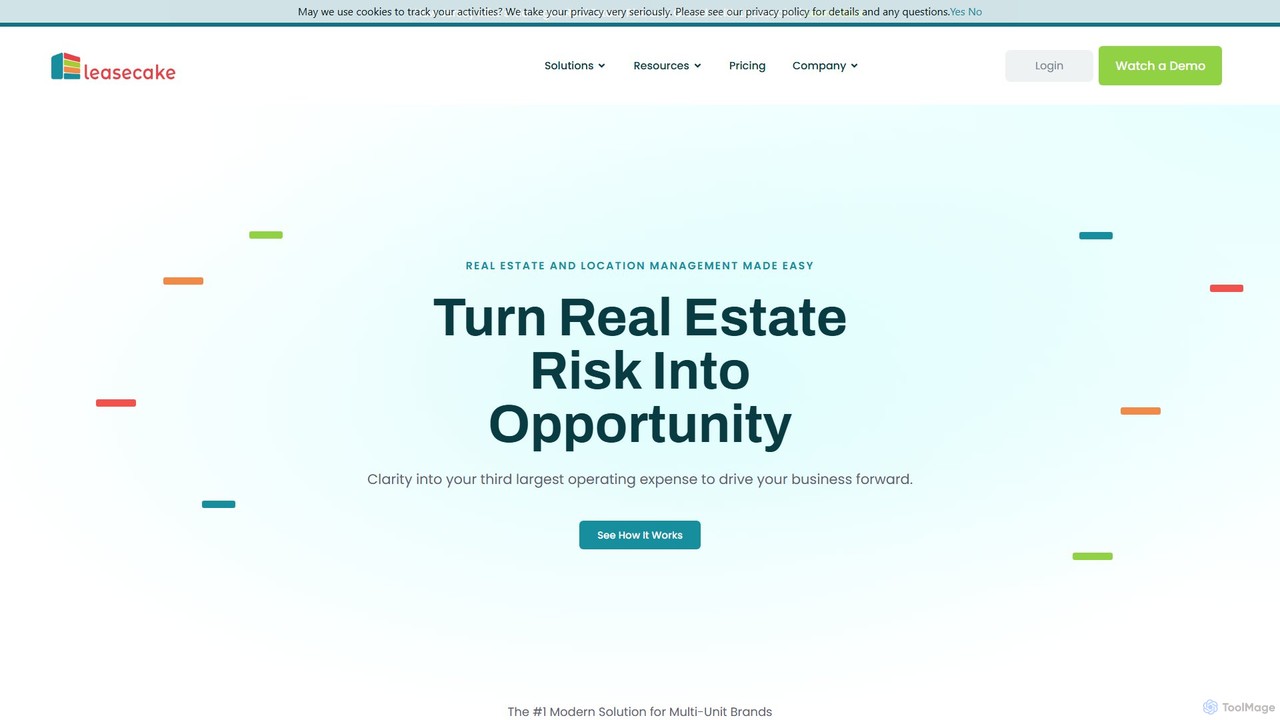
Leasecake is a cloud-based lease management and location intelligence platform designed for multi-unit businesses. It simplifies real estate and location management by automating critical date tracking, ensuring compliance, and centralizing all lease-related data. This helps tenants, franchisees, and operators reduce risk, save costs, and make informed decisions to drive business growth.

Real Estate Management
Visits 18.5KFavorites 167Likes 153

About Real Estate Management

AI Real Estate Management tools are specialized platforms that apply artificial intelligence to optimize property investment, management, and sales processes. They utilize machine learning for predictive market analysis, automated property valuation, and operational efficiency. These tools empower property managers, investors, and agents to make data-driven decisions, automate administrative tasks, and identify lucrative opportunities. Their core value lies in transforming vast real estate data into actionable strategic insights.

Core Features

  • Automated Valuation Models (AVM): Instantly estimate property values using AI algorithms that analyze market data, property characteristics, and historical trends.
  • Predictive Analytics: Forecast market trends, rental income potential, and property appreciation to guide investment strategies.
  • Lease Abstraction: Automatically extract and summarize key terms, dates, and clauses from complex lease agreements using Natural Language Processing (NLP).
  • Intelligent Tenant Screening: Analyze applicant data beyond credit scores to assess risk and predict tenant reliability.
  • Smart Maintenance Scheduling: Predict equipment failures and maintenance needs to proactively schedule repairs, reducing costs and downtime.

Use Cases

These tools are primarily used by real estate investment trusts (REITs), large property management firms, individual investors, and brokerage agencies. For example, a REIT can use AI to analyze its entire portfolio for underperforming assets, while an agent can use an AVM to provide clients with instant, data-backed pricing recommendations.

How to Choose

When selecting a tool, consider the accuracy and source of its data, as this directly impacts the quality of predictions. Evaluate its integration capabilities with your existing Property Management System (PMS) or CRM. Also, determine if the tool specializes in residential, commercial, or industrial real estate to ensure it aligns with your portfolio.

Real Estate Management use cases

1

Automated Property Valuation for Investment Analysis

A real estate investor uses an AI tool to instantly analyze the potential value of hundreds of properties in a target city. The platform provides estimated market values, rental yield projections, and neighborhood growth forecasts. This allows the investor to quickly shortlist high-potential assets and avoid overpaying, reducing research time from weeks to a matter of hours and increasing the accuracy of their acquisition strategy.

2

Intelligent Lease Abstraction for Commercial Portfolios

A property management firm handling a large portfolio of commercial leases uses an AI tool to automatically extract critical data. The system scans lengthy legal documents to pull key information like renewal dates, rent escalation clauses, and maintenance responsibilities. This eliminates manual data entry errors, ensures no critical deadlines are missed, and saves hundreds of administrative hours per month, allowing staff to focus on tenant relations and strategic management.

3

Predictive Maintenance for Residential Properties

A large apartment complex manager implements an AI system that analyzes data from smart sensors and historical repair records. The system predicts when HVAC units, plumbing, or appliances are likely to fail and automatically schedules preventative maintenance. This approach reduces emergency repair costs by over 30%, minimizes tenant disruption, and extends the lifespan of critical building equipment, improving the property's overall net operating income.

4

AI-Powered Lead Generation for Real Estate Agents

A real estate agency employs an AI platform that analyzes online behavior and public records to identify potential home buyers and sellers. The tool scores leads based on their likelihood to transact and automates personalized email outreach with relevant property listings. This allows agents to focus their efforts on high-intent prospects, increasing their lead conversion rate and significantly boosting their sales pipeline without manual prospecting.

5

Optimizing Rental Pricing with Dynamic Models

A property manager for short-term vacation rentals uses an AI-powered pricing tool. The system analyzes real-time market data, local events, seasonality, and competitor pricing to automatically adjust nightly rates. This dynamic pricing strategy ensures maximum occupancy at the highest possible price, leading to a 15-25% increase in annual revenue compared to relying on static, manually set prices.

6

AI-Enhanced Tenant Screening and Risk Assessment

A property manager uses an AI screening tool that goes beyond traditional credit checks. It analyzes a broader set of data points, including verified income, rental history, and public records, to generate a comprehensive risk score for each applicant. This provides a more holistic view of an applicant's reliability, helping the manager select high-quality tenants, reduce eviction rates, and minimize potential income loss from defaults.

Real Estate Management FAQ

What are AI Real Estate Management tools?

AI Real Estate Management tools are software solutions that use artificial intelligence to automate and enhance real estate operations. They leverage technologies like machine learning and predictive analytics to perform tasks such as property valuation, market trend forecasting, lease abstraction, and tenant risk assessment. Unlike traditional software, they provide data-driven insights to help professionals make more strategic investment and management decisions.

How to choose the right AI Real Estate Management tool?

To choose the right tool, consider these factors:

  • Data Quality and Scope: Ensure the tool uses accurate, up-to-date, and comprehensive data sources relevant to your market.
  • Specialization: Select a tool designed for your specific niche, whether it's residential, commercial, short-term rentals, or development.
  • Integration Capabilities: Check if it can seamlessly integrate with your existing systems like Property Management Software (PMS), CRM, or accounting tools.
  • User-Friendliness: The platform should have an intuitive interface that your team can adopt without extensive training.
What's the difference between AI tools and traditional Property Management Software (PMS)?

Traditional Property Management Software (PMS) primarily focuses on administrative and operational tasks like tracking rent payments, managing maintenance requests, and storing tenant information. AI Real Estate Management tools go a step further by adding a layer of intelligence. They use data to provide predictive insights (e.g., forecasting rental demand), automate complex decisions (e.g., dynamic pricing), and extract information from unstructured data (e.g., lease documents). Essentially, PMS manages what is happening now, while AI tools help predict and optimize what will happen next.

Who can benefit from using AI Real Estate Management tools?

A wide range of professionals in the real estate industry can benefit:

  • Property Managers: To automate administrative tasks, predict maintenance needs, and optimize rental pricing.
  • Real Estate Investors & REITs: To identify high-potential investment opportunities, analyze market trends, and manage large portfolios efficiently.
  • Real Estate Agents/Brokers: To generate qualified leads, provide accurate property valuations, and personalize client communication.
  • Asset Managers: To gain a high-level overview of portfolio performance and make data-driven strategic decisions.
Can AI tools accurately predict property values?

AI-powered Automated Valuation Models (AVMs) can provide highly accurate estimates by analyzing millions of data points, including sales history, property features, and market trends. Their accuracy often matches or exceeds that of traditional appraisals for standard properties. However, for unique, custom, or high-end properties with few comparable sales, their accuracy may vary. They are best used as a powerful data point to support, rather than completely replace, professional human judgment and physical inspection.