Business Best in category 1 results Regulatory Affairs AI Tool

Popular AI tools in the Regulatory Affairs field of Business include FRAI, etc., helping you quickly improve efficiency.

Free
FRAI

FRAI

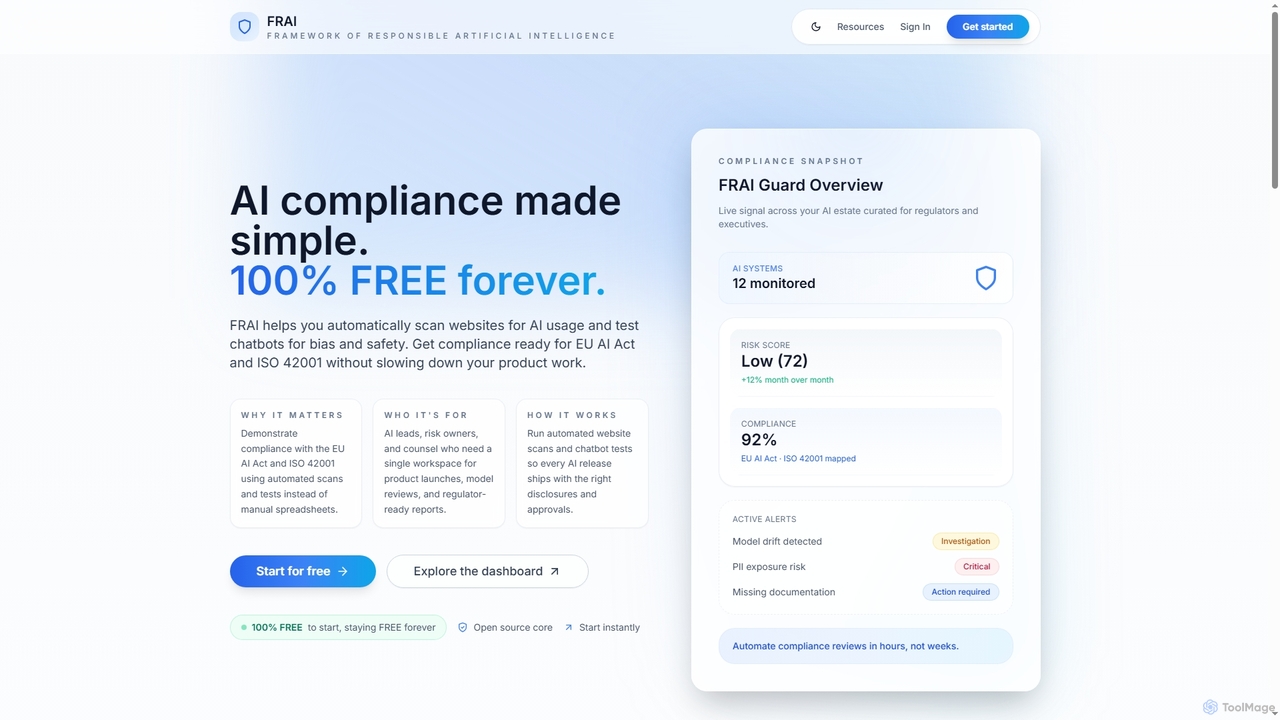
FRAI is a comprehensive, free-forever AI compliance platform designed to simplify adherence to global AI regulations like the …

5.4K

About Regulatory Affairs

Regulatory Affairs AI tools are specialized software solutions that leverage artificial intelligence to automate and streamline the complex processes of regulatory compliance. These tools utilize natural language processing, machine learning, and data analytics to interpret vast amounts of regulatory documentation, manage submissions, and ensure adherence to legal standards. They empower businesses across highly regulated sectors to navigate intricate compliance landscapes, reduce manual errors, accelerate approval timelines, and maintain continuous regulatory alignment.

Core Features

  • Regulatory Text Analysis & Interpretation: Automatically identifies, analyzes, and interprets large volumes of regulatory documents, extracting key requirements and obligations.
  • Compliance Checking & Risk Assessment: Performs automated compliance checks on internal processes and product data, identifying potential violations and associated risks.
  • Document Management & Generation: Assists in creating, managing, and version controlling regulatory submission documents, including automated generation of reports.
  • Change Tracking & Impact Analysis: Monitors regulatory updates in real-time and analyzes their potential impact on existing business operations and products.
  • Submission Process Automation: Automates the preparation and tracking of submissions to regulatory bodies, improving efficiency and accuracy.

Applicable Scenarios

These tools are crucial for industries facing stringent and evolving regulatory environments, such as pharmaceuticals, finance, healthcare, and manufacturing. They are used by compliance officers, legal teams, product development specialists, and quality assurance departments to ensure products and operations meet all necessary legal and industry standards.

How to Choose

When selecting a Regulatory Affairs AI tool, consider its industry-specific capabilities (e.g., support for FDA, EMA, GDPR), the breadth of its features (e.g., analysis, risk assessment, document generation), its integration potential with existing enterprise systems, and its data security protocols. Scalability and the ability to adapt to future regulatory changes are also vital for long-term value.

Regulatory AffairsUse Cases

1

Pharmaceutical New Drug Approval Document Preparation

Pharmaceutical companies leverage AI tools to organize, cross-reference, and validate thousands of pages of clinical trial data and non-clinical study reports for new drug applications. This ensures all submission documents comply with the stringent requirements of agencies like the FDA and EMA, significantly shortening preparation times and reducing human errors in complex regulatory filings.

2

Financial Institution Anti-Money Laundering (AML) Compliance Monitoring

Financial institutions deploy AI to monitor transaction data in real-time, identifying unusual patterns and potential money laundering activities. The tools automatically generate suspicious transaction reports (STRs) and ensure compliance with international anti-money laundering regulations such as those from FATF, enhancing the effectiveness and speed of financial crime detection.

3

Medical Device CE Certification Document Automation

Medical device manufacturers utilize AI tools to analyze the requirements of the EU Medical Device Regulation (MDR), automatically matching product technical documentation and generating reports and declarations compliant with CE certification standards. This significantly accelerates the product launch process by streamlining complex documentation and ensuring regulatory adherence.

4

Data Privacy Regulation (GDPR/CCPA) Compliance Audit

Enterprises leverage AI tools to scan internal data processing workflows and storage systems, identifying potential GDPR or CCPA violations in personal data handling. These tools generate comprehensive compliance audit reports and provide actionable recommendations for improvement, ensuring robust data privacy practices and mitigating legal risks associated with non-compliance.

5

Energy Sector Environmental Regulation Reporting Automation

Energy companies deploy AI tools to collect and integrate data from sensors and operational systems, automatically generating environmental impact reports and emissions monitoring reports that comply with requirements from agencies like the EPA. This ensures timely and accurate submission of critical environmental data, supporting sustainability goals and avoiding penalties for non-compliance.

6

Food Safety Regulation Change Impact Analysis

Food manufacturers use AI tools to track the latest changes in global food safety regulations (e.g., FDA FSMA, EFSA), analyzing their impact on existing product formulations, production processes, and labeling requirements. The tools provide actionable recommendations for adjustments, helping companies proactively adapt to new standards and maintain consumer trust.

Regulatory AffairsFrequently Asked Questions