Business Best in category 1 results Reports AI Tool

Popular AI tools in the Reports field of Business include Venngage, etc., helping you quickly improve efficiency.

Venngage

Venngage

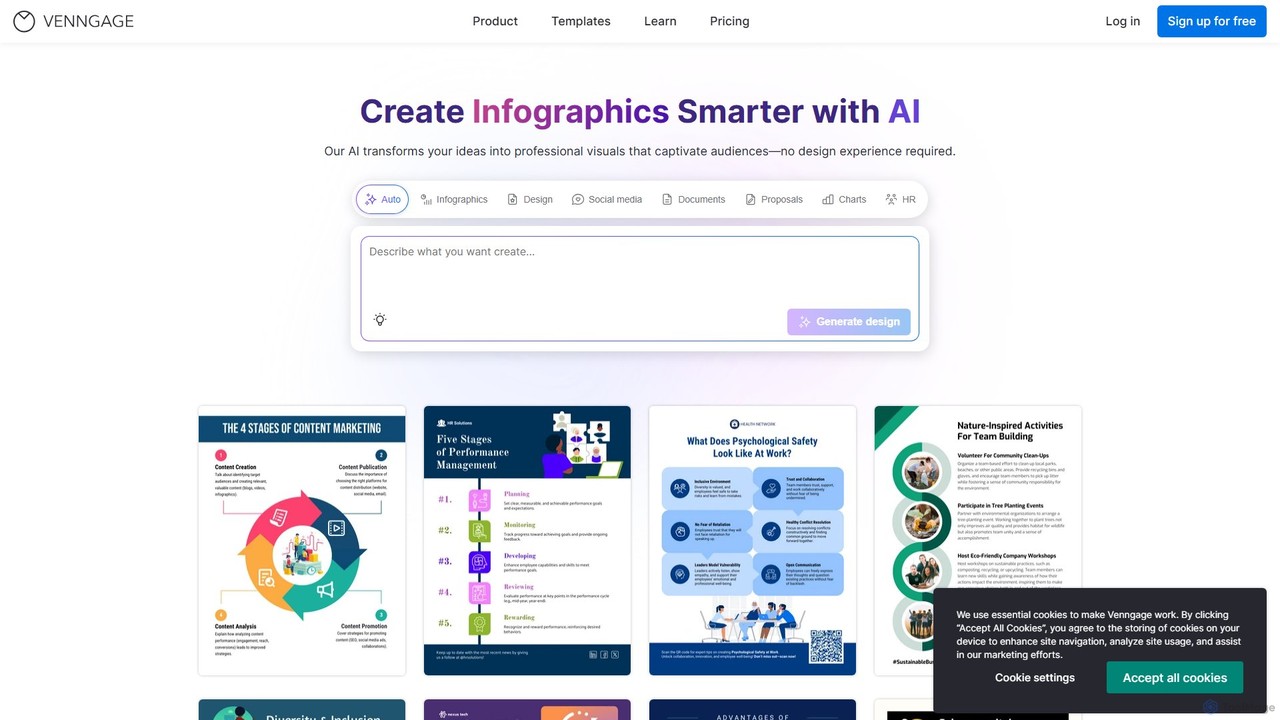
Venngage is an AI-powered online design platform that empowers users to create professional and engaging visuals like infographics, …

1.6M

About Reports

Reports are AI-powered tools designed to automate the generation, analysis, and visualization of data-driven reports. These tools leverage advanced artificial intelligence and natural language generation (NLG) to transform raw data into actionable insights. They streamline the reporting process, enabling businesses to make faster, more informed decisions across various functions like sales, marketing, finance, and operations. By reducing manual effort and human error, AI reports tools enhance efficiency and accuracy in business intelligence.

Core Features

  • Automated Data Aggregation: Automatically collects and integrates data from diverse sources such as CRM, ERP, marketing platforms, and databases.
  • Intelligent Data Analysis: Utilizes AI algorithms to identify trends, anomalies, correlations, and key performance indicators (KPIs) within complex datasets.
  • Natural Language Generation (NLG): Converts analyzed data into human-readable narrative summaries, explaining findings and implications in plain language.
  • Customizable Visualization: Generates dynamic charts, graphs, and dashboards tailored to specific reporting needs, allowing for interactive data exploration.
  • Predictive Insights: Employs machine learning to forecast future trends and potential outcomes, providing proactive recommendations for strategic planning.

Applicable Scenarios

AI reports tools are invaluable for business analysts, marketing managers, sales leaders, and financial controllers who need to quickly understand performance, identify opportunities, and mitigate risks. They are particularly useful in scenarios requiring frequent, detailed, and data-intensive reporting, such as tracking campaign ROI, monitoring sales pipeline health, or assessing financial performance.

How to Choose

When selecting an AI reports tool, consider its data integration capabilities with your existing systems, the flexibility of its customization options for report formats and visualizations, and the sophistication of its NLG for generating clear narratives. Evaluate its scalability to handle growing data volumes, the security measures for sensitive information, and the clarity of its pricing model. User-friendliness and the level of technical expertise required for setup and operation are also crucial factors.

ReportsUse Cases

1

Automated Sales Performance Reporting

Sales managers can leverage AI reports tools to automatically generate daily or weekly performance reports for their teams. These reports consolidate data from CRM systems, highlighting individual and team sales figures, pipeline status, conversion rates, and identifying top-performing products or regions. This automation saves hours of manual data compilation, allowing managers to focus on strategic coaching and quickly address underperforming areas, leading to improved sales efficiency and revenue growth.

2

Marketing Campaign ROI Analysis

Marketing teams utilize AI reports tools to analyze the return on investment (ROI) of various campaigns across different channels. By integrating data from advertising platforms, social media, and web analytics, these tools generate comprehensive reports detailing campaign costs, lead generation, conversion rates, and customer acquisition costs. The AI can identify which channels and content types are most effective, providing actionable insights to optimize future marketing spend and improve overall campaign performance.

3

Financial Health Summaries for Executives

CFOs and financial analysts can employ AI reports tools to generate concise, high-level financial health summaries for executive boards. These tools process vast amounts of financial data from ERP and accounting systems, identifying key trends in revenue, expenses, cash flow, and profitability. The AI's natural language generation capabilities can then summarize complex financial statements into easily digestible narratives, highlighting critical insights and potential risks, enabling executives to grasp the company's financial standing at a glance.

4

Operational Efficiency Monitoring

Operations managers can use AI reports tools to continuously monitor and report on operational efficiency across various departments. By integrating data from production lines, supply chain logistics, and inventory management systems, these tools generate real-time dashboards and reports. The AI can identify bottlenecks, predict equipment failures, and suggest optimization strategies, providing a clear overview of operational performance and enabling proactive adjustments to maintain smooth workflows and reduce costs.

5

Customer Feedback Trend Analysis

Customer service and product development teams can utilize AI reports tools to analyze vast volumes of customer feedback from surveys, social media, and support tickets. These tools employ natural language processing (NLP) to identify sentiment, categorize common issues, and detect emerging trends in customer preferences or complaints. The generated reports provide actionable insights into product improvements, service enhancements, and overall customer satisfaction, enabling businesses to respond proactively to customer needs.

6

Project Progress and Risk Reporting

Project managers can leverage AI reports tools to automate the generation of project progress and risk assessment reports. By integrating data from project management software, task trackers, and resource allocation systems, these tools provide real-time updates on task completion, budget adherence, and potential delays. The AI can identify critical path issues and forecast project risks, presenting this information in clear, concise reports that enable stakeholders to make timely decisions and keep projects on track.

ReportsFrequently Asked Questions