ToolMage
Sign in

Best 1 Research Assistant for Business

Popular Research Assistant in Business include PromptlyClear, helping you work more efficiently.

PromptlyClear
Freemium

PromptlyClear

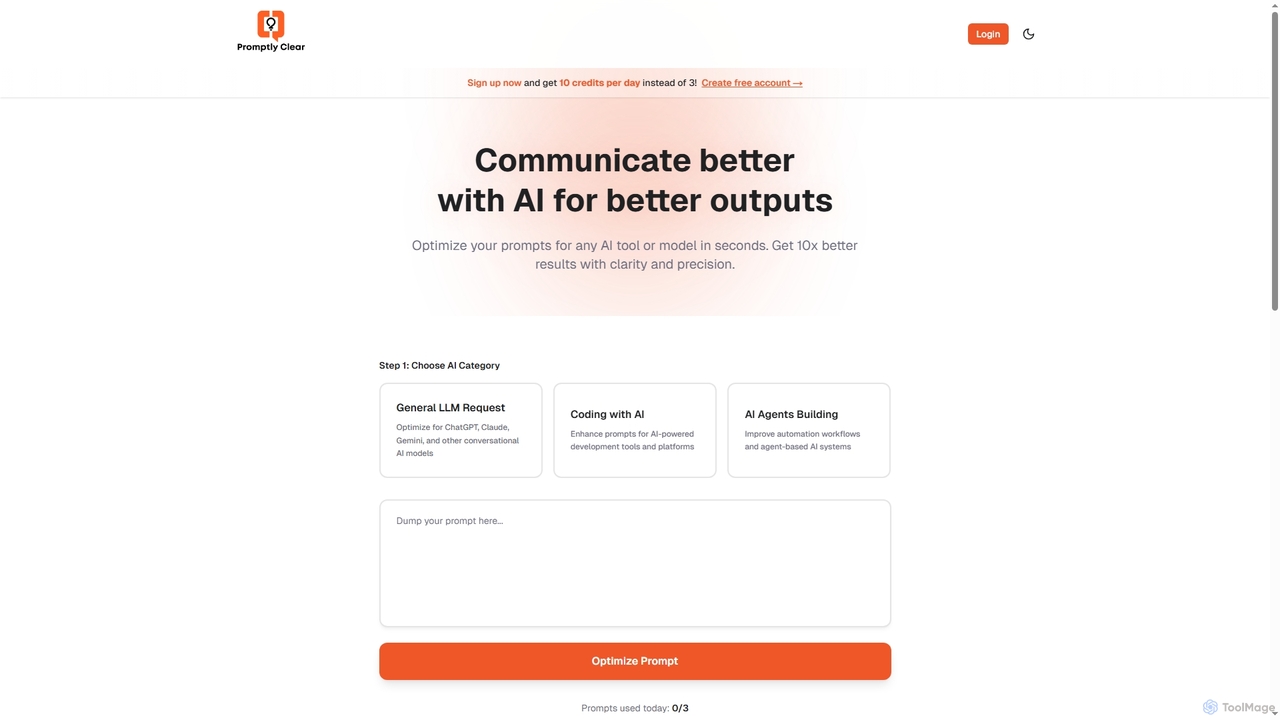
PromptlyClear is an AI prompt optimizer designed to refine user inputs for large language models like ChatGPT, Claude, and Gemini. It enhances clarity and precision, enabling users to achieve significantly better and more detailed AI outputs across various applications, from business research to coding.

Research Assistant
Visits 5.7KFavorites 157Likes 160

About Research Assistant

Research Assistant tools are AI-powered platforms designed to streamline and enhance the research process. Leveraging natural language processing (NLP), machine learning, and data analysis, they automate tasks like information gathering, synthesis, and summarization. These tools empower academics, analysts, and business professionals to accelerate literature reviews, market analysis, and report generation. By intelligently sifting through vast datasets, they significantly reduce manual effort and improve the accuracy of insights.

Core Features

  • Automated Information Gathering: Scans and collects relevant data from diverse sources.
  • Content Summarization: Condenses lengthy articles, papers, or reports into key insights.
  • Data Extraction & Analysis: Identifies and extracts specific data points, trends, or entities.
  • Citation & Reference Management: Helps organize and format academic citations.
  • Insight Generation: Uncovers patterns, connections, and novel insights from complex information.

Use Cases

Academics utilize them for literature reviews and thesis writing, while market researchers employ them for competitive analysis and trend identification. Business strategists benefit from rapid synthesis of industry reports for informed decision-making.

How to Choose

When selecting a research assistant tool, consider its data source coverage (e.g., academic databases, web, proprietary data), summarization accuracy, and integration capabilities with existing workflows. Evaluate its analytical depth for specific research needs and the user interface intuitiveness for ease of adoption.

Research Assistant use cases

1

Conducting Comprehensive Literature Reviews

Academic researchers and students can utilize AI research assistants to rapidly scan thousands of scholarly articles, journals, and conference papers. By inputting research questions or keywords, the tool identifies relevant studies, extracts key findings, and generates concise summaries, significantly reducing the time spent on manual reading and synthesis. This allows for a more thorough understanding of existing knowledge and identification of research gaps.

2

Automating Market & Competitive Analysis

Business analysts and strategists leverage these tools to monitor industry trends, analyze competitor strategies, and identify emerging market opportunities. The AI assistant gathers data from news articles, financial reports, social media, and industry publications, then synthesizes this information into actionable insights, helping businesses make data-driven decisions and maintain a competitive edge.

3

Accelerating Report & Proposal Generation

Consultants and project managers can use AI research assistants to quickly compile background information and data for reports, proposals, or presentations. The tool can extract relevant statistics, case studies, and expert opinions from various sources, then structure this information into a coherent draft, drastically cutting down preparation time and ensuring comprehensive content.

4

Enhancing Scientific Data Synthesis

Scientists and R&D teams employ AI research assistants to process and synthesize complex experimental data and scientific literature. The tools can identify correlations, anomalies, and patterns across multiple datasets, helping researchers formulate hypotheses, validate findings, and accelerate the discovery process by providing a consolidated view of intricate information.

5

Streamlining Legal Research & Case Preparation

Legal professionals can utilize AI research assistants to efficiently search through vast legal databases, case precedents, and statutes. The tools help identify relevant legal arguments, summarize complex cases, and extract key clauses, significantly reducing the time required for legal research and improving the accuracy and completeness of case preparation.

6

Personalized Learning & Knowledge Curation

Individual learners and lifelong students can use these assistants to curate personalized learning paths and deepen their understanding of specific topics. The AI can gather information from textbooks, online courses, and articles, then summarize key concepts, create study guides, and answer specific questions, making learning more efficient and tailored to individual needs.

Research Assistant FAQ

What are AI Research Assistant tools?

AI Research Assistant tools are software applications that use artificial intelligence, primarily natural language processing and machine learning, to automate and enhance various stages of the research process. They are designed to help users efficiently gather, analyze, summarize, and synthesize information from diverse sources, significantly reducing manual effort and accelerating insight generation.

How do I choose the best AI Research Assistant for my needs?

To choose the best AI Research Assistant, consider your specific research domain and data sources (e.g., academic, market, legal). Evaluate its core functionalities like summarization accuracy, data extraction capabilities, and citation management. Also, assess its integration with your existing tools, user-friendliness, pricing model, and the level of customer support offered to ensure it aligns with your workflow and budget.

How do AI Research Assistants differ from standard search engines?

While standard search engines retrieve information based on keywords, AI Research Assistants go further by actively processing, analyzing, and synthesizing the retrieved content. They can summarize documents, extract specific data points, identify trends, and even generate insights, effectively transforming raw information into structured knowledge, unlike search engines which primarily provide links to sources.

What specific tasks can AI Research Assistants automate?

AI Research Assistants can automate a wide range of tasks, including:

  • Literature Review: Identifying and summarizing relevant academic papers.
  • Data Extraction: Pulling specific facts, figures, or entities from texts.
  • Content Synthesis: Combining information from multiple sources into a coherent overview.
  • Trend Analysis: Detecting patterns and emerging themes in large datasets.
  • Citation Management: Organizing references and generating bibliographies.
These automations significantly streamline the research workflow.

Who benefits most from using AI Research Assistants?

A diverse range of professionals benefits from AI Research Assistants. This includes academics and students for literature reviews and thesis writing, market researchers for competitive analysis, business analysts for strategic planning, consultants for report generation, and legal professionals for case preparation. Essentially, anyone involved in extensive information gathering, analysis, and synthesis can gain significant efficiency and insight.