Elixion
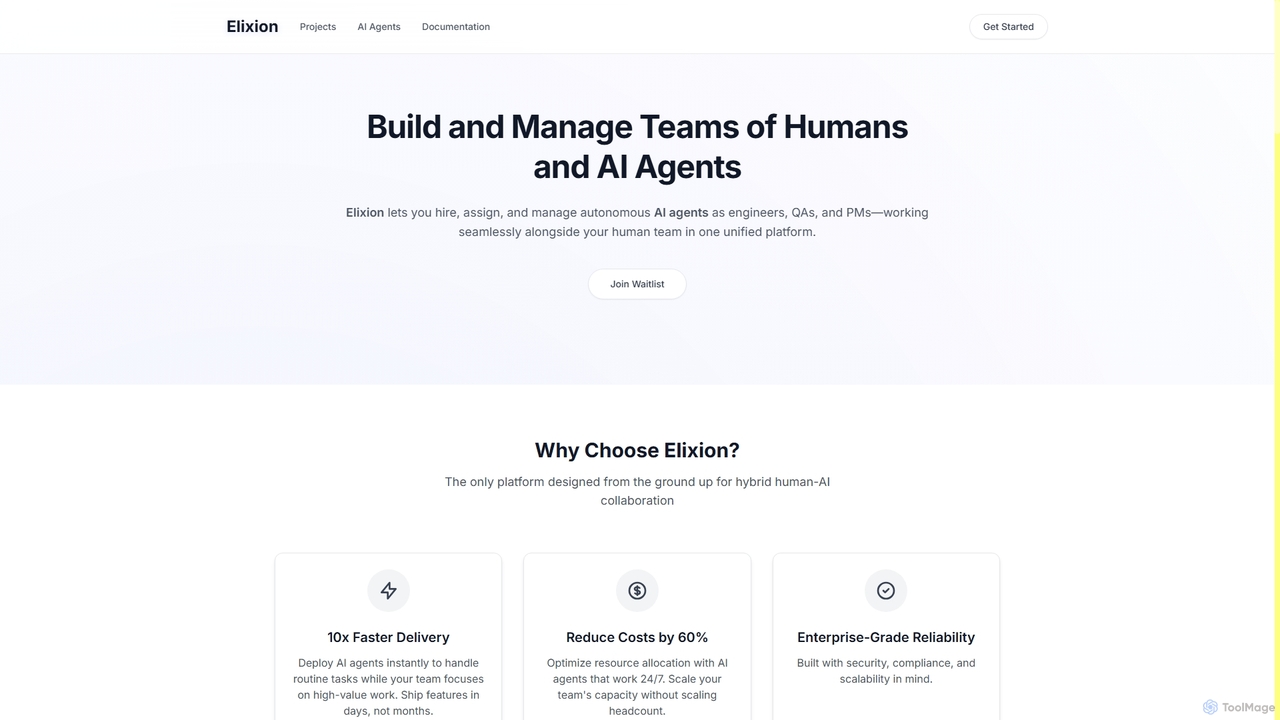
Elixion is an enterprise project management platform that empowers organizations to build and manage hybrid teams of human …
Elixion is an enterprise project management platform that empowers organizations to build and manage hybrid teams of human engineers and autonomous AI agents. It streamlines software development by enabling AI agents to handle routine tasks, accelerating delivery, and reducing costs while ensuring enterprise-grade reliability.
About Resource Optimization
Resource Optimization tools are a class of AI-driven software designed to maximize the efficiency and utilization of business assets. These tools leverage machine learning algorithms, predictive analytics, and simulation models to analyze complex operational data. They help organizations reduce waste, lower operational costs, and improve productivity by identifying optimal allocation strategies for resources like personnel, inventory, energy, and computing power. Unlike traditional methods, AI-powered optimization can adapt to real-time changes and uncover non-obvious patterns for superior decision-making within a business context.
Core Features
- Predictive Demand Forecasting: Forecasts future resource needs based on historical data and market trends.
- Dynamic Scheduling & Allocation: Automatically assigns tasks, shifts, or assets to the right place at the right time.
- Route & Logistics Optimization: Calculates the most efficient routes for delivery, service, or supply chains.
- Cloud Cost Management: Analyzes cloud usage and recommends adjustments to minimize spending.
- Energy Consumption Analysis: Monitors and predicts energy usage to identify savings opportunities.
Use Cases
These tools are crucial in industries like logistics, manufacturing, retail, healthcare, and IT. Operations managers use them for fleet routing, hospital administrators for staff scheduling, and IT managers for managing cloud server costs. The primary goal is to achieve more with less, directly impacting the bottom line.
How to Choose
When selecting a Resource Optimization tool, consider its integration capabilities with your existing ERP or CRM systems. Evaluate whether it specializes in your specific need, such as workforce, logistics, or cloud cost optimization. Assess its scalability to handle your operational volume and the level of control it offers over the optimization algorithms and constraints.
Resource OptimizationUse Cases
Optimizing Delivery Fleet Routes
A logistics manager for a local delivery company oversees 50 drivers and hundreds of daily deliveries. They face challenges with traffic congestion and last-minute order changes. By using a resource optimization tool, the manager inputs all delivery addresses, vehicle capacities, driver shifts, and real-time traffic data. The AI algorithm then calculates the most fuel- and time-efficient route for each driver, dynamically adjusting as new orders or traffic issues arise. This results in a 15-20% reduction in fuel consumption, an increase in the number of successful deliveries per driver, and significantly improved on-time delivery rates.
Automating Nurse and Doctor Shift Scheduling
A hospital administrator is tasked with creating complex weekly schedules for hundreds of medical staff. This process must balance skill requirements, staff availability, labor regulations, and fluctuating patient loads. Using an AI scheduling tool, the administrator inputs all constraints and the system uses predictive analytics to forecast patient admissions. It then generates an optimal schedule that ensures full coverage, minimizes overtime costs, and distributes workload fairly. This reduces the time spent on scheduling from days to mere hours, cuts overtime pay by up to 25%, and improves overall staff satisfaction by creating more balanced and predictable schedules.
Minimizing Cloud Computing Expenditure
A FinOps manager at a tech company notices that their monthly cloud bill from AWS is consistently high due to over-provisioned resources. Using an AI-powered cloud cost optimization tool, the system continuously monitors resource utilization like CPU and memory across all instances. It automatically identifies idle or underused servers and provides actionable recommendations, such as right-sizing instances, scheduling shutdowns during off-peak hours, or purchasing reserved instances for predictable workloads. By implementing these AI-driven suggestions, the company reduces its monthly cloud spending by 30% without any negative impact on application performance or availability.
Managing Retail Inventory and Supply Chain
A supply chain planner for a national retail chain needs to balance inventory levels across hundreds of stores. The goal is to avoid stockouts of popular items while preventing overstocking of slow-moving products. An AI optimization tool analyzes historical sales data, seasonality, promotional events, and even local weather forecasts to predict demand for each product at each store. Based on these predictions, it recommends optimal stock transfers between stores and calculates precise reorder points from the central warehouse. This leads to improved inventory turnover, a reduction in carrying costs, and minimized lost sales due to stockouts.
Optimizing Energy Consumption in Manufacturing
A plant manager in a large factory faces high electricity costs from heavy machinery and HVAC systems, especially during peak usage hours which incur penalty rates. An AI-powered energy optimization tool is implemented, connecting to IoT sensors on equipment to monitor real-time energy usage. The AI analyzes usage patterns, identifies inefficient machinery, and suggests optimal production schedules to shift energy-intensive tasks to off-peak hours without disrupting output. This proactive management reduces overall energy costs by 15% and helps the company meet its sustainability and carbon reduction goals.
Dynamic Pricing for Ride-Sharing Services
A revenue manager for a ride-sharing company aims to maximize revenue by balancing supply (drivers) and demand (riders). An AI-powered dynamic pricing engine continuously analyzes thousands of real-time data points, including traffic conditions, weather, local events, competitor pricing, and rider demand patterns. The algorithm automatically adjusts prices, implementing surge pricing in high-demand areas or offering discounts to incentivize riders during quiet periods. This real-time optimization ensures that driver resources are utilized efficiently, wait times are minimized for riders, and overall revenue is maximized by capturing the true market value at any given moment.