ToolMage
Sign in

Best 3 Sales Automation AI tools for Business

Popular Sales Automation AI tools in Business include Digistore24, Nextbrowser, and Penguin Maily, helping you work more efficiently.

Penguin Maily
Freemium

Penguin Maily

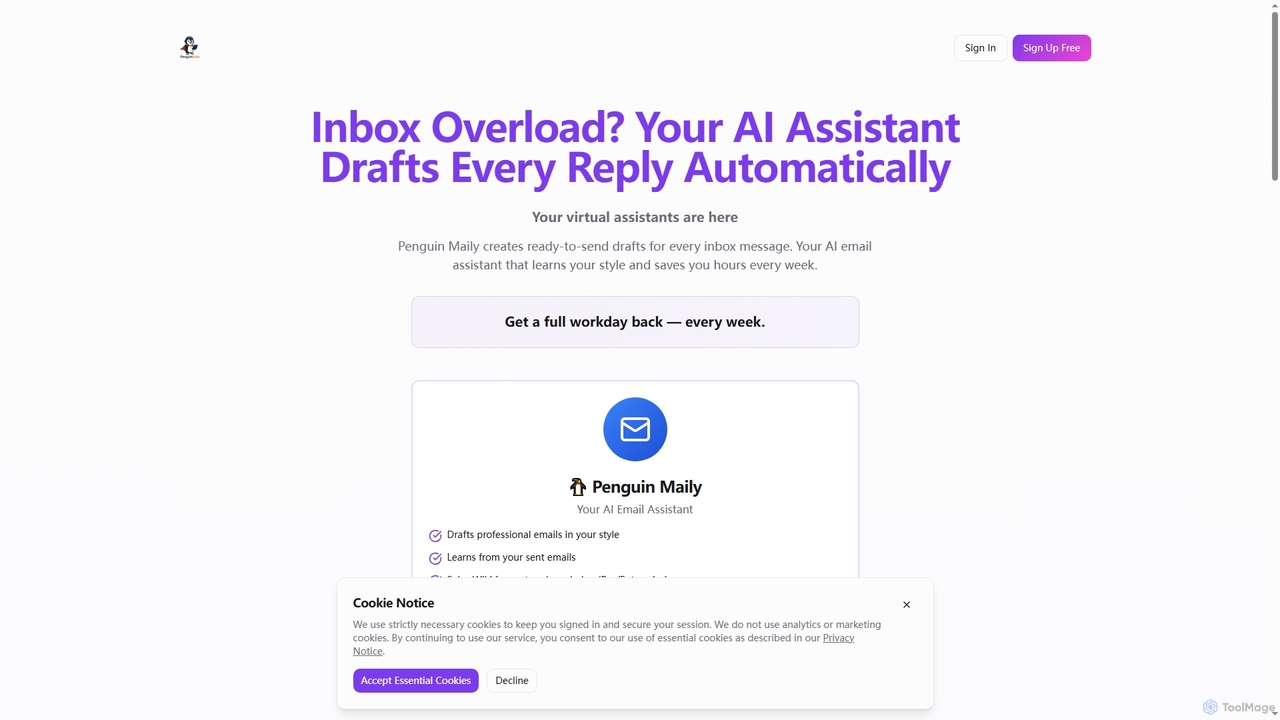
Penguin Maily is an AI-powered email assistant designed to streamline communication, generate professional email drafts in seconds, and learn your unique writing style. It helps individuals and teams save significant time weekly by automating routine email responses and enhancing productivity.

Sales Automation
Visits 5.9KFavorites 147Likes 137
Nextbrowser
Freemium

Nextbrowser

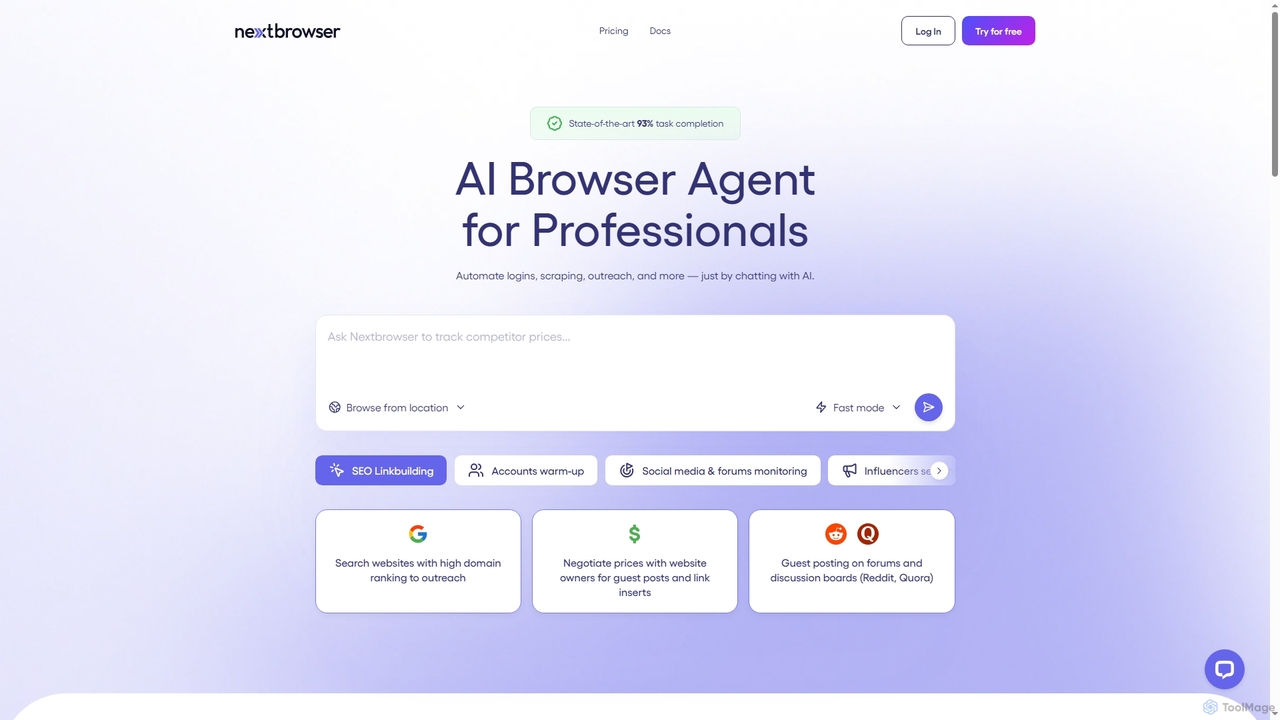
Nextbrowser is an AI-powered browser agent designed for sales and marketing professionals. It automates complex web tasks like logins, data scraping, SEO link building, and influencer outreach through simple chat commands. Operating in the cloud with human-like interaction and geo-control, it streamlines repetitive workflows, manages multiple accounts, and schedules tasks, significantly boosting efficiency and reducing operational costs.

Sales Automation
Visits 8.8KFavorites 131Likes 138
Digistore24
Freemium

Digistore24

Digistore24 is an all-in-one online sales platform and affiliate marketplace designed to help vendors and affiliates start, scale, and automate their online businesses. It provides a comprehensive suite of tools for sales automation, payment processing, and back-office management. With its extensive affiliate network and conversion-optimized features, Digistore24 empowers entrepreneurs to sell digital products, physical goods, services, and event tickets globally, while handling complex tasks like taxes, invoicing, and customer support.

Sales Automation
Visits 1.5MFavorites 140Likes 141

About Sales Automation

Sales Automation tools are a class of AI-powered software designed to streamline and automate repetitive tasks throughout the sales cycle. These platforms use machine learning to analyze data, score leads, personalize outreach, and predict sales outcomes. By handling manual work like follow-up emails and data entry, they empower sales teams to focus on high-value activities such as building relationships and closing deals. This targeted automation leads to increased efficiency, shorter sales cycles, and higher conversion rates.

Core Features

  • AI-Powered Lead Scoring: Automatically analyzes lead behavior and demographic data to prioritize the most promising prospects.
  • Automated Outreach Sequences: Creates and executes personalized email and message campaigns, with intelligent follow-ups.
  • Conversation Intelligence: Transcribes and analyzes sales calls to provide insights on performance, customer sentiment, and successful tactics.
  • Predictive Sales Forecasting: Uses historical data and AI models to generate more accurate revenue and performance predictions.
  • Intelligent Appointment Scheduling: Automates the back-and-forth process of booking meetings with leads and clients.

Use Cases

Sales Automation tools are widely used in B2B sectors like SaaS, financial services, and consulting. They are essential for roles such as Sales Development Representatives (SDRs) for prospecting, Account Executives (AEs) for managing pipelines, and Sales Managers for performance tracking and forecasting.

How to Choose

When selecting a Sales Automation tool, consider its integration capabilities with your existing CRM (e.g., Salesforce, HubSpot). Evaluate the level of workflow customization and the sophistication of its AI features, such as lead scoring accuracy. Also, assess its scalability to support your team's growth and the depth of its analytics and reporting functions.

Sales Automation use cases

1

Automated Lead Nurturing for B2B Tech Sales

A Sales Development Representative (SDR) at a SaaS company uses a sales automation tool to manage new inbound leads. They create a multi-channel sequence that includes a series of personalized emails and LinkedIn connection requests. The tool automatically sends these communications over several weeks, pausing the sequence if a lead replies or books a meeting. This ensures every lead receives consistent, timely follow-up without manual tracking, allowing the SDR to focus on engaging with responsive prospects rather than administrative tasks.

2

Intelligent Lead Prioritization for a Sales Team

A sales manager implements an AI sales automation tool to score and prioritize all incoming leads. The AI analyzes factors like company size, industry, website activity, and email engagement to assign a score from 1 to 100. High-scoring leads (e.g., above 85) are automatically routed to senior account executives, while lower-scoring leads enter a long-term nurturing sequence. This system ensures that the sales team's most valuable resource—time—is spent on prospects with the highest probability of closing, significantly improving team efficiency and conversion rates.

3

Automating Meeting Scheduling for Financial Advisors

A financial advisor uses a sales automation tool with an AI scheduling assistant to manage client bookings. Instead of manually emailing back and forth to find a suitable time, the advisor simply directs prospects to their booking link. The AI assistant handles the entire process, checking the advisor's calendar for availability, offering open slots to the prospect, and sending confirmation emails and reminders to both parties once a time is selected. This eliminates administrative overhead, reduces no-shows, and presents a professional, modern experience to potential clients.

4

Sales Call Analysis for Performance Coaching

A sales enablement manager uses a conversation intelligence feature within their sales automation platform. The tool automatically records, transcribes, and analyzes all sales calls made by the team. It identifies key moments, such as when competitors are mentioned, pricing is discussed, or objections are raised. The manager can then review call highlights, track keyword usage, and compare the talk-to-listen ratios of top performers versus new hires. This data provides concrete, actionable feedback for coaching sessions, helping to standardize successful sales tactics across the entire team.

5

Predictive Sales Forecasting for Quarterly Planning

A VP of Sales uses their automation platform's AI-powered forecasting module to prepare for the quarterly business review. Instead of relying solely on reps' subjective pipeline estimates, the AI analyzes historical deal data, deal progression speed, and engagement levels for current opportunities. It generates a more objective forecast with different probability scenarios (e.g., likely, best-case). This data-driven prediction helps the VP set more realistic targets, allocate resources effectively, and identify at-risk deals that need immediate attention, leading to more predictable revenue outcomes.

6

Personalized Email Campaign Generation at Scale

A marketing team supporting a large sales force uses an AI sales automation tool to create hyper-personalized outreach campaigns. They upload a list of prospects with data points like industry, job title, and recent company news. The AI then generates hundreds of unique email variations, referencing specific details for each prospect (e.g., "I saw your company recently launched..."). This allows the sales team to send highly relevant messages at scale, dramatically increasing open and reply rates compared to generic, templated emails, and filling the top of the sales funnel with more qualified conversations.

Sales Automation FAQ

What is AI Sales Automation?

AI Sales Automation refers to software that uses artificial intelligence to automate and enhance tasks within the sales process. Unlike simple automation that follows rigid rules, AI-powered tools can analyze data, learn from interactions, and make intelligent decisions. Key functions include prioritizing leads based on their likelihood to convert, personalizing communication at scale, forecasting sales outcomes, and providing insights from sales conversations. The primary goal is to free up salespeople from repetitive administrative work so they can focus on strategic selling and building client relationships.

How is Sales Automation different from a CRM?

A CRM (Customer Relationship Management) system is primarily a database or a system of record. It stores customer data, tracks interactions, and manages the sales pipeline. Sales Automation software, on the other hand, is a system of action. It uses the data within the CRM to proactively execute tasks. For example, a CRM stores a lead's contact information, while a sales automation tool uses that information to automatically send a personalized email sequence. Many sales automation tools integrate with or are built on top of CRMs, with the CRM acting as the data foundation and the automation tool as the engine that drives engagement.

What are the key benefits of using Sales Automation tools?

The primary benefits of using sales automation tools revolve around efficiency and effectiveness. Key advantages include:

  • Increased Productivity: Automating repetitive tasks like data entry and follow-ups frees up significant time for sales reps to focus on selling.
  • Improved Lead Management: AI-powered scoring and routing ensure that reps always work on the most promising leads first, increasing conversion rates.
  • Enhanced Personalization: These tools allow for personalized communication at scale, leading to higher engagement than generic outreach.
  • Data-Driven Insights: They provide valuable analytics on sales performance, customer interactions, and forecasting, enabling better strategic decisions.
  • Shorter Sales Cycles: By ensuring timely and consistent follow-up, automation helps move prospects through the pipeline faster.
How do I choose the right Sales Automation tool for my team?

Choosing the right tool depends on your team's specific needs. First, evaluate its integration capabilities, especially with your existing CRM, to ensure seamless data flow. Second, consider the feature set; do you need advanced AI lead scoring, conversation intelligence, or just email sequencing? Third, assess its scalability. The tool should be able to grow with your team and lead volume. Finally, consider the user experience (UX) and ease of use. A complex tool with a steep learning curve may hinder adoption and reduce its overall effectiveness. It's often wise to start with a free trial to test its suitability for your workflow.

Who can benefit most from Sales Automation?

While many roles can benefit, Sales Automation is particularly valuable for B2B sales teams with a high volume of leads and a structured sales process. Key beneficiaries include:

  • Sales Development Representatives (SDRs): They use it to automate top-of-funnel prospecting, outreach, and appointment setting, allowing them to handle more leads effectively.
  • Account Executives (AEs): They leverage it to nurture their pipeline, ensure consistent follow-up on active deals, and gain insights from call analytics.
  • Sales Managers: They use it for accurate forecasting, monitoring team performance, and identifying coaching opportunities through data.
  • Small Business Owners: For smaller teams, automation allows them to compete with larger organizations by maximizing the efficiency of a limited sales staff.