
Business Best in category 1 results Screening AI Tool

Popular AI tools in the Screening field of Business include RefHub, etc., helping you quickly improve efficiency.

RefHub

RefHub

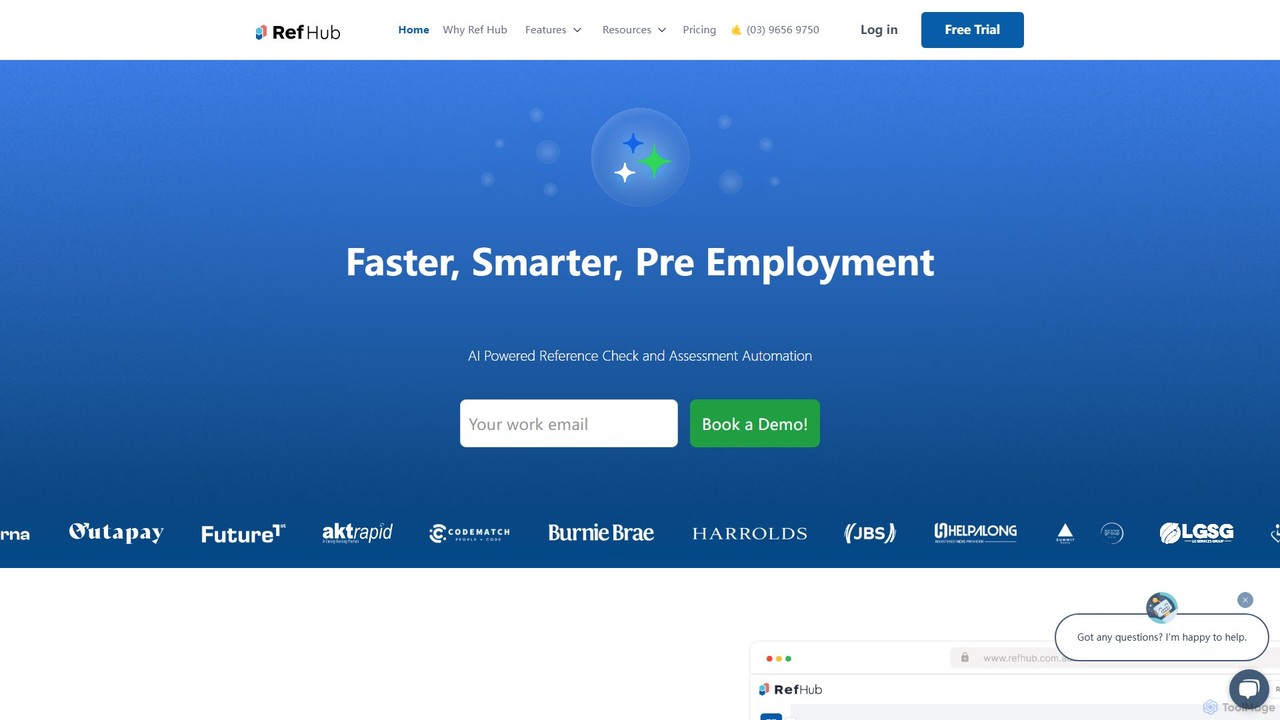
RefHub is an AI-powered platform designed to automate and streamline pre-employment reference checks and candidate assessments. It helps …

12.3K

About Screening

AI Screening tools are a class of business software designed to automatically evaluate and filter large volumes of data against predefined criteria. These tools leverage machine learning and Natural Language Processing (NLP) to analyze unstructured information, such as resumes, leads, or proposals. Their primary value lies in accelerating the initial assessment process, ensuring consistency, and allowing human experts to focus on the most promising candidates or opportunities. By automating the top of the funnel, they significantly improve efficiency in recruitment, sales, and compliance workflows.

Core Features

  • Automated Data Parsing: Extracts and structures key information from documents like resumes, emails, and forms.
  • Customizable Criteria Matching: Allows users to define specific rules, keywords, and parameters for evaluation.
  • Scoring and Ranking: Assigns a relevance score to each item and ranks them to prioritize review.
  • Bias Detection & Mitigation: Includes features to identify and reduce potential biases in the screening process.
  • Integration APIs: Connects with existing business systems like Applicant Tracking Systems (ATS) or CRMs.

Use Cases

AI Screening tools are widely used in departments that handle high volumes of incoming applications or leads. Human Resources departments use them to shortlist job candidates, sales teams employ them for lead qualification, and venture capital firms use them for initial startup pitch evaluation. They are also critical in compliance for Know Your Customer (KYC) and Anti-Money Laundering (AML) checks.

How to Choose

When selecting an AI Screening tool, first evaluate its accuracy and the fairness of its algorithms to avoid bias. Consider its integration capabilities with your current software stack, such as your CRM or ATS. Assess the level of customization available for setting screening criteria and weighting. Finally, review the tool's data security protocols and compliance with regulations like GDPR to ensure sensitive information is protected.

ScreeningUse Cases

1

Automating Resume Screening for High-Volume Roles

An HR manager at a large corporation is tasked with hiring for a popular entry-level position that receives over 1,000 applications. Manually reviewing each resume is impractical. Using an AI Screening tool, the manager sets up criteria based on required skills, education level, and years of experience. The tool automatically parses all submitted resumes, scores each candidate against the criteria, and presents a ranked shortlist of the top 50 most qualified applicants. This reduces the initial screening time from weeks to a few hours, allowing the recruitment team to focus on interviewing top-tier talent.

2

Qualifying Inbound Sales Leads at Scale

A SaaS company's marketing team generates hundreds of inbound leads daily through their website. The sales team needs an efficient way to identify high-potential leads. They implement an AI Screening tool connected to their CRM. The tool analyzes lead data, including company size, industry, job title, and the content of their inquiry. It scores each lead based on the company's Ideal Customer Profile (ICP). Leads scoring above a certain threshold are automatically assigned to sales representatives for immediate follow-up, while lower-scoring leads are placed into a nurturing campaign. This ensures sales efforts are focused on the most promising opportunities.

3

Initial Screening of Startup Investment Pitches

A venture capital firm receives hundreds of investment proposals each month. An analyst uses an AI Screening tool to perform an initial filter. They configure the tool to look for key metrics like market size, team experience, traction (e.g., revenue, user growth), and specific industry keywords. The AI scans pitch decks and executive summaries, flagging proposals that meet the firm's core investment thesis. This allows the analyst to quickly discard irrelevant or incomplete submissions and dedicate their in-depth due diligence efforts to a smaller, more relevant pool of startups, increasing the efficiency of the deal flow process.

4

Screening New Customers for KYC Compliance

A financial institution is required to perform Know Your Customer (KYC) checks on all new clients to prevent fraud and money laundering. A compliance officer uses an AI Screening tool to automate this process. When a new client signs up, the tool cross-references their provided information against global watchlists, sanctions lists, and databases of Politically Exposed Persons (PEPs). It also analyzes documents for authenticity. The system flags any potential matches or discrepancies for manual review by the officer. This automation ensures consistent, auditable compliance checks and significantly reduces the risk of human error.

5

Moderating User-Generated Content for Policy Violations

A social media platform needs to screen millions of daily posts for hate speech, spam, and inappropriate content. A community manager sets up an AI Screening tool to act as a first line of defense. The AI is trained on the platform's content policies and uses NLP to analyze text and computer vision to scan images and videos. It automatically flags or removes content that clearly violates policies and forwards borderline cases to human moderators for a final decision. This hybrid approach allows the platform to manage content moderation at scale while ensuring nuanced cases receive human attention.

6

Screening Tenant Applications for Property Management

A property management company handles applications for hundreds of rental units. A leasing agent uses an AI Screening tool to streamline the tenant application process. Applicants submit their information through an online portal, and the AI tool verifies identity, runs credit checks, and cross-references eviction history databases. It scores each application based on the company's predefined criteria, such as credit score thresholds and income-to-rent ratios. The agent receives a consolidated report for each applicant, highlighting any red flags. This allows them to make faster, more consistent, and data-driven leasing decisions while complying with fair housing laws.

ScreeningFrequently Asked Questions