ToolMage
Sign in

Best 1 Service Provider Platform for Business

Popular Service Provider Platform in Business include Trymilana, helping you work more efficiently.

Trymilana

Trymilana

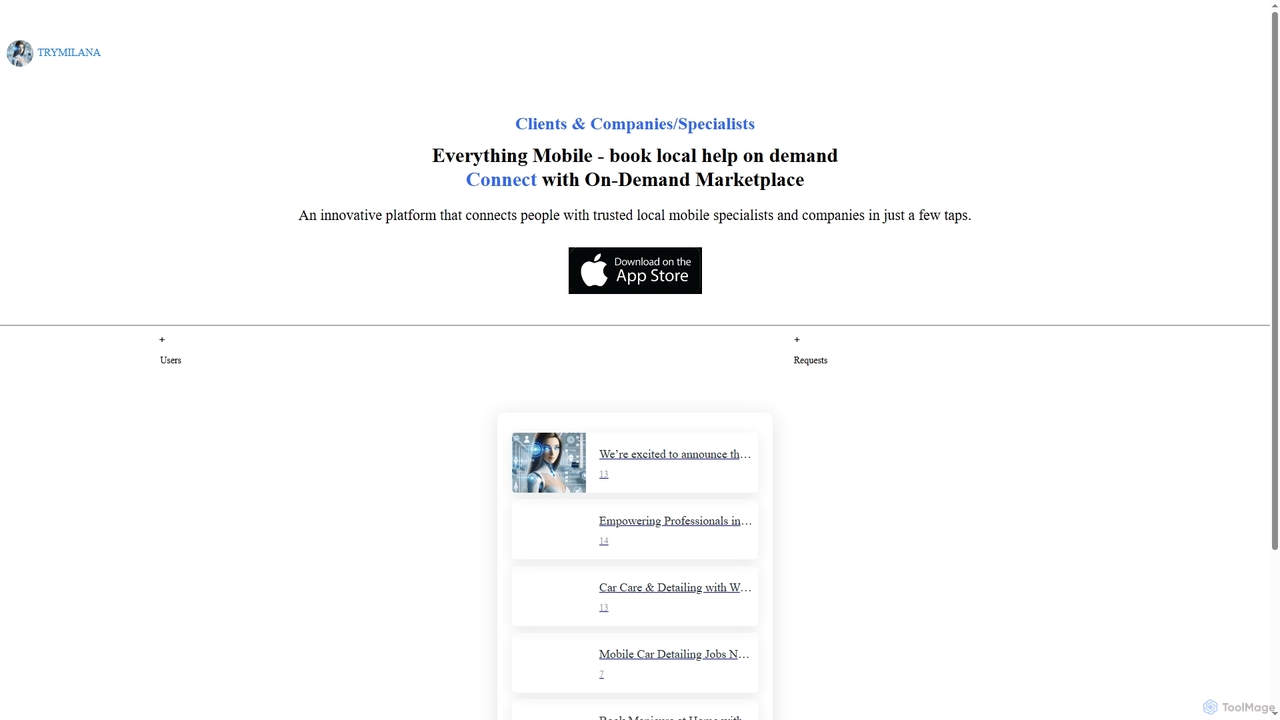
Trymilana is a next-generation on-demand marketplace that simplifies everyday life by connecting users with trusted local mobile specialists and companies. It offers a wide range of services, including beauty, wellness, mobile car care, and home services, all bookable with just a few taps for ultimate convenience.

Service Provider Platform
Visits 5.8KFavorites 114Likes 120

About Service Provider Platform

Service Provider Platforms are AI-powered tools designed to streamline the delivery and management of services, acting as a crucial component within the broader business technology landscape. These platforms leverage automation, intelligent matching, and data analytics to connect service providers with clients, manage bookings, and facilitate transactions. They enhance operational efficiency, improve client satisfaction, and enable scalability for businesses offering diverse services.

Core Features

  • Client Management: Centralized tools for managing client profiles, communication history, and service requests.
  • Service Catalog & Booking: Customizable service listings with integrated scheduling, availability management, and automated booking confirmations.
  • Automated Billing & Payments: Secure processing of invoices, recurring payments, and financial reporting for services rendered.
  • Performance Analytics: Dashboards and reports to track service delivery metrics, client feedback, and provider performance.
  • Communication Tools: Integrated messaging, video conferencing, or ticketing systems for seamless client-provider interaction.

Applicable Scenarios

Service Provider Platforms are essential for businesses that offer professional services, consultations, or specialized expertise. They are widely adopted by freelance marketplaces, consulting firms, IT support companies, educational institutions offering courses, and healthcare providers managing appointments and telehealth services. These platforms help automate repetitive tasks, ensure consistent service quality, and provide a structured environment for service delivery.

How to Choose

When selecting a Service Provider Platform, prioritize scalability to accommodate growth, robust integration capabilities with existing CRM or accounting software, and comprehensive customization options to align with specific service offerings. Evaluate the security features for client data protection, the intuitiveness of the user interface for both providers and clients, and the pricing model to ensure it aligns with your budget and usage volume. Consider platforms that offer strong analytics for continuous service improvement.

Service Provider Platform use cases

1

Automating Client Onboarding for Consulting Firms

Consulting firms can leverage Service Provider Platforms to automate the entire client onboarding process. From initial inquiry and proposal generation to contract signing and project kickoff, the platform streamlines document sharing, task assignments, and communication. This reduces administrative overhead by up to 60%, ensuring a consistent and professional experience for new clients while freeing up consultants to focus on core advisory work.

2

Managing Freelancer Bookings and Payments for Creative Agencies

Creative agencies often work with a large pool of freelance talent. A Service Provider Platform allows them to manage freelancer profiles, track availability, assign projects, and automate payment processing. This ensures that the right talent is matched to projects efficiently, reduces manual invoicing errors, and provides freelancers with a transparent payment schedule, improving overall project delivery speed by 25%.

3

Optimizing Field Service Dispatch for Maintenance Companies

Maintenance and repair companies can use Service Provider Platforms to optimize their field service operations. The platform can intelligently schedule technicians based on location, skill set, and availability, dispatch work orders, and provide real-time updates to customers. This reduces travel time by 20%, improves first-time fix rates, and enhances customer communication, leading to higher operational efficiency and customer satisfaction.

4

Streamlining Online Course Enrollment and Management for Educational Institutions

Educational institutions offering online courses can utilize Service Provider Platforms to streamline student enrollment, course scheduling, and payment processing. The platform can manage student profiles, track course progress, facilitate communication between instructors and students, and automate certificate issuance. This improves the student experience, reduces administrative burden for staff, and allows for easier scaling of course offerings to a wider audience.

5

Enhancing Patient Booking and Telehealth Services for Healthcare Providers

Healthcare providers can significantly enhance patient experience and operational efficiency using Service Provider Platforms. These platforms enable online appointment booking, automated reminders, secure patient portals for record access, and integrated telehealth functionalities. This reduces no-show rates by 15%, streamlines administrative tasks, and expands access to care, particularly for remote patients, ensuring a more connected and efficient healthcare delivery system.

6

Facilitating Booking and Management for Personal Trainers and Coaches

Individual personal trainers, life coaches, and fitness instructors can use Service Provider Platforms to manage their client base, schedule sessions, and process payments. The platform offers customizable booking pages, automated reminders for clients, and tools to track client progress and goals. This allows trainers to focus more on coaching and less on administrative tasks, leading to a 30% increase in client retention due to improved organization and communication.

Service Provider Platform FAQ

What are Service Provider Platforms?

Service Provider Platforms are integrated software solutions that help businesses manage and deliver their services efficiently. They typically feature tools for client management, service booking, automated billing, and communication. These platforms are designed to streamline operations, enhance customer experience, and facilitate the growth of service-oriented businesses by automating repetitive tasks and providing valuable insights into service delivery.

How do Service Provider Platforms differ from CRM systems?

While both manage customer interactions, Service Provider Platforms focus specifically on the operational aspects of service delivery, including booking, scheduling, and payment processing for actual services. CRM systems, on the other hand, primarily focus on managing customer relationships, sales pipelines, and marketing efforts. A Service Provider Platform often integrates with a CRM to provide a holistic view, but its core function is service execution rather than just relationship management.

What are the key benefits of using a Service Provider Platform?

The primary benefits include enhanced operational efficiency through automation of tasks like scheduling and billing, improved customer satisfaction due to streamlined booking and communication, and increased scalability for businesses looking to expand their service offerings or client base. Additionally, these platforms often provide valuable data analytics, offering insights into service performance, client preferences, and revenue trends, which aids in strategic decision-making.

What features should I look for in a Service Provider Platform?

Look for robust client management capabilities, a flexible service catalog with integrated booking and scheduling, and secure automated payment processing. Essential features also include communication tools (e.g., in-app messaging, video conferencing), performance analytics dashboards, and customization options for branding and service workflows. Strong integration with other business tools like CRM, accounting software, and calendar applications is also crucial for seamless operations.

Which types of businesses benefit most from Service Provider Platforms?

Businesses that heavily rely on scheduling appointments, managing client projects, and processing payments for services are ideal candidates. This includes consulting firms, freelance marketplaces, IT support and managed service providers, educational institutions offering courses, healthcare clinics, beauty salons, and personal coaching services. Essentially, any business where service delivery is a core function can significantly benefit from the automation and organizational tools these platforms provide.