
alteropen
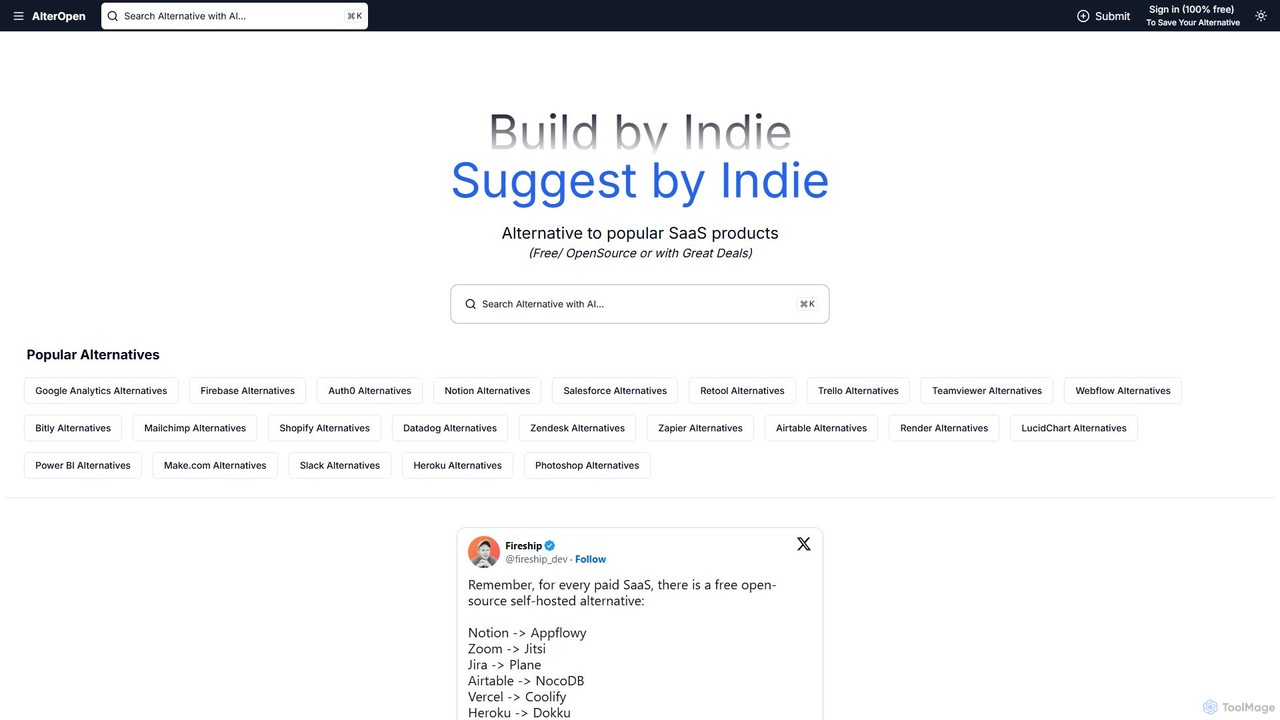
AlterOpen is a curated directory for finding free, open-source, and cost-effective alternatives to popular SaaS products. Built by …
AlterOpen is a curated directory for finding free, open-source, and cost-effective alternatives to popular SaaS products. Built by and for the indie developer community, it helps users discover innovative tools, reduce software costs, and find solutions with greater data control.
About Software Marketplace
A Software Marketplace is a centralized online platform where users can discover, compare, purchase, and manage software applications from various vendors. These platforms function as digital storefronts, aggregating a wide range of tools and providing detailed information, user reviews, and pricing comparisons. They streamline the software procurement process for businesses and individuals by offering a single point of access for diverse software needs. This simplifies decision-making and helps users find the best-fit solutions for their specific requirements.
Core Features
- Comprehensive Search & Filtering: Allows users to find software based on category, features, pricing, platform compatibility, and other specific criteria.
- User Reviews & Ratings: Provides authentic feedback and ratings from real users to help evaluate software quality and performance.
- Side-by-Side Comparison: Enables direct comparison of features, pricing, and specifications for multiple software products.
- Centralized Procurement & Billing: Offers the ability to purchase, subscribe, and manage multiple software licenses through a single account and invoice.
Use Cases
Software Marketplaces are widely used by IT managers and procurement teams in enterprises to source and manage company-wide software. They are also invaluable for startup founders building their technology stack from scratch and for individual professionals or freelancers seeking specific tools for their projects. These platforms serve industries ranging from tech and marketing to finance and healthcare.
How to Choose
When selecting a Software Marketplace, consider the breadth and relevance of its software catalog to your needs. Evaluate the quality and authenticity of user reviews and the depth of the comparison tools. For business use, check for features like centralized billing, license management, and integration with existing procurement systems. Also, assess the platform's user interface and ease of navigation.
Software MarketplaceUse Cases
Building a Startup's Technology Stack
A startup founder needs to quickly assemble a suite of essential business tools, including a CRM, project management software, and a marketing automation platform. Instead of researching vendors individually, they use a software marketplace. They filter by 'best for startups,' read user reviews from similar-sized companies, and compare the top three options side-by-side. The marketplace allows them to subscribe to all chosen tools through a single dashboard, simplifying billing and license management from day one and saving significant research time.
Enterprise Software Procurement and Compliance
An IT procurement manager at a large corporation is tasked with finding a new, compliant data analytics tool for the finance department. Using an enterprise-focused software marketplace, they can filter solutions by security certifications (e.g., SOC 2, ISO 27001) and integration capabilities with their existing ERP system. The platform provides detailed vendor profiles, security documentation, and peer reviews from other enterprise users. This centralizes the vetting process, ensures compliance, and streamlines the purchase and deployment of the new software across the organization.
Freelancer Tool Discovery and Comparison
A freelance graphic designer needs a vector editing tool but is unsure whether to choose a popular subscription-based option or a lesser-known one-time purchase software. They visit a software marketplace and use the comparison tool to see a detailed feature-by-feature breakdown. They read reviews focusing on performance on their specific hardware and check for plugins they frequently use. The marketplace helps them make an informed, cost-effective decision without committing to multiple free trials, saving both time and money.
Evaluating Niche Industry Software
A manager in the construction industry needs project management software tailored for their field, with features like RFI and submittal tracking. General project management tools lack these specifics. By using a software marketplace, they can navigate to the 'Construction Management' category. Here, they find a curated list of relevant software, read reviews from other construction professionals, and compare pricing. This targeted discovery process prevents them from wasting time evaluating irrelevant, generic software and connects them directly with solutions built for their unique industry needs.
Managing Software Subscriptions Centrally
A small business owner uses over a dozen different SaaS applications for marketing, sales, and operations, each with its own billing cycle and renewal date. This creates administrative overhead and makes budgeting difficult. By migrating their subscriptions to a single software marketplace, they consolidate all payments into one monthly invoice. The marketplace dashboard provides a clear overview of all active licenses, usage data, and upcoming renewals, allowing them to manage costs effectively and easily add or remove user seats as the team changes.
Discovering App Integrations and Add-ons
A marketing team uses a popular project management tool but needs to connect it with their social media scheduler and email marketing platform. They visit the marketplace associated with their project management software. Here, they can browse a catalog of verified third-party apps and add-ons. They can filter by category (e.g., 'Social Media'), read reviews on how well the integrations work, and install the new apps with one click. This process allows them to extend the functionality of their core tools and create a seamless, automated workflow without needing developer resources.