Stackfix
Stackfix is an AI-powered platform that helps businesses discover, compare, and choose the right software. It provides unbiased, …
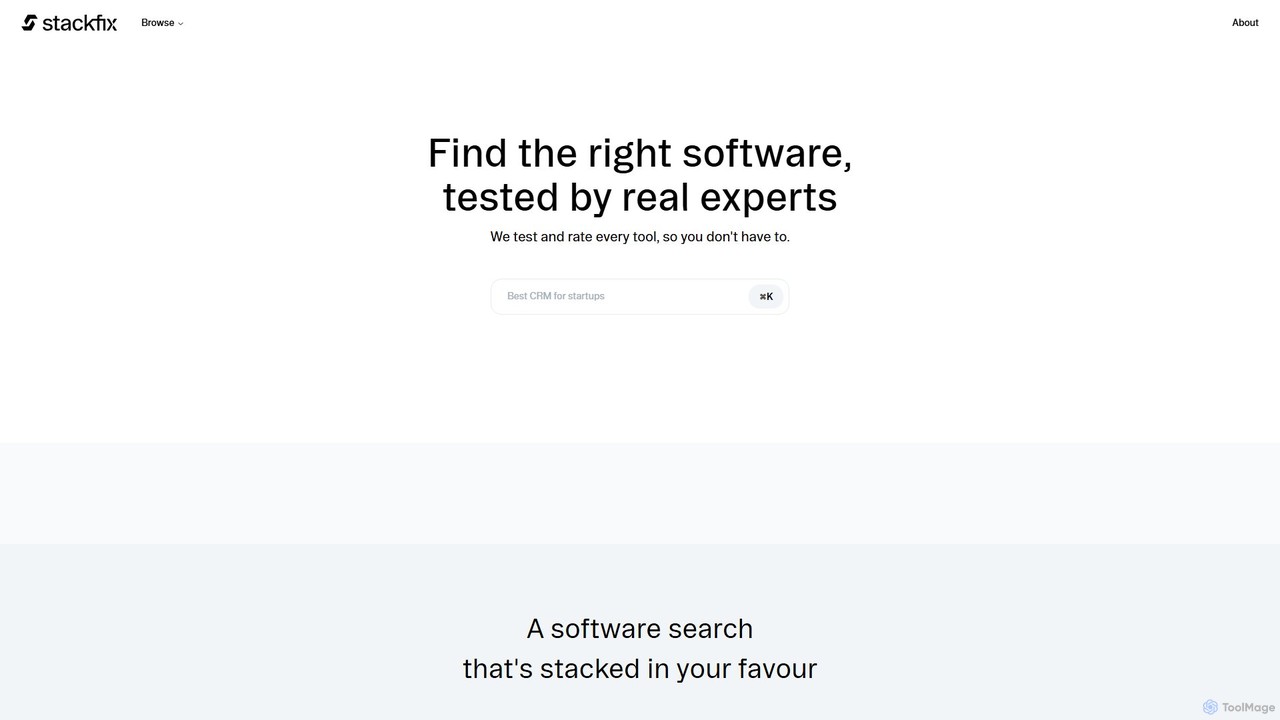
Stackfix is an AI-powered platform that helps businesses discover, compare, and choose the right software. It provides unbiased, expert-tested reviews, side-by-side comparisons, and an instant pricing calculator to ensure transparent and informed decision-making.
About Softwarediscovery
Software Discovery tools are AI-powered platforms designed to automate and optimize the process of finding, comparing, and selecting business software. These tools use machine learning and natural language processing to analyze your specific requirements, existing tech stack, and operational workflows. They then scan extensive databases of software vendors to provide data-driven recommendations, significantly reducing manual research time. This approach helps businesses make more informed technology decisions, avoid costly mismatches, and identify solutions that truly fit their unique needs.
Core Features
- Needs Analysis Engine: Interprets natural language descriptions of business needs to create a detailed requirements profile.
- Vendor Matching & Filtering: Intelligently searches and filters thousands of software options based on features, pricing, and industry.
- Side-by-Side Comparison: Generates detailed comparison reports highlighting key differences in functionality, integrations, and user reviews.
- Integration Compatibility Check: Analyzes your current software ecosystem to ensure new tools will integrate smoothly.
- Cost & ROI Projection: Provides estimates for total cost of ownership (TCO) and potential return on investment.
Applicable Scenarios
These tools are invaluable for IT managers, procurement teams, and department heads in any industry. For instance, a startup founder can use them to build an entire initial tech stack from scratch, ensuring all components work together. A large enterprise can leverage them to find a replacement for a legacy system, ensuring the new solution meets complex security and integration requirements.
Selection Criteria
When choosing a Software Discovery tool, consider the breadth and depth of its software database. Evaluate the sophistication of its recommendation algorithm and the level of detail in its comparison reports. Also, assess its user interface for ease of use and check if its pricing model (e.g., subscription-based or per-report) aligns with your budget and frequency of use.

SoftwarediscoveryUse Cases
Building a Tech Stack for a New Startup
A startup founder needs to select a core set of affordable and scalable tools for marketing, sales, and project management. Instead of spending weeks researching, they input their business model, team size, and budget into a Software Discovery tool. The AI analyzes these parameters and recommends a compatible suite of tools, such as a CRM that integrates seamlessly with a specific marketing automation platform and a project management tool. This data-driven approach saves valuable time and ensures the foundational tech stack is cohesive and future-proof.
Replacing an Enterprise Legacy System
An IT manager at a large corporation is tasked with replacing an outdated, on-premise ERP system. The requirements are complex, involving specific security compliance (like SOC 2), data residency rules, and integrations with dozens of existing applications. Using a Software Discovery platform, the manager inputs all these constraints. The platform filters out non-compliant vendors and generates a shortlist of modern, cloud-based ERPs that meet all technical and legal requirements. It also provides a detailed comparison of their integration capabilities, saving hundreds of hours of vendor vetting.
Optimizing Departmental SaaS Spend
A finance department notices rising software subscription costs across the company. They use a Software Discovery tool with spend analysis features. The tool connects to their financial systems to identify all SaaS subscriptions, flagging redundant tools (e.g., three different project management apps used by different teams) and underutilized licenses. The platform then recommends cost-effective alternatives or consolidated enterprise plans, providing clear data to justify software changes and potentially reducing the company's annual SaaS budget by 15-20%.
Finding a Niche Tool for a Marketing Campaign
A marketing manager is planning a highly specialized campaign involving interactive video and needs a specific tool that integrates with their existing CRM and email platform. A general search yields hundreds of broad video tools. By using a Software Discovery tool, they can input specific feature requirements like 'interactive branching logic' and 'HubSpot integration'. The AI narrows the results down to a handful of niche vendors that perfectly match the criteria, allowing the team to quickly evaluate and select the best tool for their unique campaign needs.
Agency Recommending Software to Clients
A digital consulting agency works with clients across various industries, each with unique software needs. To maintain efficiency and provide expert advice, the agency uses a Software Discovery platform. When onboarding a new client, they input the client's industry, business goals, and existing systems. The platform quickly generates a tailored recommendation report. This allows the agency to present well-researched, data-backed software solutions to their clients in hours instead of days, reinforcing their position as a knowledgeable technology partner.
Vetting Vendors for Security and Compliance
A Chief Technology Officer (CTO) in a regulated industry like finance or healthcare needs to ensure any new software adheres to strict compliance standards (e.g., HIPAA, GDPR). Manually checking each vendor's security posture is tedious. The CTO uses a Software Discovery tool with advanced filtering for compliance certifications. They can instantly filter for vendors that are HIPAA-compliant and have SOC 2 Type II certification. The tool provides direct links to trust and compliance documentation, streamlining the due diligence process and ensuring the organization avoids significant regulatory risks.