
ToolMage
Sign in

Best 1 Stakeholder Management AI tools for Business

Popular Stakeholder Management AI tools in Business include Colabjetpack, helping you work more efficiently.

Colabjetpack
Freemium

Colabjetpack

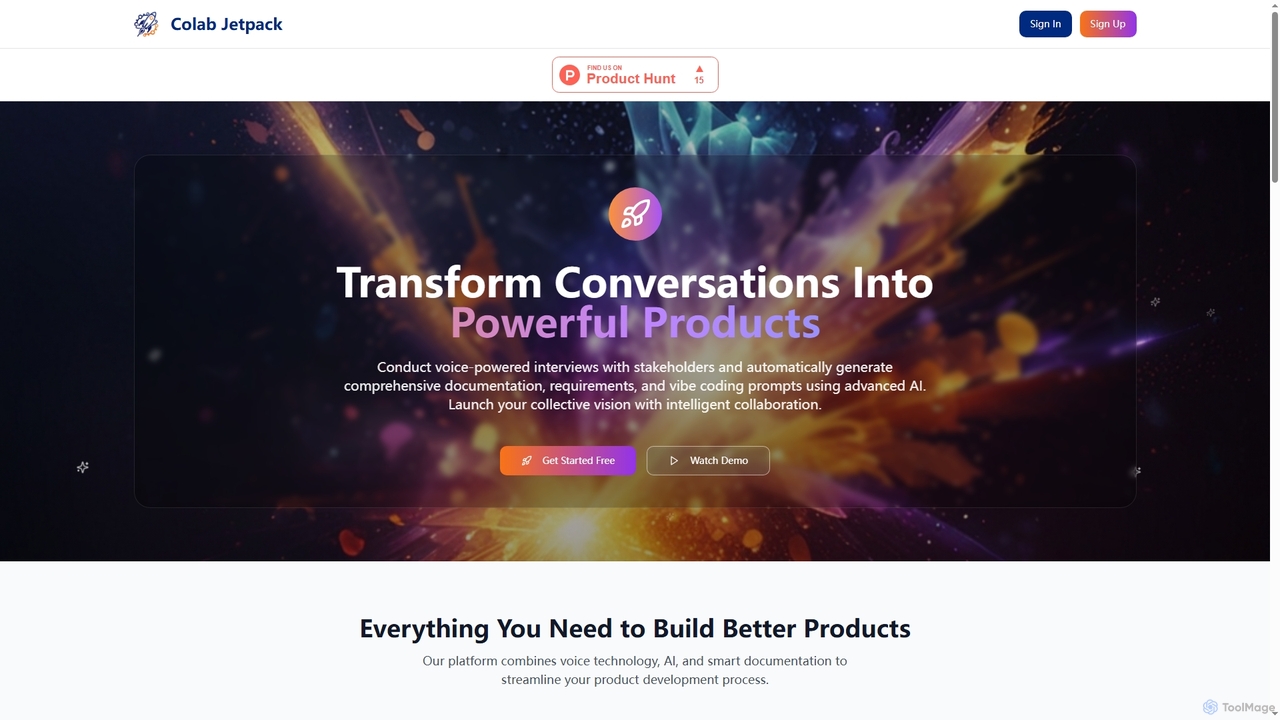
An AI-powered platform that transforms voice interviews with stakeholders into comprehensive product documentation, requirements, user stories, and vibe coding prompts to streamline product development.

Transcription
Visits 5.8KFavorites 138Likes 149

About Stakeholder Management

AI Stakeholder Management tools are specialized platforms that use artificial intelligence to identify, analyze, and engage with key individuals or groups impacting a project or organization. They leverage natural language processing (NLP) and machine learning to analyze communications, predict stakeholder sentiment, and recommend engagement strategies. This enables organizations to proactively manage relationships, mitigate risks, and align project outcomes with stakeholder expectations, moving beyond manual tracking in spreadsheets.

Core Features

  • Stakeholder Identification & Mapping: Automatically discovers potential stakeholders from documents and communications, mapping their influence and interests.
  • Sentiment Analysis: Analyzes emails, social media, and meeting transcripts to gauge stakeholder sentiment (positive, negative, neutral) in real-time.
  • Engagement Strategy Recommendation: Suggests personalized communication plans and engagement tactics based on stakeholder profiles and past interactions.
  • Risk Prediction: Identifies potential conflicts or disengagement risks by analyzing communication patterns and sentiment trends.
  • Automated Reporting: Generates dynamic dashboards on stakeholder engagement levels, sentiment scores, and overall relationship health.

Use Cases

These tools are primarily used in large-scale project management, public relations, corporate affairs, and product development. For example, a construction firm can use them to manage community relations for a major infrastructure project, while a tech company can track investor sentiment during a product launch.

How to Choose

When selecting a tool, consider its integration capabilities with your existing CRM and communication platforms. Evaluate the sophistication of its AI models for sentiment analysis and influence mapping. Also, assess the clarity of its reporting dashboards and the level of customization available for engagement workflows.

Stakeholder Management use cases

1

Managing Community Relations for Infrastructure Projects

A Public Relations Manager for a construction company is tasked with proactively managing concerns from local residents, government bodies, and environmental groups for a new highway project. They use an AI tool to scan local news and social media for project mentions, perform sentiment analysis on community feedback, and identify key influencers. The tool recommends targeted communication campaigns to address specific concerns before they escalate, helping to build trust and transparency. This data-driven approach results in a 30% reduction in public opposition and helps streamline the permit approval process.

2

Aligning Stakeholders for a Major Product Launch

A Product Manager at a tech company needs to ensure internal teams (engineering, marketing, sales) and external partners (investors, beta testers) are aligned for a successful launch. The AI platform maps the influence network, analyzes feedback from beta testers using NLP to identify critical issues, and tracks the engagement level of key investors through communication logs. It automatically flags misalignment risks, such as marketing messaging that doesn't match engineering capabilities. This early detection allows the manager to intervene, improving cross-departmental alignment and securing crucial investor buy-in for a smoother launch.

3

Navigating Corporate Mergers and Acquisitions

During a merger, a Corporate Strategy Director must manage relationships with employees, shareholders, and regulators from both companies. An AI stakeholder management tool analyzes internal communications to gauge employee morale and identify flight risks. It also monitors shareholder sentiment through public filings and news analysis, predicting potential opposition to the deal. The system provides a unified dashboard to track all stakeholder groups, helping create targeted integration plans that address specific concerns. This proactive management helps reduce employee turnover by 15% and ensures a more seamless transition.

4

Enhancing Investor Relations and Reporting

An Investor Relations Officer needs to maintain positive relationships with a large base of institutional and retail investors. The AI tool aggregates investor inquiries from various channels, analyzes sentiment from earnings call transcripts, and identifies recurring topics of concern. This allows the officer to proactively address key issues in quarterly reports and communications. The platform also helps personalize outreach to major investors based on their known interests and past engagement, increasing investor confidence and providing data-driven insights for strategic messaging.

5

Managing Government and Regulatory Affairs

A Policy Analyst for a large corporation needs to track legislative changes and manage relationships with policymakers. The AI tool monitors legislative databases and news feeds for relevant policy shifts in real-time. It maps the influence of different policymakers on key committees and analyzes their public statements to predict voting behavior. Based on this analysis, the tool recommends the most effective channels and messages for advocacy efforts, helping the analyst to focus their resources efficiently and provide timely briefings to executive leadership on potential regulatory impacts.

6

Tracking Supplier and Partner Engagement

A Supply Chain Manager needs to monitor the health of relationships with critical suppliers to mitigate risks. The AI system analyzes communication frequency, response times, and sentiment in emails and contracts. It automatically flags deteriorating relationships, such as a consistent increase in negative sentiment or a sudden drop in communication. This early warning allows the manager to proactively address issues with the supplier before they impact the supply chain, helping to prevent disruptions and maintain strong, collaborative partnerships, ultimately reducing supply chain disruptions by 20%.

Stakeholder Management FAQ

What are AI Stakeholder Management tools?

AI Stakeholder Management tools are software platforms that use artificial intelligence to enhance the process of identifying, analyzing, and engaging with stakeholders. They go beyond simple contact databases by employing machine learning and NLP to analyze sentiment from communications, map complex influence networks, and predict stakeholder behavior. This provides organizations with data-driven insights to build stronger, more strategic relationships and proactively manage risks associated with their projects or reputation.

How do I choose the right AI Stakeholder Management tool?

To choose the right tool, consider these key factors:

  • Integration Capabilities: Ensure it connects seamlessly with your existing systems like email, CRM, and project management software to centralize data.
  • AI Model Sophistication: Evaluate the accuracy of its sentiment analysis and the depth of its relationship mapping and risk prediction features.
  • Scalability: Confirm the tool can handle the volume of stakeholders, projects, and data your organization manages now and in the future.
  • Reporting and Analytics: Look for intuitive dashboards and customizable reports that provide clear, actionable insights rather than just raw data.
  • Data Security and Compliance: Verify that the tool meets your industry's data protection and privacy standards.
What's the difference between AI Stakeholder Management tools and CRMs?

While both manage relationships, they have different core focuses. A CRM (Customer Relationship Management) is primarily designed for the sales and marketing funnel, tracking leads and customer interactions to drive revenue. In contrast, an AI Stakeholder Management tool has a broader scope, focusing on any individual or group (e.g., investors, employees, regulators, community members) that can impact an organization's objectives. It uses AI more heavily for qualitative analysis like sentiment and influence mapping, whereas a CRM's AI features often focus on sales forecasting and lead scoring.

Who typically uses AI Stakeholder Management tools?

These tools are valuable for a wide range of professionals who manage complex external and internal relationships. Key users include:

  • Project Managers: For overseeing large-scale initiatives with diverse stakeholders like contractors, clients, and regulatory bodies.
  • Public Relations & Corporate Affairs Teams: For managing brand reputation, community relations, and media engagement.
  • Investor Relations Officers: For communicating effectively with shareholders and financial analysts.
  • Government Affairs Specialists: For navigating policy landscapes and managing relationships with policymakers.
  • Product Managers: For aligning internal teams and external partners during product development and launch cycles.
What are the key benefits of using AI for stakeholder management?

Using AI for stakeholder management offers several key benefits over traditional methods:

  • Proactive Risk Mitigation: AI can analyze communication patterns and sentiment trends to predict potential conflicts or disengagement before they escalate into major issues.
  • Data-Driven Strategy: It replaces guesswork and intuition with objective, quantifiable insights, allowing for more effective and targeted engagement strategies.
  • Increased Efficiency: AI automates the time-consuming tasks of tracking communications, identifying key stakeholders from vast amounts of data, and generating reports.
  • Personalized Engagement at Scale: It enables the creation of tailored communication plans for different stakeholder groups, improving the relevance and impact of your outreach even with thousands of contacts.