Pabbly Payments
Pabbly Payments is a comprehensive billing and subscription management platform. It allows businesses to handle one-time and recurring …
Pabbly Payments is a comprehensive billing and subscription management platform. It allows businesses to handle one-time and recurring payments, create unlimited checkout forms, and manage affiliates without charging any per-transaction fees. It integrates with major payment gateways like Stripe and PayPal, providing an all-in-one solution for online sales and revenue management.
UniBee
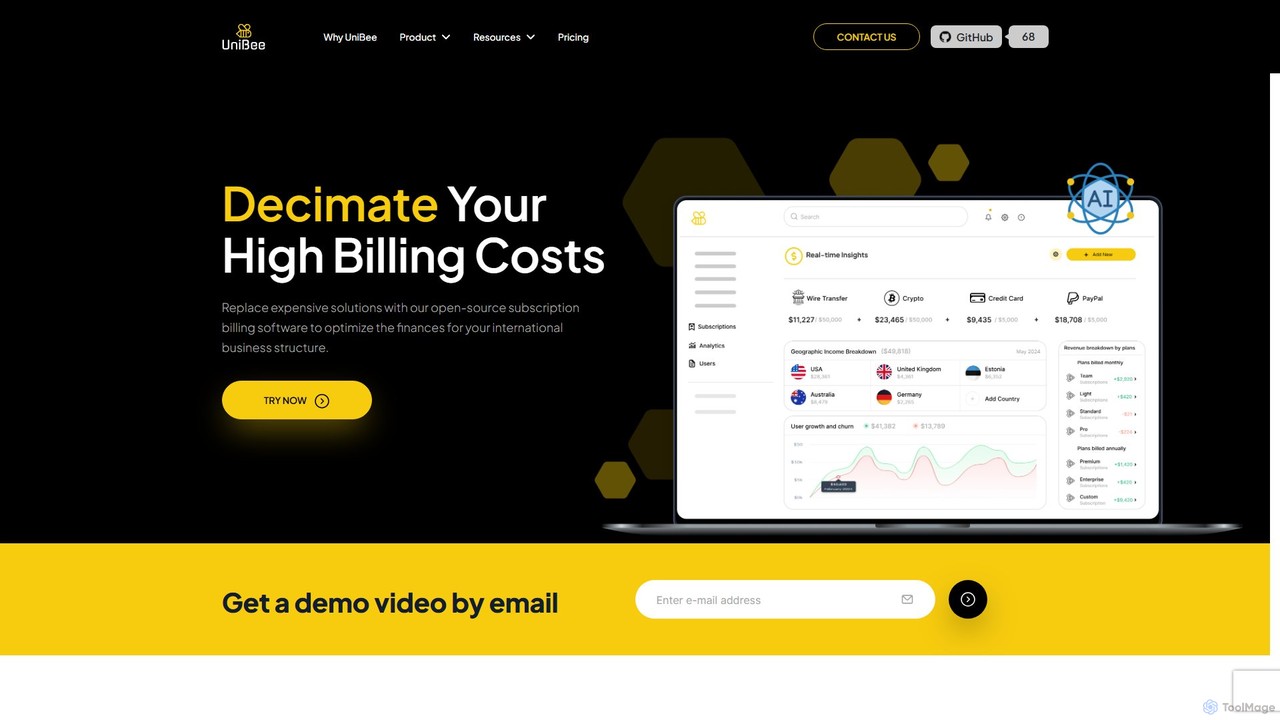
UniBee is an open-source subscription billing and payment management platform designed for SaaS businesses. It offers a flexible, …
UniBee is an open-source subscription billing and payment management platform designed for SaaS businesses. It offers a flexible, cost-effective alternative to proprietary solutions, supporting various billing models like recurring, usage-based, and one-time payments. With features like multi-gateway support (including crypto), automated invoicing, revenue analytics, and options for both cloud and self-hosting, UniBee empowers businesses to streamline their global financial operations and scale efficiently.
SubscriptionFlow
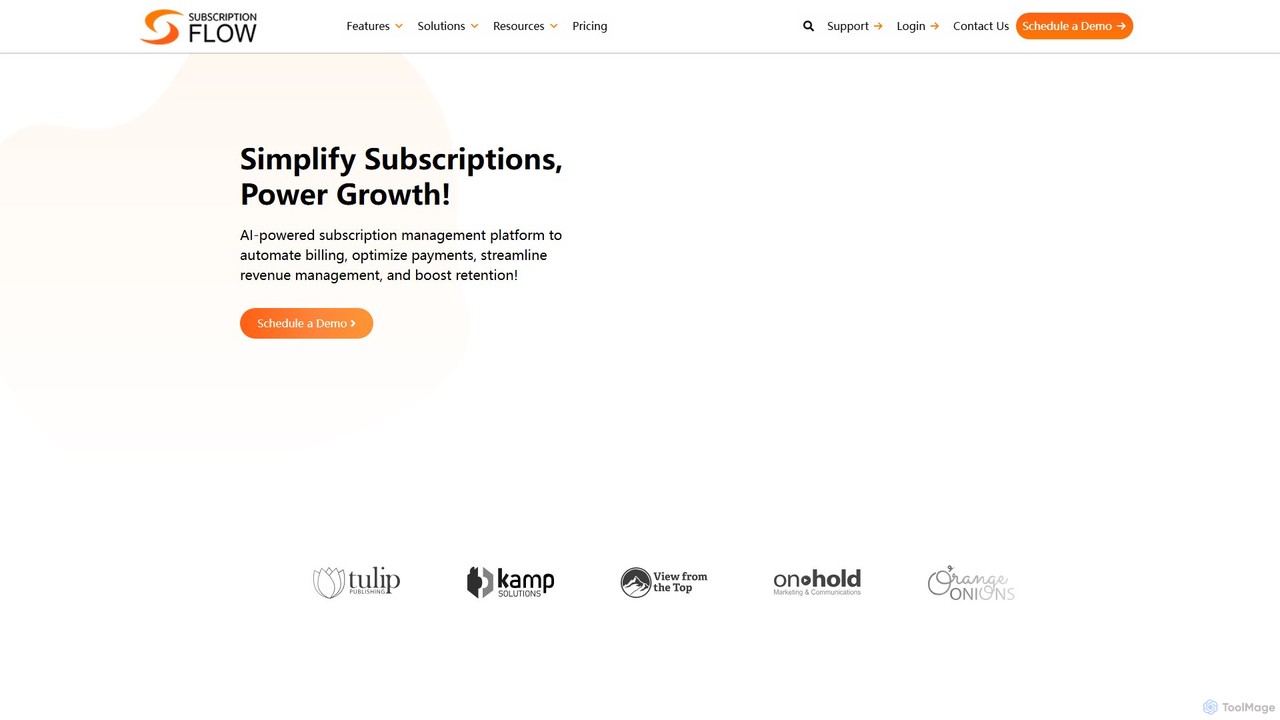
An AI-powered subscription management platform designed to automate recurring billing, optimize payments, and reduce customer churn. It provides …
An AI-powered subscription management platform designed to automate recurring billing, optimize payments, and reduce customer churn. It provides a comprehensive solution for businesses to manage the entire subscription lifecycle, from customer acquisition to revenue reconciliation and growth.
About Subscription Management
Subscription Management tools are specialized platforms designed to automate and streamline the entire lifecycle of customer subscriptions for businesses. These systems handle complex recurring billing logic, manage payment failures, and provide crucial analytics on revenue and customer retention. They empower companies, particularly in the SaaS, media, and e-commerce sectors, to efficiently scale their subscription models, reduce involuntary churn, and gain deep insights into key metrics like MRR and LTV. By centralizing subscription data, these tools form a critical component of a modern business's financial technology stack.
Core Features
- Recurring Billing Engine: Automates the process of charging customers on a periodic basis (monthly, annually) with support for various pricing models.
- Dunning Management: Intelligently manages failed payments through automated retries and customized customer communication to recover revenue.
- Subscription Lifecycle Management: Provides functionality to handle upgrades, downgrades, pauses, cancellations, and trials seamlessly.
- Revenue Recognition & Analytics: Delivers reports on key metrics like Monthly Recurring Revenue (MRR), churn rate, and customer lifetime value (LTV), often with compliance for accounting standards.
- Customer Self-Service Portal: Offers a portal for customers to manage their own subscription details, payment methods, and plan changes.
Use Cases
These tools are essential for any business with a recurring revenue model. This includes Software-as-a-Service (SaaS) companies managing software licenses, digital media publishers handling paid content access, and e-commerce businesses offering subscription boxes. Finance and operations teams use them to automate billing and reporting, while marketing and product teams leverage the analytics to understand customer behavior and reduce churn.
How to Choose
When selecting a Subscription Management tool, first evaluate its integration capabilities with your existing payment gateways, CRM, and accounting software. Consider its scalability to support future growth in subscribers and transaction volume. Assess the flexibility of its billing logic to handle complex pricing structures like usage-based or tiered models. Finally, review its analytics and reporting features to ensure they provide the insights needed to manage your business effectively.
Subscription ManagementUse Cases
Automating Billing for a SaaS Startup
A growing SaaS company needs to manage hundreds of monthly and annual subscriptions. Instead of manually creating invoices and tracking payments, they implement a subscription management tool. The platform automatically bills each customer according to their chosen plan, sends professional invoices, and reconciles payments with their accounting software. This automation saves the finance team over 20 hours per week, reduces billing errors, and ensures a steady, predictable cash flow as the company scales.
Reducing Involuntary Churn for a Media Publisher
A digital news publisher notices a high rate of subscription cancellations due to failed credit card payments (involuntary churn). They use their subscription management platform's dunning feature. The system automatically retries failed payments at optimal times, sends customized email notifications to subscribers about expired cards, and directs them to a secure page to update their payment information. This proactive approach successfully recovers 15% of failed payments, directly preserving revenue and maintaining their subscriber base.
Empowering Customers with a Self-Service Portal
An e-commerce company selling subscription boxes for coffee wants to reduce customer support tickets related to subscription management. They leverage their platform's customer self-service portal. Now, customers can log in to their accounts to easily pause their subscription for a month, upgrade to a premium box, change their delivery address, or update their credit card details without contacting support. This improves the customer experience and frees up the support team to handle more complex inquiries, leading to higher customer satisfaction.
Analyzing Key Metrics for Product Strategy
A product manager at a B2B SaaS company uses the analytics dashboard of their subscription management tool to inform strategy. They track Monthly Recurring Revenue (MRR) growth, churn rate by customer segment, and the average revenue per user (ARPU) for different pricing tiers. By identifying that customers on the 'Pro' plan have a much lower churn rate and higher LTV, they decide to invest more marketing resources into promoting this plan and develop new features specifically for this segment, driving sustainable growth.
Streamlining Revenue Recognition for Financial Compliance
The finance team at a publicly-traded tech company must comply with strict revenue recognition standards like ASC 606. Manually calculating deferred and recognized revenue for thousands of subscriptions is complex and error-prone. Their subscription management platform automates this process. It generates detailed revenue recognition reports that align with accounting principles, providing a clear audit trail and ensuring compliance. This saves the accounting team days of work each month and significantly reduces the risk of non-compliance during financial audits.
Offering Flexible Plans for an EdTech Platform
An online learning platform wants to attract a wider range of students by offering more flexible pricing. Using a subscription management tool, they easily configure and launch multiple plans: a basic monthly subscription, a discounted annual plan, and a usage-based plan for 'power users' who consume a lot of content. The platform handles the complex logic of tracking usage, calculating prorated charges for upgrades, and applying discounts automatically. This flexibility leads to a 25% increase in new sign-ups from different user segments.