ToolMage
Sign in

Best 2 Talent Assessment AI tools for Business

Popular Talent Assessment AI tools in Business include Xobin and Algobash, helping you work more efficiently.

Xobin
Freemium

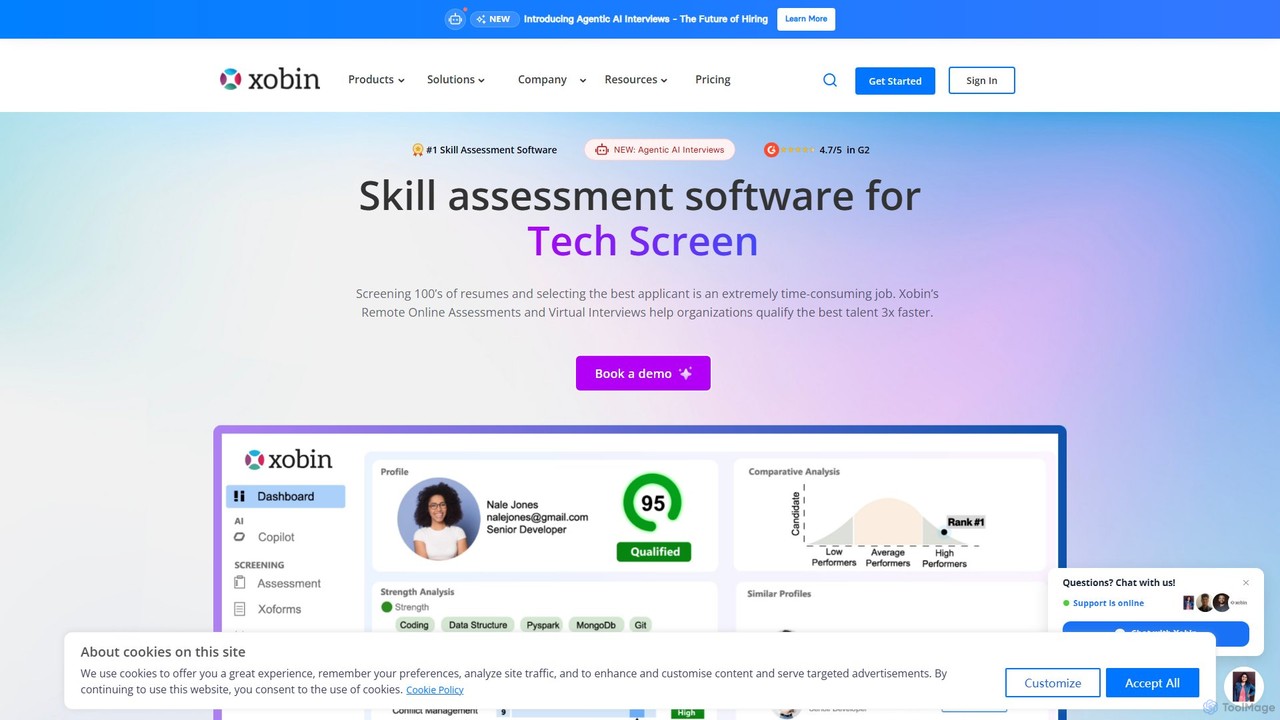
Xobin

Xobin is an AI-powered platform for skill assessments and psychometric testing, designed to help companies streamline their hiring process. It enables recruiters to accurately evaluate candidates' technical and soft skills, reduce bias, and identify the best talent efficiently through a vast library of tests and video interviews.

Talent Assessment
Visits 153.5KFavorites 131Likes 125
Algobash
Freemium

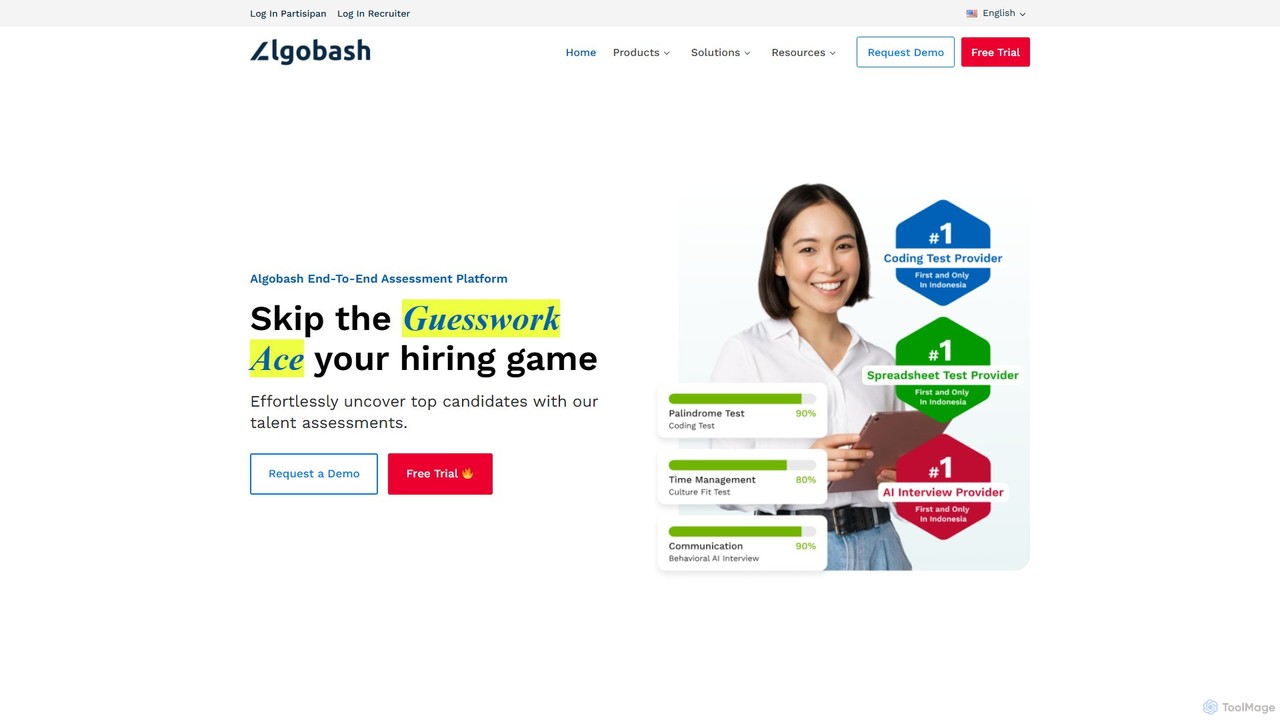
Algobash

Algobash is an end-to-end AI-powered talent assessment platform designed to streamline the hiring process. It helps companies identify top candidates by offering a comprehensive suite of tests, including AI interviews, coding challenges, personality assessments, and skill evaluations, all managed from a single dashboard.

Talent Assessment
Visits 42.9KFavorites 154Likes 141

About Talent Assessment

Talent Assessment tools are a class of AI-powered software designed to objectively evaluate a candidate's skills, competencies, and potential fit for a role. These platforms utilize machine learning, natural language processing (NLP), and predictive analytics to analyze everything from coding tests to video interview responses. They provide data-driven insights that go far beyond a traditional resume, enabling organizations to make more accurate, efficient, and fair hiring decisions. This technology helps to identify top performers, reduce unconscious bias, and streamline the entire recruitment process.

Core Features

  • Automated Skills Testing: Administer and automatically grade technical, cognitive, or language proficiency tests at scale.
  • Behavioral Analysis: Analyze video, audio, or text responses to assess soft skills like communication, problem-solving, and emotional intelligence.
  • Predictive Performance Modeling: Use historical data to create models that forecast a candidate's likelihood of success and tenure in a specific role.
  • Bias Reduction Algorithms: Focus evaluations on job-relevant criteria while actively minimizing the impact of demographic factors like age, gender, or ethnicity.
  • Candidate Ranking and Matching: Automatically score and rank applicants against predefined job requirements to surface the most qualified individuals.

Use Cases

These tools are widely used by human resources departments, recruitment agencies, and hiring managers across various industries. They are particularly effective for high-volume recruiting scenarios, such as for customer service or entry-level positions, where they can efficiently screen thousands of applicants. They are also critical for hiring specialized technical roles, like software engineers or data scientists, by providing validated, objective skill assessments. Furthermore, organizations use them for internal mobility to identify high-potential employees for leadership development.

How to Choose

When selecting a Talent Assessment tool, first evaluate the scientific validity and fairness of its assessment models; vendors should provide data on predictive accuracy and bias mitigation. Second, consider its integration capabilities with your existing Applicant Tracking System (ATS) for a seamless workflow. Third, assess the candidate experience—the platform should be engaging and intuitive to avoid deterring top talent. Finally, ensure the tool's assessment library covers the specific hard and soft skills relevant to your organization's needs.

Talent Assessment use cases

1

Screening Technical Candidates at Scale

A fast-growing tech company needs to hire 50 software engineers in one quarter. Their HR team is overwhelmed with thousands of applications. By using an AI Talent Assessment tool, they automate the initial screening process. Each applicant receives a standardized coding challenge relevant to the job. The AI platform automatically grades the code for correctness, efficiency, and style, then ranks all candidates. This allows recruiters to focus their time exclusively on the top 5% of applicants, reducing time-to-hire by 60% and ensuring only technically proficient candidates move to the interview stage.

2

Assessing Soft Skills for Customer-Facing Roles

A large retail bank needs to hire customer service representatives who demonstrate empathy and strong problem-solving skills. Traditional interviews are subjective and time-consuming. The bank implements an AI assessment tool that uses video interviews. Candidates record their answers to situational questions. The AI analyzes their verbal cues, tone of voice, and word choice to generate a soft skills profile for each candidate, scoring them on traits like patience and clarity. This provides hiring managers with objective data to compare candidates, leading to a 25% improvement in customer satisfaction scores from new hires.

3

Identifying High-Potential Internal Candidates

A multinational corporation wants to promote from within for a new leadership program. To identify suitable managers, they use an AI assessment platform that combines performance data with cognitive and behavioral tests. The tool analyzes past project outcomes, 360-degree feedback, and assessment results to create a 'leadership potential' score. This data-driven approach uncovers hidden talent that might have been overlooked by traditional succession planning, ensuring a fair and objective selection process for internal mobility and reducing the cost of external hiring.

4

Reducing Bias in Graduate Recruitment Programs

A global consulting firm aims to increase diversity in its annual graduate intake. They replace traditional resume screening with an AI-powered gamified assessment. Candidates complete a series of engaging challenges that measure cognitive abilities, learning agility, and problem-solving skills, without revealing demographic information. The AI platform provides a ranked list of candidates based purely on merit and potential. This approach helps level the playing field for candidates from non-traditional backgrounds and has led to a 15% increase in the diversity of their new hires.

5

Predicting Sales Performance for a High-Turnover Team

A company with a large sales force experiences high employee turnover. To improve retention, they use an AI assessment tool to identify candidates with the personality traits of their top performers, such as resilience, optimism, and competitiveness. The tool administers a personality and situational judgment test during the application process. The AI then generates a 'sales potential' score for each applicant, predicting their likelihood of hitting targets. By prioritizing candidates with high scores, the company increased its 12-month retention rate for new sales hires by 30%.

6

Assessing Cultural Fit for a Remote-First Company

A fully distributed company needs to ensure new hires can thrive in an asynchronous, high-autonomy environment. They use an AI assessment tool that evaluates work styles and collaboration preferences. Candidates answer questions about their preferred communication methods, approach to feedback, and time management. The AI compares their profile to the company's established 'remote success profile'. This helps identify individuals who are self-motivated, proactive communicators, and comfortable with ambiguity, significantly improving the quality of hires and team cohesion in a remote setting.

Talent Assessment FAQ

What are AI Talent Assessment tools?

AI Talent Assessment tools are software platforms that use artificial intelligence to evaluate job candidates' skills, personality, and potential. They leverage technologies like machine learning and natural language processing to analyze data from tests, video interviews, and gamified challenges. Unlike traditional methods, these tools provide objective, data-driven insights to help companies make faster, fairer, and more accurate hiring decisions by predicting future job performance and reducing human bias.

How do you choose the right AI Talent Assessment tool?

Choosing the right tool involves several key considerations. First, verify the scientific validity and fairness of the assessments; look for tools that are transparent about their methodology and bias mitigation. Second, ensure it integrates seamlessly with your existing HR software, like an Applicant Tracking System (ATS). Third, evaluate the candidate experience to ensure it's engaging and user-friendly. Finally, confirm that the tool's library of assessments covers the specific skills (both technical and soft) that are critical for success in your roles.

How do AI assessments differ from traditional tests?

AI assessments differ from traditional tests in several ways. While traditional tests are often static (e.g., multiple-choice questions), AI assessments can be dynamic and adaptive, adjusting difficulty based on candidate performance. AI tools can also analyze richer data types, such as video and audio, to evaluate soft skills and behavioral traits, which is impossible with standard tests. Furthermore, AI platforms can process data at a massive scale to provide predictive insights about job performance and reduce the unconscious bias often present in manual review processes.

Can AI Talent Assessment tools completely eliminate hiring bias?

While AI Talent Assessment tools are powerful for reducing bias, they cannot completely eliminate it. Their main advantage is focusing on objective, job-related data rather than demographic information. However, if the AI model is trained on biased historical data, it can inadvertently perpetuate those biases. It is crucial to choose reputable vendors who are transparent about their data sources, algorithm design, and ongoing efforts to audit and mitigate bias in their systems. They are a tool for significant improvement, not a perfect solution.

Who should use AI Talent Assessment tools?

AI Talent Assessment tools are beneficial for a wide range of users within an organization. HR departments and recruiters use them to streamline high-volume screening and improve efficiency. Hiring managers use them to gain deeper, objective insights into a candidate's skills and potential fit. Executives and leadership teams use the data to inform strategic workforce planning and diversity initiatives. They are particularly valuable for medium to large enterprises that need to scale their hiring processes, hire for specialized roles, and are committed to fair and data-driven recruitment.